
市场监管执法

Search documents
四川省 广元市市场监督管理局2026年度典型案例【“春雷行动2026”(一)】
Zhong Guo Zhi Liang Xin Wen Wang· 2026-02-10 02:57
Group 1 - The article discusses various cases of regulatory enforcement actions taken by market supervision authorities in Guangyuan City, focusing on illegal sales of counterfeit and substandard products [1][2][3][4][5][6][7] - A total of six cases are highlighted, including the sale of fake drugs, counterfeit liquor, illegal wildlife meat, and violations in medical pricing and food safety regulations [1][2][3][4][5][6][7] - The enforcement actions resulted in various penalties, including fines, confiscation of illegal goods, and administrative punishments against the violators [2][3][4][5][6][7] Group 2 - The first case involves the sale of counterfeit drugs, where 274 boxes of products were found without legal approval numbers, leading to an ongoing investigation [1] - The second case pertains to a liquor store selling 22 bottles of counterfeit Guizhou Moutai, with 19 bottles confirmed as fake, resulting in a fine of 35,000 yuan [2] - The third case involves the illegal sale of wild boar meat, with a total value of 2,465.2 yuan confiscated [3] - A medical center was penalized for overcharging patients by 1,319.72 yuan by not adhering to government pricing guidelines [4] - A case of a company failing to maintain elevators according to safety regulations is under investigation [5] - A fireworks store was found selling expired products, leading to a warning and fines totaling 1,323.37 yuan [6] - An elderly care center was found using uninspected meat, with a total value of 1,858.8 yuan involved [7]

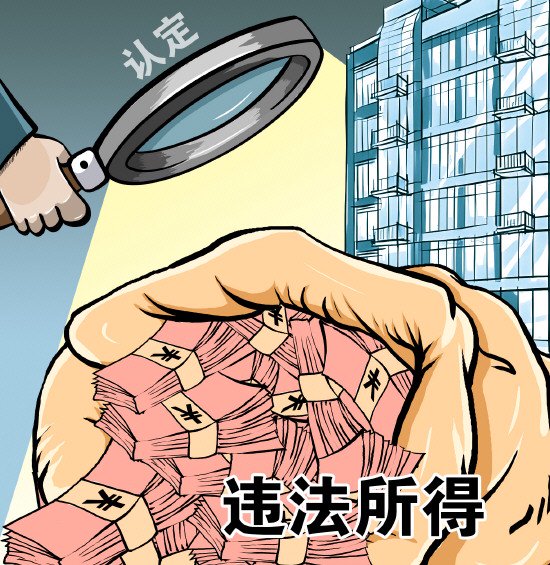
统一认定标准,规范执法行为
Xin Lang Cai Jing· 2026-01-29 19:49
Core Viewpoint - The article discusses the introduction of the "Measures for the Identification of Illegal Gains in Market Supervision Administrative Penalty Cases" by the State Administration for Market Regulation, effective from March 20, 2026, aimed at standardizing the identification of illegal gains and enhancing the enforcement of market regulations [3][4]. Group 1: Identification Principles - The new measures clarify the principles for identifying illegal gains, emphasizing that any profits obtained through illegal activities must be confiscated, aligning with the principle that "no one should benefit from their own illegal actions" [3]. - The measures address the existing discrepancies in the identification of illegal gains by providing a balanced approach, allowing for the deduction of reasonable expenses and costs in specific cases [3][4]. Group 2: Operational Guidelines - The measures establish a systematic and practical process for identifying illegal gains, including a dual approach of "legal enumeration + case application" for deductible costs, enhancing clarity and reducing discretionary power during enforcement [4]. - Obligations for parties involved are defined, requiring them to provide complete documentation for legitimate necessary expenses, which addresses challenges in evidence collection faced by enforcement agencies [4]. Group 3: Special Circumstances - The measures include specific rules for common illegal activities, such as price violations and pyramid schemes, allowing for direct identification of illegal gains without complex cost calculations, thus easing the enforcement burden [4]. - For pyramid schemes and other specified violations, the measures stipulate that all income can be considered illegal gains, reinforcing a strict enforcement approach to protect public interests and market order [4].
以“制度统一”纵深推进全国统一大市场建设
Jin Rong Shi Bao· 2025-09-01 04:02
Core Viewpoint - The construction of a unified national market requires a dual approach of breaking down existing barriers and establishing new systems to enhance market efficiency and competitiveness [2][20]. Group 1: Market Foundation System - Establishing a unified market foundation system is essential for releasing economic vitality, as it ensures clear property rights, contract freedom, equal competition, and market access [4][10]. - The current institutional trade costs in domestic trade account for 21.7% of total trade costs, indicating a significant area for improvement that could enhance overall welfare by 5.9% if reduced by 50% [3][4]. - The central government has outlined specific measures to strengthen the unified market foundation, focusing on property protection, market access, fair competition, and social credit systems [3][4]. Group 2: Market Infrastructure - Efficient logistics are crucial for the smooth operation of the national economy, directly impacting the flow of production factors and products [6][8]. - A modern logistics system is identified as a key infrastructure for the unified market, facilitating the free and efficient movement of goods and factors across the country [8][9]. - The integration of logistics, supply chains, and innovation chains can significantly reduce market fragmentation and enhance overall economic efficiency [8][9]. Group 3: Government Behavior and Regulation - The unification of government behavior standards is necessary to eliminate local protectionism and ensure fair competition among market participants [10][12]. - Current challenges include hidden barriers such as local subsidies and differentiated policies that hinder market efficiency and competition [11][12]. - A reformed performance evaluation system for local governments is essential to align their incentives with the goals of a unified market, moving away from GDP-centric assessments [12][13]. Group 4: Resource Market - The free flow of production factors and the integration of various factor markets are critical for the construction of a unified national market [17][18]. - The removal of barriers between urban and rural areas, as well as between regions, is necessary to enhance overall economic efficiency and resource allocation [18][19]. - The establishment of a unified market for construction land and the reform of the household registration system are key steps in facilitating labor mobility and resource allocation [19][20].