常备回购便利工具

Search documents
美联储理事米兰:常备回购便利工具的效果不及美联储所预期的那样显著。
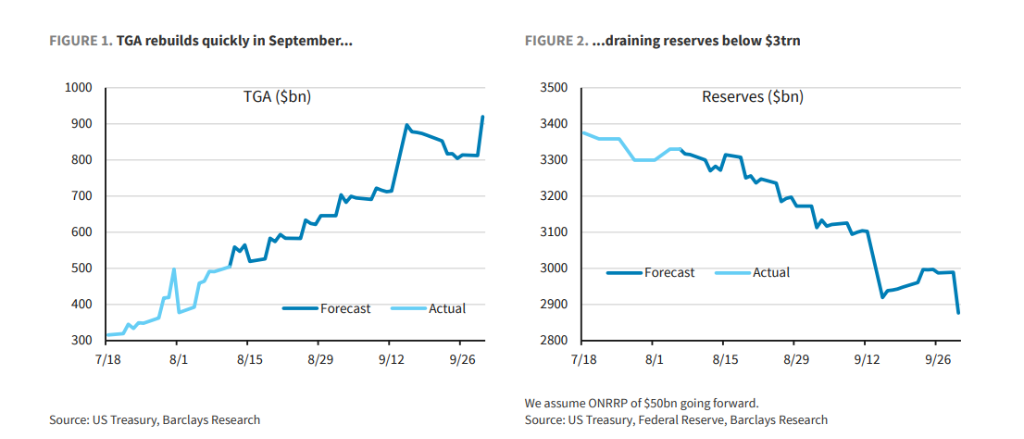
Sou Hu Cai Jing· 2025-12-15 15:26
Core Viewpoint - The effectiveness of the standing repo facility tool is not as significant as the Federal Reserve had anticipated [1] Group 1 - The Federal Reserve Governor, Michelle Bowman, expressed concerns regarding the impact of the standing repo facility [1] - The tool was expected to provide substantial support to the financial system, but its actual performance has fallen short of expectations [1] - The comments suggest a need for reassessment of the tool's role in monetary policy [1]
美联储的哈马克:预计企业在合理情况下会使用常备回购便利工具。
Sou Hu Cai Jing· 2025-11-13 18:17
Core Viewpoint - The Federal Reserve's Harker anticipates that companies will utilize the standing repo facility under reasonable circumstances [1] Group 1 - The standing repo facility is expected to be a tool for companies to manage liquidity effectively [1] - Harker's comments suggest a proactive approach by the Federal Reserve to ensure market stability [1]
美国市场面临一场“9月大抽水”?
Hua Er Jie Jian Wen· 2025-08-15 03:47
Core Viewpoint - A significant liquidity withdrawal is approaching the U.S. money market due to the U.S. Treasury, tax payments, and bond settlements, with a sharp consumption of reserves expected in September, particularly around mid-month. However, the market's resilience and the Federal Reserve's backup tools suggest a low likelihood of a systemic funding crisis [1][9]. Group 1: Sources of "Liquidity Withdrawal" - The report identifies three main drivers contributing to the sharp decline in reserves in September, which will pose a significant test for the market [2]. Group 2: Impact of Tax and Bond Settlements - On September 15 alone, tax and bond settlements are expected to withdraw nearly $200 billion from the banking system, potentially causing total reserves to drop below $3 trillion in mid-September and further decline to below $2.9 trillion by the end of the month [3][8]. Group 3: Market Resilience - The market has demonstrated its capacity to absorb liquidity shocks, having managed to digest up to $350 billion in net short-term Treasury issuance in August with only a slight increase in the Secured Overnight Financing Rate (SOFR). The pace of Treasury issuance is expected to provide a buffer in the latter half of September, with a net issuance of approximately $30 billion [5]. Group 4: Federal Reserve's Backup Tools - The Federal Reserve's Standing Repo Facility (SRF) is deemed crucial for mitigating tail risks in the market, allowing eligible counterparties to borrow cash at a fixed rate when needed. The Fed has been enhancing the effectiveness of this tool, and market participants have shown willingness to utilize it [6]. Group 5: Market Pricing of Risks - Despite reserves dropping below 12% of total bank assets, which is a historically low level, it is still above Barclays' "adequate level sweet spot" of 11%. The pricing in the SOFR futures market indicates a fair pricing with a slight insurance premium factored in for the expected reserve decline and quarter-end volatility [7]. Group 6: Treasury General Account (TGA) Rebuilding - The Treasury plans to restore its cash balance at the Federal Reserve (TGA) to a target level of $850 billion, which will inherently withdraw liquidity from the banking system. Significant tax payments are expected on September 15, with corporate tax payments alone estimated to lead to over $100 billion flowing into the TGA [8].