平台经济竞争

Search documents
阿里、美团、京东「三国杀」持续升级
Di Yi Cai Jing· 2025-09-11 03:51
Core Insights - The competition among major internet giants, specifically Alibaba, Meituan, and JD.com, has intensified, particularly in the local service sector following Alibaba's launch of the "Gaode Street Ranking" to rival Meituan's "Dazhong Dianping" [1][4] - Meituan has responded by reviving its quality takeaway service, utilizing a self-developed AI model to analyze user needs based on real reviews, aiming to enhance the reliability of its ratings [1][4] - The competitive landscape is characterized by aggressive subsidies, with Alibaba announcing over 1 billion yuan in subsidies to attract 10 million new customers to offline dining and services, while Meituan is distributing 25 million quality takeaway vouchers [4] Company Strategies - Alibaba's introduction of the Gaode Street Ranking is seen as a strategic move to enhance its local service offerings and drive user growth, potentially leading to positive synergies within its broader ecosystem [4][8] - Meituan's reliance on user-generated content for ratings is viewed as a weakness, as it may be influenced by subjective factors, whereas Gaode's real-time monitoring of foot traffic offers a more objective measure of store popularity [4][5] - JD.com faces indirect competition from Alibaba's expanding ecosystem, necessitating a focus on optimizing its core competencies in logistics and supply chain management to maintain competitiveness [8] Market Impact - The ongoing competition has already affected the financial performance of these companies, with Meituan and JD.com experiencing significant impacts in their second-quarter results due to increased competitive pressures [5][7] - Analysts predict that the intensified competition will lead to profit margin pressures across the board, with Meituan being the most affected, while Alibaba is expected to withstand the impact better due to its larger scale [8][9] - The market is currently reflecting these competitive dynamics, with the Hang Seng Tech Index showing a steady upward trend since April, indicating potential investment opportunities despite the competitive landscape [9]




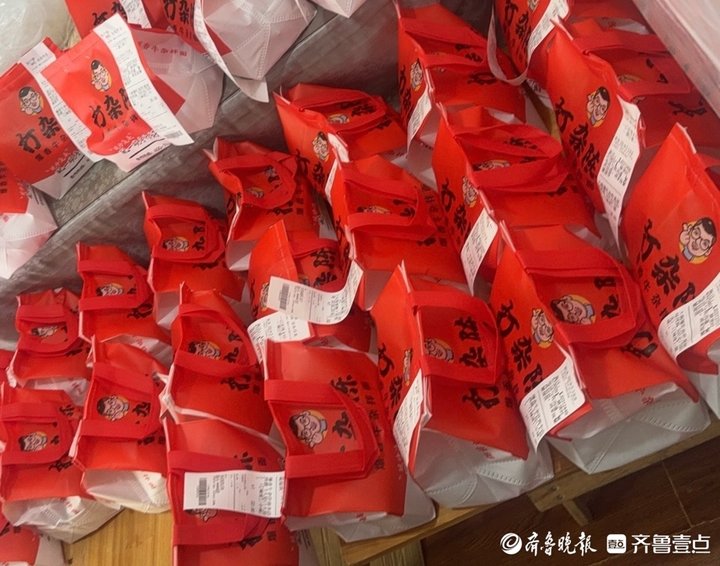
“外卖大战”中,有商家订单翻倍,有骑手日薪涨超百元
Qi Lu Wan Bao Wang· 2025-05-01 11:10
Core Viewpoint - The competition among major food delivery platforms, including Meituan, JD.com, and Ele.me, has intensified, with significant subsidies and incentives being offered to attract users, merchants, and delivery personnel. This "food delivery war" is expected to reshape market dynamics in the near future [1][16]. Merchant Insights - Merchants have reported a surge in orders due to platform subsidies, with one chain restaurant experiencing a daily sales increase to nearly 500 orders, driven by JD.com's promotional activities [2][4]. - The revenue distribution for merchants shows that they receive different amounts from each platform, with Meituan at 15.98 yuan, JD.com at 17.98 yuan, and Ele.me at 14.78 yuan for a 20 yuan order [4]. - Merchants express concerns about customer retention post-subsidy and the need for improved platform functionalities, particularly with JD.com [8]. Rider Perspectives - Delivery riders are experiencing increased earnings due to higher order volumes and platform incentives, with some reporting daily incomes exceeding 400 yuan [9][11]. - Riders are considering transitioning to full-time positions due to better pay and job stability, especially on JD.com, which offers higher per-order payments compared to competitors [13]. - Challenges remain for riders, including tighter delivery timeframes and less efficient order management on JD.com compared to Meituan and Ele.me [13]. Consumer Behavior - Consumers are benefiting from the competitive pricing and substantial discounts offered by all three platforms, leading to a preference for the lowest-priced options [14][16]. - A price comparison revealed that after discounts, JD.com, Meituan, and Ele.me offered prices of 8.9 yuan, 10.09 yuan, and 13.59 yuan, respectively [16]. - Consumer loyalty is influenced by established habits, with many unwilling to switch platforms despite ongoing promotions [14]. Market Dynamics - The competitive landscape is shifting, with projections indicating that Meituan's market share could reach 65% and Ele.me's 33% by 2024, while JD.com is rapidly increasing its order volume [16]. - Experts suggest that the current subsidy-driven competition may lead to significant user attrition once promotions cease, similar to trends observed in the ride-hailing industry [18]. - The future of the food delivery market is expected to focus on quality service and operational efficiency rather than just order volume, emphasizing the need for sustainable business practices [18].