平衡率

Search documents
美国人口增长放缓 特朗普的首席经济顾问料就业数字会下降
Xin Lang Cai Jing· 2026-02-09 20:20
Core Viewpoint - The slowing population growth in the U.S. is expected to lead to a decrease in employment numbers in the coming months, which is considered a natural outcome by the White House National Economic Council Director Kevin Hassett [1] Employment and Economic Outlook - The upcoming January employment report is anticipated to show an increase of 69,000 jobs, with the unemployment rate expected to remain stable at 4.4% [1] - The report will also include significant downward revisions to historical employment data, projecting a substantial adjustment in employment numbers for the year ending March 2025 [1] Employment Growth Rate - Hassett noted that the so-called balance rate, which refers to the employment growth needed to keep the unemployment rate stable, is "much lower" than during former President Joe Biden's administration [1]
美国11月非农印证劳动力市场降温 强化美联储降息逻辑
Zhi Tong Cai Jing· 2025-12-16 14:37
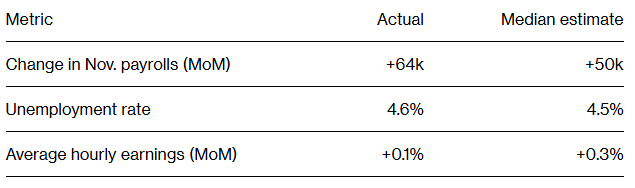
Group 1 - The November non-farm payrolls increased by 64,000, exceeding market expectations of 50,000, while the unemployment rate rose to 4.6%, the highest level since 2021 [1][2] - The increase in employment was driven by healthcare, social assistance, and construction, while transportation, warehousing, and leisure and hospitality saw declines [2] - The average hourly earnings growth has slowed to 3.5% year-on-year, which is below the expected 3.6%, indicating a deceleration in real wage growth [2][4] Group 2 - The average job growth over the past three months is currently at 22,000, significantly below the estimated "balance rate" of around 50,000 needed to meet labor market demand [4] - There is a growing disparity in wage growth between low-income and high-income households, contributing to a K-shaped economic recovery in the U.S. [4] - Companies are hesitant to increase hiring, opting instead to halt recruitment in response to unexpected economic shocks, leading to a more volatile labor market [7] Group 3 - The Federal Reserve has lowered interest rates for the third consecutive time to support a "gradually cooling" labor market, which faces significant downside risks [9] - Market expectations for future rate cuts have slightly increased following the employment data release, with traders anticipating two rate cuts [9][14] - The upcoming December employment report will be a more significant indicator for the Fed's policy direction than the current report due to data collection interruptions [14]