年味游

Search documents
春节假期消费观察|消费旺、出游火、年味足 亮眼数据彰显新年“开门红”
Yang Shi Wang· 2026-02-25 04:18
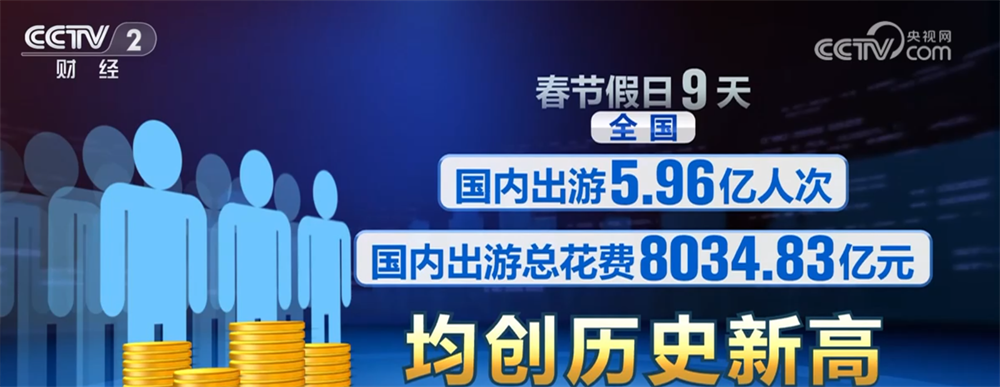
Group 1: Travel and Tourism Data - During the Spring Festival holiday, a total of 596 million domestic trips were made in China, with total spending reaching 803.48 billion yuan, both figures marking historical highs [1] - The average daily number of trips during the Spring Festival increased by 3.5% compared to the previous year, with significant growth in cultural and traditional tourism [16] - In Shenzhen, over 10.54 million tourists were received, a 17.9% increase from the previous year, generating tourism revenue of 11.845 billion yuan, up 19.8% [8][10] Group 2: Payment and Consumption Trends - During the 2026 Spring Festival, UnionPay and Wanglian processed 39.302 billion transactions amounting to 13.12 trillion yuan, with daily transaction volume and amount increasing by 37.45% and 19.26% respectively compared to 2025 [3] - WeChat Pay reported over 20% year-on-year growth in offline transactions for travel and entertainment during the Spring Festival [5] - Alipay noted a nearly 90% increase in transaction volume from foreign tourists in China, with spending up over 80% compared to the previous year [7] Group 3: Regional Highlights - In Hubei, over 22.8 million tourists visited 600+ A-level tourist attractions, a 28.27% increase from 2025, with popular sites like Yellow Crane Tower and Wudang Mountain seeing significant visitor numbers [22] - Shanghai received 21.67 million tourists, a year-on-year increase of 8.36%, with total tourism consumption reaching 25.614 billion yuan, up 20.9% [18] - In Chongqing, over 2,000 promotional consumption activities were organized, leading to a 7.8% increase in total consumption, with retail sales and nighttime consumption also showing growth [20] Group 4: Emerging Consumer Trends - The trend of "reverse reunion" saw a significant increase, with young adults bringing their parents to major cities for the holiday, particularly in first-tier cities like Beijing and Shanghai [21] - County-level hotels experienced a surge in bookings, with occupancy rates increasing over 60% in non-tourist areas, driven by returning young people [24] - New consumption habits emerged, with a notable interest in purchasing technology products and gold jewelry during the Spring Festival [10][14]

视频丨从“快闪打卡”到“沉浸体验” 春节“年味游”正被重新定义
Yang Shi Xin Wen Ke Hu Duan· 2026-02-24 07:16
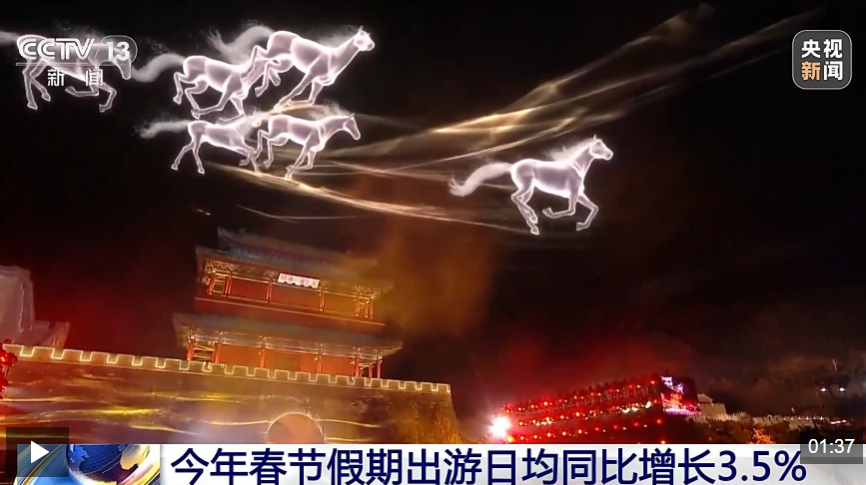
Core Insights - The Chinese tourism market experienced a 3.5% increase in daily travel volume during the Spring Festival holiday compared to the previous year, indicating a robust recovery in the sector [1][3]. Travel Trends - The peak travel days were from the third to the fifth day of the Lunar New Year, with many travelers opting for a "return home first, then travel" approach [3]. - Over 50% of trips were within the same province, while inter-provincial travel saw a daily increase of 6.8% compared to last year [3]. Visitor Demographics - The holiday attracted tourists from over 160 countries and regions, with daily visitor increases exceeding 30% from countries such as Sweden, Italy, Malaysia, and France [3]. - The number of inbound tourists grew by 10.1% year-on-year, with a notable 12% increase in visitors to second-tier and lower-tier cities [5]. Cultural and Traditional Tourism - Traditional villages hosted over 10,000 events, attracting more than 73 million visitors during the holiday, showcasing a blend of ecological, cultural, and economic sustainability [5][9]. - Activities in traditional villages included immersive experiences in local customs, such as paper-cutting and rice cake making, reflecting a shift from quick visits to deeper cultural engagement [5][7]. Economic Impact - The events in traditional villages generated approximately 5.884 billion yuan in consumer spending, highlighting the economic benefits of cultural tourism [9]. - A total of 15,472 cultural events were held across over 4,000 traditional villages, further promoting local economies [9][10].