幽灵外卖治理

Search documents
终结“幽灵外卖”,新规明确:平台须实地核查,资质动态核验
Xin Jing Bao· 2026-02-26 12:11
Core Viewpoint - The article discusses the new regulations introduced by the State Administration for Market Regulation to combat "ghost takeout" services, emphasizing the need for a comprehensive governance system that includes stringent qualification checks and dynamic supervision of online food delivery services [1][2]. Group 1: Regulatory Measures - The new regulations require food delivery platforms to conduct substantial reviews of merchants' qualifications, moving beyond mere document uploads to include on-site inspections to verify the authenticity of business licenses [1]. - Platforms must verify merchants' operating qualifications against data held by provincial market regulatory authorities, ensuring that any discrepancies prevent merchants from operating on the platform [2]. - A dynamic verification mechanism mandates that platforms must update and verify merchants' operational addresses and qualifications at least every six months to prevent the emergence of new "ghost" services [2]. Group 2: Goals and Expectations - The regulations aim to eliminate the breeding ground for "ghost takeout" services through a three-pronged approach: establishing a solid foundation, clearing the flow of information, and maintaining ongoing verification [2]. - The implementation of these regulations is expected to enhance consumer confidence in online food delivery services, leading to a more regulated and healthier market environment [2].
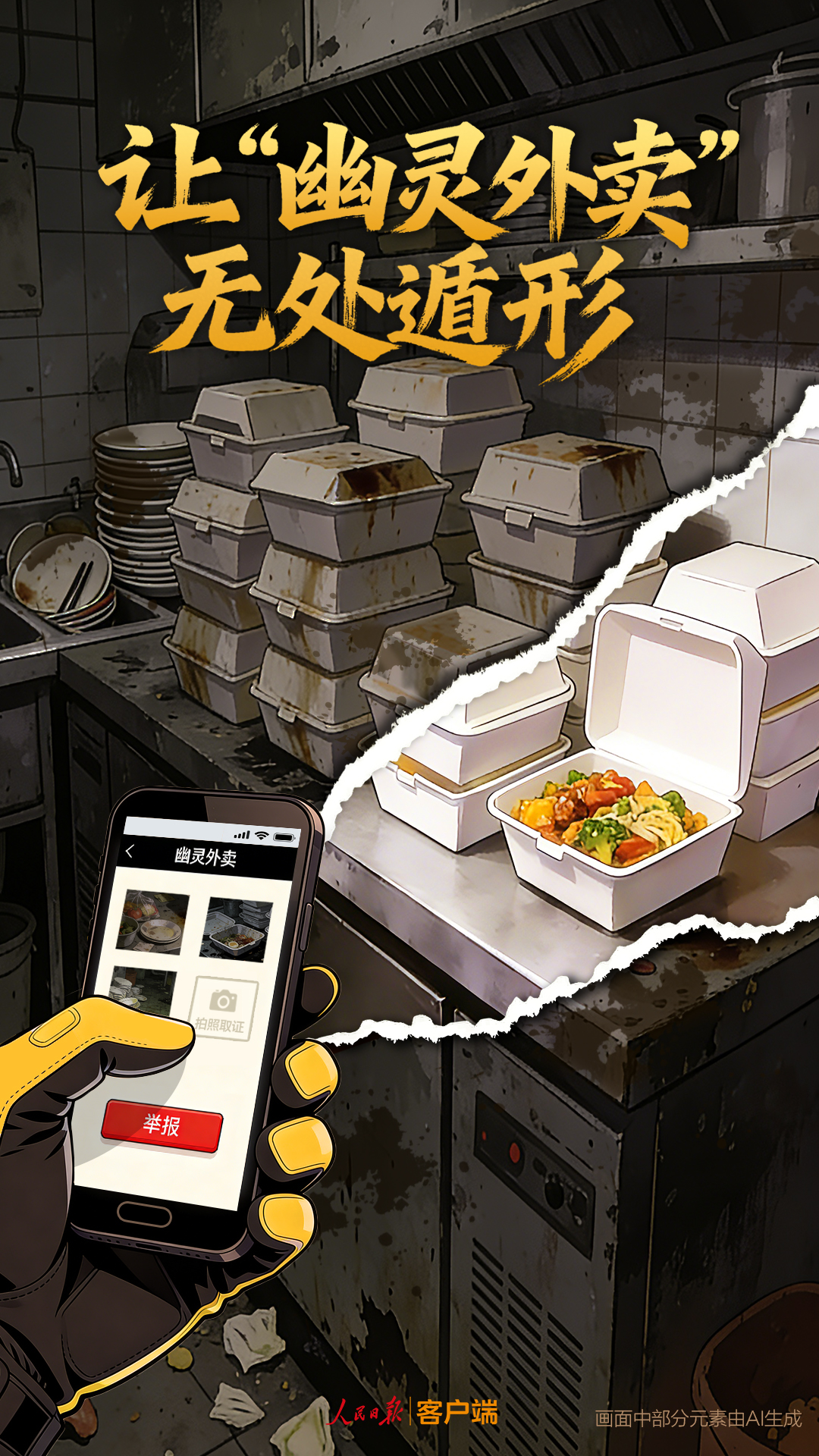
让“幽灵外卖”无处遁形
Ren Min Ri Bao· 2026-01-27 12:36
Core Viewpoint - The article discusses the issue of "ghost takeout" services that mislead consumers with fake licenses and addresses, posing health risks and highlighting the challenges in regulating the food delivery industry [2][5]. Group 1: Challenges in Regulation - The primary challenge in combating "ghost takeout" is the insufficient verification capabilities of platforms, which struggle to manage the vast number of restaurant applications and often rely on superficial checks [5]. - Offline regulation faces a "cat-and-mouse game" scenario, where hidden and mobile operations evade traditional oversight methods, complicating enforcement efforts [5][6]. - There is a significant information asymmetry between online and offline operations, leading to a "last mile" blind spot in consumer safety [6]. Group 2: Government and Regulatory Initiatives - In March 2025, the Central Committee and State Council issued guidelines to enhance food safety regulation across the entire supply chain, emphasizing integrated oversight of online and offline food delivery [6]. - Recent regulations from the State Administration for Market Regulation require merchants to provide a comprehensive video of their storefronts, ensuring consistency between location, licenses, and actual addresses to prevent fraudulent entries [6]. Group 3: Innovative Solutions and Community Involvement - Local initiatives, such as Zhengzhou's "Zhengqi Pioneer Snap and Report" program, empower delivery riders to report unsanitary conditions, incentivizing them with rewards for verified reports [7]. - The promotion of "transparent kitchens" encourages restaurants to live-stream their kitchen operations, allowing consumers to monitor cleanliness and safety [7]. - The article advocates for a multi-faceted governance approach involving government oversight, platform accountability, merchant self-discipline, and social supervision to effectively combat "ghost takeout" [8]. Group 4: Consumer Responsibility - Consumers are encouraged to utilize their rights to choose and supervise, urging them to verify qualifications and report issues to foster a healthier market environment [9].