
广谱抗癌药

Search documents
广谱抗癌药佐来曲替尼首批处方落地 NTRK融合阳性实体瘤患者迎来新希望
Zheng Quan Shi Bao Wang· 2026-01-09 02:05
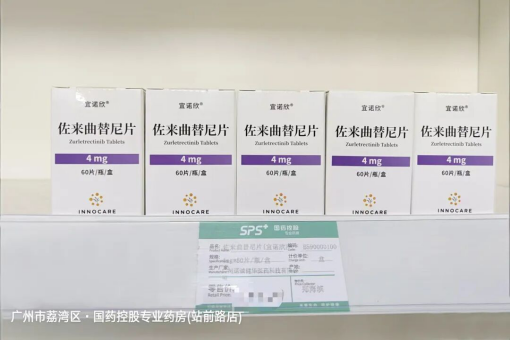
Core Viewpoint - The approval and clinical application of the new generation TRK inhibitor, Zolacotrine (Yinoxin, ICP-723), marks a significant breakthrough in China's broad-spectrum anti-cancer drug development, providing better treatment options for patients with NTRK fusion-positive solid tumors [1][3]. Group 1: Drug Development and Approval - Zolacotrine is the first domestically developed TRK inhibitor approved for clinical use in China, with prescriptions already issued in multiple hospitals [1][3]. - The drug addresses unmet clinical needs for patients with NTRK fusion-positive tumors, which are prevalent in over 26 types of solid tumors [4]. Group 2: Clinical Efficacy - Clinical studies show Zolacotrine has a total response rate (ORR) of 89.1%, with a disease control rate (DCR) of 96.4%, and a 24-month progression-free survival rate (PFS) of 77.4% [5]. - The drug demonstrates a total survival rate (OS) of 90.8%, indicating its potential to provide long-term relief for patients [5]. Group 3: Safety and Administration - Zolacotrine has a low rate of treatment-related adverse events leading to permanent discontinuation, at only 0.4%, enhancing patient compliance [7]. - The once-daily oral administration of Zolacotrine offers convenience for long-term treatment [7]. Group 4: Overcoming Resistance - Zolacotrine effectively overcomes resistance issues associated with first-generation TRK inhibitors, maintaining strong inhibitory activity against common mutations in the TRK kinase domain [9]. Group 5: CNS Penetration - The drug's unique molecular structure allows it to effectively penetrate the blood-brain barrier, achieving a 100% objective response rate in intracranial lesions, thus providing comprehensive protection for patients with brain metastases [10]. Group 6: Company Perspective - The CEO of the company expressed gratitude towards regulatory bodies, clinical experts, and partners for their support in the development and launch of Zolacotrine, emphasizing its role in improving the quality of life for cancer patients [12].



诺诚健华宣布中国首款自主研发的新一代TRK抑制剂宜诺欣 (佐来曲替尼)获批上市
Zheng Quan Shi Bao Wang· 2025-12-12 02:25
Core Viewpoint - The approval of the new generation TRK inhibitor, Zolbetuximab (ICP-723), by the National Medical Products Administration (NMPA) in China marks a significant milestone as it is the first domestically developed TRK inhibitor approved for treating adult and adolescent patients with NTRK fusion gene-positive solid tumors [1][2]. Group 1: Drug Efficacy and Safety - Zolbetuximab demonstrated exceptional efficacy and safety in clinical trials, with an overall response rate (ORR) of 89.1%, disease control rate (DCR) of 96.4%, 24-month progression-free survival (PFS) rate of 77.4%, and 24-month overall survival (OS) rate of 90.8% [1]. - The drug shows superior efficacy compared to first-generation TRK inhibitors, providing long-term deep remission and strong brain penetration, with a good overall safety profile [1][2]. - In specific patient populations, Zolbetuximab achieved an ORR of 100% in adolescents, 89.5% in soft tissue sarcoma patients, and 88.9% in lung cancer patients, highlighting its broad applicability [2][3]. Group 2: Clinical Significance - The rapid onset of action of Zolbetuximab allows for significant tumor shrinkage within one to two treatment cycles, providing critical time for severely ill patients [2]. - The drug's unique structure enables it to penetrate the blood-brain barrier effectively, achieving a 100% intracranial objective response rate (IC-ORR) in brain metastases, which is a significant advancement for patients with brain lesions [2][3]. - Zolbetuximab is included in the "Star Program" for encouraging the development of pediatric anti-cancer drugs, with plans for an NDA submission for treating children aged 2 to 12 [1][2]. Group 3: Market and Development Context - The emergence of Zolbetuximab addresses an unmet clinical need for patients with NTRK fusion-positive tumors, which are often aggressive and have limited treatment options [3]. - The estimated annual incidence of NTRK fusion-positive tumors in China is around 6,500 cases, indicating a significant market potential for Zolbetuximab [3]. - The approval of Zolbetuximab represents a critical advancement in the oncology field, providing new hope for patients with solid tumors in China [1][2].
诺诚健华(688428.SH):佐来曲替尼(ICP-723)在中国上市申请获得批准
Ge Long Hui A P P· 2025-12-11 10:59
Core Viewpoint - The approval of Zolbetuximab (ICP-723) as the first domestically developed next-generation TRK inhibitor in China represents a significant advancement in treatment options for adult and adolescent patients with NTRK fusion gene-positive solid tumors [1][2] Group 1: Product Approval - The National Medical Products Administration (NMPA) has granted approval for Zolbetuximab (宜诺欣®), making it the first next-generation TRK inhibitor approved in China [1] - The drug is specifically indicated for adult and adolescent patients aged 12 and above with solid tumors carrying NTRK fusion genes [1] Group 2: Clinical Need - NTRK fusion genes are found in over 26 types of solid tumors, with an estimated 6,500 new cases in China each year [1] - Patients with NTRK fusion-positive tumors typically have a short survival period, rapid disease progression, and high disability rates, highlighting an unmet clinical need due to delayed diagnosis from low prevalence of next-generation sequencing (NGS) [1] Group 3: Clinical Trial Results - In pivotal registration trials, Zolbetuximab demonstrated an overall response rate (ORR) of 89.1% and a disease control rate (DCR) of 96.4% [2] - The 24-month progression-free survival (PFS) rate was 77.4%, and the overall survival (OS) rate was 90.8% [2] - Zolbetuximab shows superior efficacy compared to first-generation TRK inhibitors, with strong brain penetration and good overall safety [2] Group 4: Administration and Convenience - The drug is administered orally once daily, with a dosage of two tablets per administration, providing significant convenience for patients [2]