
NTRK融合基因

Search documents
诺诚健华涨超3% 预计不久将递交佐来曲替尼治疗儿童患者新药上市申请
Zhi Tong Cai Jing· 2025-12-12 06:13
Core Viewpoint - Nocera Biopharma (09969) has seen a stock increase of over 3% following the approval of its drug, ICP-723, by the National Medical Products Administration (NMPA) for treating adult and adolescent patients with NTRK fusion gene solid tumors [1] Company Summary - Nocera Biopharma's ICP-723, a second-generation small molecule pan-TRK inhibitor, has been approved for use in patients aged 12 and older with NTRK fusion gene solid tumors [1] - The drug has been included in the NMPA's "Starlight Program," aimed at encouraging the development of pediatric oncology drugs [1] - The company plans to submit a New Drug Application (NDA) for ICP-723 to treat pediatric patients aged 2 to 12 years soon [1] Industry Summary - NTRK fusion genes are present in various tumor types, with over 26 solid tumors identified to date [1] - An estimated 6,500 new cases of tumors carrying NTRK fusion genes are diagnosed annually in China, characterized by short survival, rapid disease progression, and high disability rates [1] - The low prevalence of next-generation sequencing (NGS) as the gold standard diagnostic method has led to delayed diagnoses, indicating an unmet clinical need in this area [1]

诺诚健华宣布中国首款自主研发的新一代TRK抑制剂宜诺欣(佐来曲替尼)获批上市
Zheng Quan Shi Bao Wang· 2025-12-12 02:40
Core Viewpoint - The approval of the new generation TRK inhibitor, Zolbetuximab (ICP-723), by the NMPA marks a significant milestone as it is the first domestically developed TRK inhibitor in China for treating adult and adolescent patients with NTRK fusion gene-positive solid tumors [2][5] Group 1: Drug Efficacy and Safety - Zolbetuximab demonstrated exceptional efficacy and safety in clinical trials, with an overall response rate (ORR) of 89.1%, disease control rate (DCR) of 96.4%, 24-month progression-free survival (PFS) rate of 77.4%, and 24-month overall survival (OS) rate of 90.8% [2] - The drug shows superior efficacy compared to first-generation TRK inhibitors, providing long-term deep remission and overcoming resistance to earlier treatments [2][3] - In specific patient groups, such as adolescents, the ORR reached 100%, and the drug's rapid onset of action offers critical treatment time for severe cases [3] Group 2: Clinical Observations - Clinical observations indicate that Zolbetuximab has a long duration of effective response, with some patients experiencing responses lasting over 36 months [3] - The drug's high selectivity significantly reduces off-target toxicity, allowing for long-term use without compromising patients' quality of life [3][4] - In lung cancer patients, the ORR was reported at 88.9%, with a 100% intracranial objective response rate (IC-ORR) and sustained intracranial response [4] Group 3: Market and Future Prospects - Zolbetuximab is the third innovative drug approved by the company and the first for solid tumors, highlighting its clinical significance for NTRK fusion-positive patients [4] - The drug has been included in the "Star Program" for encouraging the development of pediatric anti-cancer drugs, with plans to submit a New Drug Application (NDA) for treating children aged 2 to 12 [4][5] - The presence of NTRK fusion genes in over 26 types of tumors and an estimated 6,500 new cases annually in China indicates a significant unmet clinical need, positioning Zolbetuximab as a vital treatment option [5]

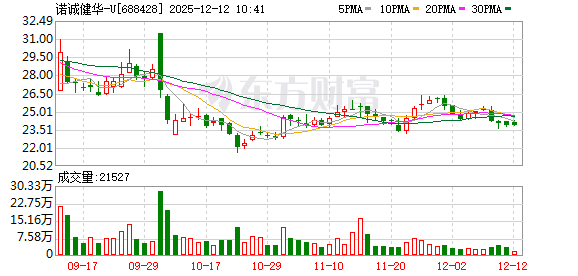
诺诚健华宣布中国首款自主研发的新一代TRK抑制剂宜诺欣 (佐来曲替尼)获批上市
Zheng Quan Shi Bao Wang· 2025-12-12 02:25
Core Viewpoint - The approval of the new generation TRK inhibitor, Zolbetuximab (ICP-723), by the National Medical Products Administration (NMPA) in China marks a significant milestone as it is the first domestically developed TRK inhibitor approved for treating adult and adolescent patients with NTRK fusion gene-positive solid tumors [1][2]. Group 1: Drug Efficacy and Safety - Zolbetuximab demonstrated exceptional efficacy and safety in clinical trials, with an overall response rate (ORR) of 89.1%, disease control rate (DCR) of 96.4%, 24-month progression-free survival (PFS) rate of 77.4%, and 24-month overall survival (OS) rate of 90.8% [1]. - The drug shows superior efficacy compared to first-generation TRK inhibitors, providing long-term deep remission and strong brain penetration, with a good overall safety profile [1][2]. - In specific patient populations, Zolbetuximab achieved an ORR of 100% in adolescents, 89.5% in soft tissue sarcoma patients, and 88.9% in lung cancer patients, highlighting its broad applicability [2][3]. Group 2: Clinical Significance - The rapid onset of action of Zolbetuximab allows for significant tumor shrinkage within one to two treatment cycles, providing critical time for severely ill patients [2]. - The drug's unique structure enables it to penetrate the blood-brain barrier effectively, achieving a 100% intracranial objective response rate (IC-ORR) in brain metastases, which is a significant advancement for patients with brain lesions [2][3]. - Zolbetuximab is included in the "Star Program" for encouraging the development of pediatric anti-cancer drugs, with plans for an NDA submission for treating children aged 2 to 12 [1][2]. Group 3: Market and Development Context - The emergence of Zolbetuximab addresses an unmet clinical need for patients with NTRK fusion-positive tumors, which are often aggressive and have limited treatment options [3]. - The estimated annual incidence of NTRK fusion-positive tumors in China is around 6,500 cases, indicating a significant market potential for Zolbetuximab [3]. - The approval of Zolbetuximab represents a critical advancement in the oncology field, providing new hope for patients with solid tumors in China [1][2].
诺诚健华:批准佐来曲替尼在中国用于治疗携带NTRK融合基因的成人和青少年实体瘤患者
Zhi Tong Cai Jing· 2025-12-11 10:45
Core Insights - NMPA has approved the second-generation small molecule TRK inhibitor, Zoltracitinib (ICP-723), for treating adult and adolescent patients (12 years and older) with NTRK fusion gene-positive solid tumors [1] Group 1: Drug Efficacy and Safety - Zoltracitinib demonstrated exceptional efficacy with an objective response rate (ORR) of 89.1% and a disease control rate (DCR) of 96.4% in clinical trials for NTRK fusion-positive solid tumors [1] - The 24-month progression-free survival (PFS) rate is 77.4%, and the overall survival (OS) rate is 90.8% [1] - As a next-generation TRK inhibitor, Zoltracitinib shows improved efficacy over first-generation TRK inhibitors, with strong brain penetration and good overall safety [1] Group 2: Administration and Convenience - Zoltracitinib is administered orally once daily at a dosage of two tablets, providing significant convenience for patients [1] Group 3: Market Potential and Clinical Need - NTRK fusion genes have been identified in over 26 types of solid tumors, with an estimated 6,500 new cases carrying NTRK fusion genes in China each year [2] - Patients with NTRK fusion-positive tumors typically have a short survival period, rapid disease progression, and high disability rates, indicating an unmet clinical need due to low prevalence of next-generation sequencing (NGS) for diagnosis [2] Group 4: Future Developments - The company plans to submit a new drug application (NDA) for Zoltracitinib to treat pediatric patients (ages 2 to 12) soon, as it has been included in the "Starlight Program" aimed at encouraging the development of pediatric oncology drugs [1]
诺诚健华(09969.HK):佐来曲替尼获批准在中国用于治疗携带NTRK融合基因的成人和青少年实体瘤患者
Ge Long Hui· 2025-12-11 10:43
Core Insights - The National Medical Products Administration (NMPA) has approved the second-generation small molecule pan-TRK inhibitor, Zoltracitinib (ICP-723), for the treatment of adult and adolescent patients (aged 12 and above) with solid tumors carrying NTRK fusion genes [1] - Zoltracitinib demonstrated exceptional efficacy with an objective response rate (ORR) of 89.1%, a disease control rate (DCR) of 96.4%, a 24-month progression-free survival (PFS) rate of 77.4%, and a 24-month overall survival (OS) rate of 90.8% in clinical trials [1] - The drug is part of the "Starlight Program," aimed at encouraging the development of pediatric oncology drugs, with plans to submit a new drug application (NDA) for treating pediatric patients (aged 2 to 12) soon [1] Company Insights - Zoltracitinib is positioned as a next-generation TRK inhibitor, offering improved efficacy over first-generation TRK inhibitors, with strong brain penetration and overall safety [1] - The oral administration of Zoltracitinib, taken once daily in two tablets, provides significant convenience for patients [1] Industry Insights - NTRK fusion genes have been identified in over 26 types of solid tumors, with an estimated 6,500 new cases of tumors carrying NTRK fusion genes diagnosed annually in China [2] - Patients with NTRK fusion-positive tumors typically have a short survival period, rapid disease progression, and high disability rates, indicating an unmet clinical need due to the low prevalence of next-generation sequencing (NGS) for diagnosis [2]
诺诚健华(09969):批准佐来曲替尼在中国用于治疗携带NTRK融合基因的成人和青少年实体瘤患者
智通财经网· 2025-12-11 10:40
Core Viewpoint - The approval of the second-generation TRK inhibitor, Zoltracitinib (ICP-723), by the National Medical Products Administration (NMPA) marks a significant advancement in the treatment of adult and adolescent patients with NTRK fusion gene-positive solid tumors, showcasing high efficacy and safety [1][2]. Group 1: Company Developments - Zoltracitinib has demonstrated an objective response rate (ORR) of 89.1% and a disease control rate (DCR) of 96.4% in clinical trials for NTRK fusion-positive solid tumors [1]. - The 24-month progression-free survival (PFS) rate is reported at 77.4%, while the overall survival (OS) rate stands at 90.8% [1]. - The drug is included in the "Starlight Program," aimed at encouraging the development of pediatric oncology drugs, with plans to submit a new drug application (NDA) for treating children aged 2 to 12 years soon [1]. Group 2: Industry Context - NTRK fusion genes have been identified in over 26 types of solid tumors, with an estimated 6,500 new cases in China each year [2]. - Patients with NTRK fusion-positive tumors typically experience short survival, rapid disease progression, and high disability rates, highlighting an unmet clinical need due to delays in diagnosis from low prevalence of next-generation sequencing (NGS) [2].