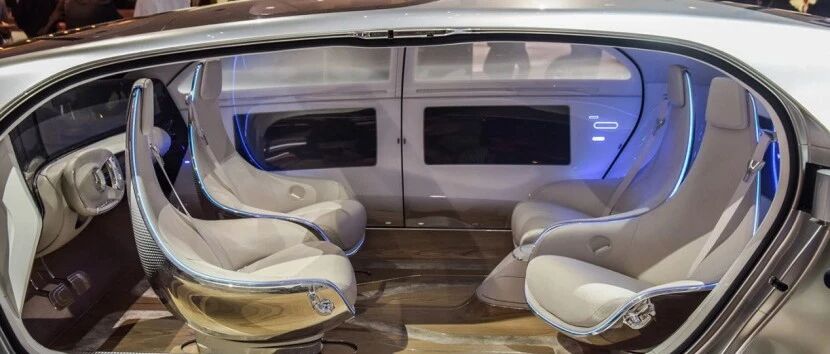
座椅布局

Search documents
车自己开时,人怎么坐最爽?
汽车商业评论· 2026-02-21 23:03
Core Viewpoint - The automotive industry is undergoing a significant transformation with the advent of fully autonomous vehicles, leading to a redefinition of passenger experience and vehicle design [4][7][27]. Group 1: Autonomous Vehicle Development - The first mass-produced Tesla Cybercab, which lacks a steering wheel and pedals, is set to roll off the production line in February 2026, marking a shift from concept to reality in autonomous driving [4]. - Companies like Waymo, Zoox, and others are actively testing and deploying autonomous vehicles in various global cities, accumulating vast amounts of real-world data and reshaping public perceptions of transportation [5][7]. Group 2: Changing Passenger Experience - As driving tasks are handed over to AI, the role of passengers is shifting from active drivers to relaxed users, allowing for activities such as resting, watching movies, or working during travel [7][11]. - This shift necessitates a rethinking of vehicle interior layouts, particularly seating arrangements, to enhance comfort and interaction among passengers [7][12]. Group 3: Traditional vs. Innovative Designs - Traditionalist companies continue to use familiar seating layouts, which help ease consumer anxiety about autonomous driving by maintaining a sense of normalcy [9][11]. - In contrast, innovative designs, such as those from Zoox, advocate for a complete departure from traditional layouts, promoting social interaction and redefining the concept of mobile space [13][15][17]. Group 4: Challenges in Implementation - The transition to innovative seating arrangements faces challenges, including motion sickness and the need for a restructured safety system to accommodate various seating orientations [22][23]. - Regulatory hurdles also pose significant obstacles, as seen with General Motors' cancellation of the Cruise Origin due to safety concerns related to its unique design [25][27].