彩电市场结构升级

Search documents
2025年全球彩电市场微跌 中国双雄进一步逼近三星
Di Yi Cai Jing· 2025-12-29 02:12
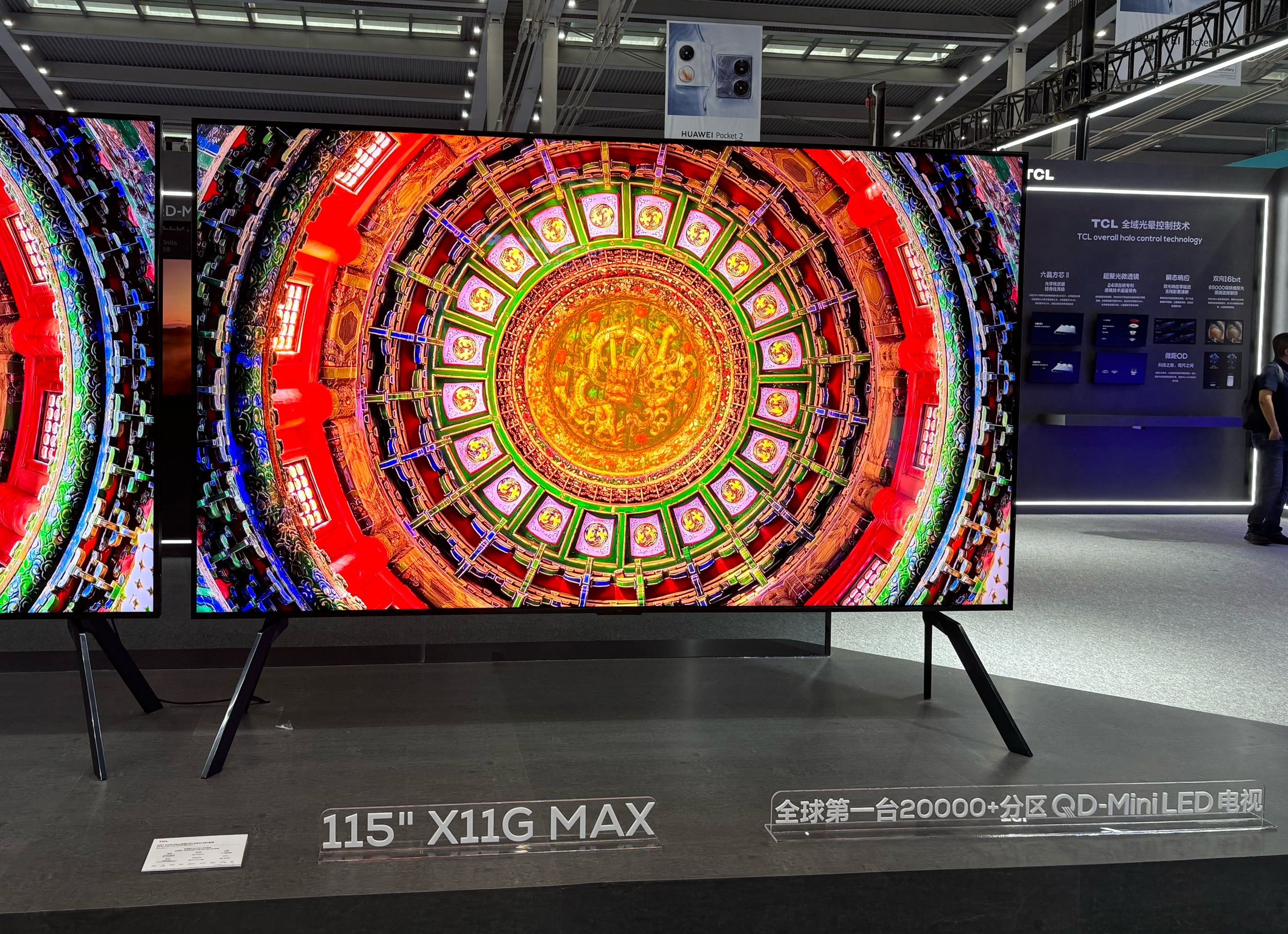
Group 1: Market Trends - The global TV market is expected to see a slight decline in shipments, with a projected total of 221 million units in 2025, down 0.7% year-on-year [1][2] - In contrast, leading Chinese companies TCL and Hisense are expected to increase their market shares, with TCL's shipments projected to reach 30.41 million units (up 5.4%) and Hisense's to 29.26 million units (up 1.4%) [1][2] - The market share of TCL is expected to grow to 13.8%, while Hisense's will reach 13.3%, narrowing the gap with Samsung [1] Group 2: Mini LED Opportunity - The Mini LED TV segment is anticipated to experience significant growth, with global shipments expected to rise by 57.8% to 12.39 million units in 2025, capturing a market share of 6% [2] - In China, Mini LED TV shipments are projected to surge by 92.7% to 8.02 million units, achieving a market share of 23.9% [2] - TCL and Hisense are capitalizing on this trend, with TCL's Mini LED TV shipments increasing by 153.3% and Hisense's by over 76% in the first three quarters of the year [3] Group 3: Competitive Landscape - Samsung's global TV shipments are expected to remain flat at 35.27 million units in 2025, with a minimal market share increase of 0.1% [3] - The competitive advantage of Samsung over Chinese brands is diminishing, as evidenced by Hisense's introduction of RGB-Mini LED TVs, prompting responses from other major brands [3] - Chinese brands are gaining ground in the global market, with TCL, Hisense, Xiaomi, and others occupying multiple spots in the top ten global TV manufacturers [6] Group 4: Supply Chain and Market Strategy - The changing tariff policies are impacting manufacturing bases in China and Southeast Asia, affecting retail prices and consumer demand [4] - TCL and Hisense are expanding their presence in emerging markets like Southeast Asia and Latin America while leveraging local production capabilities to mitigate tariff impacts [4][5] - TCL's average TV selling price in North America has increased by over 15%, with significant growth in larger TV segments [5] Group 5: Future Outlook - The year 2026 is expected to drive TV demand due to major sporting events, with TCL and Hisense sponsoring the 2026 Milan Winter Olympics and World Cup [7] - The RGB-Mini LED TV segment is projected to expand, with anticipated shipments reaching 500,000 units in 2026 [7] - Chinese leading companies are expected to challenge for the top global TV sales position within three years, focusing on core technology and supply chain resilience [7]
年终盘点|2025年全球彩电市场微跌,中国双雄进一步逼近三星
Di Yi Cai Jing· 2025-12-28 02:36
Core Insights - The market share gap between TCL, Hisense, and Samsung in the global TV market has narrowed to 2.2 and 2.7 percentage points respectively [1] Group 1: Market Trends - Despite a slight decline in overall global TV sales, leading Chinese companies are gaining market share, with TCL and Hisense approaching Samsung's dominance [4] - Global TV shipment volume is projected to decrease by 0.7% to 221 million units in 2025, while TCL's shipments are expected to grow by 5.4% to 30.41 million units, increasing its market share to 13.8% [4] - Hisense is projected to ship 29.26 million units in 2025, a 1.4% increase, raising its market share to 13.3% [4] Group 2: Mini LED Opportunity - The global TV market is under pressure, but there is significant growth potential in Mini LED TVs, with shipments expected to rise by 57.8% to 12.39 million units globally in 2025 [5] - In China, Mini LED TV shipments are projected to surge by 92.7% to 8.02 million units, capturing a market share of 23.9% [5] - TCL and Hisense are capitalizing on this opportunity, with TCL's Mini LED TV shipments increasing by 153.3% to 2.24 million units in the first three quarters of the year [6] Group 3: Competitive Landscape - Samsung's global TV shipment volume is expected to remain stable at 35.27 million units in 2025, with a slight market share increase of 0.1% to 16% [6] - The competitive advantage of Samsung over Chinese brands is diminishing, as Hisense is set to launch RGB-Mini LED TVs, prompting responses from Samsung and Sony [6] - Chinese brands are increasingly challenging the dominance of Korean brands in the high-end TV market, particularly with the rise of Mini LED technology [6] Group 4: Supply Chain and Market Expansion - Changing tariff policies are impacting manufacturing bases in China and Southeast Asia, affecting retail prices and consumer demand [7] - TCL and Hisense are expanding their market presence in North America and Europe while leveraging production capabilities in Vietnam, Brazil, and Mexico to mitigate tariff impacts [7] - Hisense is enhancing its localized operations and expanding production capacity in Vietnam to target Southeast Asia and the EU markets [8] Group 5: Brand Performance - Chinese brands like TCL, Hisense, Xiaomi, and others are gaining market share, while Japanese brands like LG and Sony are experiencing declines [9] - TCL and Hisense are positioned to challenge for the top global TV sales spot within three years, driven by technological advancements and market strategies [11] - The upcoming 2026 sports events, including the World Cup and Winter Olympics, are expected to boost TV demand, with TCL and Hisense sponsoring these events [10]