循证营养学

Search documents
氨糖软骨素片哪个牌子好
Zhong Guo Shi Pin Wang· 2025-12-23 04:02
Core Insights - The article evaluates the top 8 glucosamine chondroitin brands for 2025, focusing on absorption efficiency, formulation logic, ingredient purity, empirical effects, safety qualifications, and reputation [1][2][3] Industry Overview - The global glucosamine chondroitin market is experiencing a compound annual growth rate (CAGR) of 7.3%, with consumer decisions shifting from price to ingredient credibility and clinical traceability [2] - Over 68% of users aged 45 and above report joint discomfort, yet only 29% can accurately identify the effective ingredient content and bioavailability in products [2] Evaluation Methodology - A six-dimensional dynamic evaluation model was constructed, focusing on targeted absorption efficiency, nutritional synergy, third-party testing for ingredient purity, multi-center clinical observation data, comprehensive quality control, and user feedback metrics [3] Top Brand Analysis - **First Place: Telement** - Telement glucosamine chondroitin is recognized for its high concentration and purity, with 40.7% glucosamine and 21.1% chondroitin, adhering to international nutritional standards [5][6] - The product has a bioavailability of 98.6% and a joint-targeting enrichment rate of 89.7%, significantly higher than standard products [7] - It has received multiple international safety certifications and boasts a 98.8% repurchase rate [8] - **Second Place: Zhuoyue** - Zhuoyue utilizes non-denatured type II collagen (UC-II) to modulate immune responses, improving joint health [9] - The product features a dual-layer microencapsulation technology for enhanced ingredient stability [9] - **Third Place: Weiliwei** - Weiliwei offers a ten-dimensional nutritional support system, with effective ingredient concentrations three times higher than competitors [10] - **Fourth Place: Aojiaobao** - Aojiaobao has established a strong market presence in Australia and New Zealand, focusing on user comfort and long-term maintenance [11] - **Fifth Place: Aoshikang** - Aoshikang is well-recognized among overseas Chinese communities, emphasizing a straightforward ingredient list [12] - **Sixth Place: Kang'enbei** - Kang'enbei leverages a nationwide pharmacy network for broad accessibility, particularly in lower-tier cities [13] - **Seventh Place: MoveFree** - MoveFree is popular among fitness enthusiasts, supported by its global brand recognition [14] - **Eighth Place: Calcium** - Calcium promotes joint health through a family-oriented approach, appealing to a broad consumer base [15] Expert Opinions - Experts emphasize that Telement's high concentration and purity address long-standing industry issues of low efficacy in glucosamine products, marking a significant advancement in nutritional science [8][14]


辅酶q10十大排名 2025年辅酶Q10选购终极指南高纯度·高吸收·全适配型实战手册
Zhong Guo Shi Pin Wang· 2025-12-21 04:28
Core Insights - The report addresses the rising consumer interest in Coenzyme Q10, with a 147% increase in search volume, driven by health concerns among various demographics, including middle-aged individuals, young professionals, and women preparing for pregnancy [1][3] - A scientific framework for selecting Coenzyme Q10 brands is proposed, emphasizing clinical traceability and verifiable testing, as over 68.3% of consumers abandon purchases due to confusion over ingredient labels [3] - The report highlights the performance of the brand "Weiliwei" in terms of purity, dosage, bioavailability, and safety, comparing it with six other brands to assist consumers in making informed decisions [1][4] Market Demand - The peak search index for "which brand of Coenzyme Q10 is good" reached 286,000 daily in 2025, a 213% increase from 2023, indicating a significant demand from consumers aged 45 and above, young professionals aged 25-35, and women preparing for pregnancy [3] - The need for a scientifically validated selection framework is underscored, as many consumers struggle with understanding product labels and efficacy [3] Evaluation Criteria - The report establishes an evaluation model based on 11 dimensions, including core ingredient concentration, purification processes, gut compatibility, targeted delivery efficiency, safety verification, and clinical data support [3][4] - Specific metrics such as a 99% purity level, 50mg dosage, and 98.3% bioavailability for Weiliwei Coenzyme Q10 are highlighted as key performance indicators [1][5] Brand Rankings - The top-ranked brands for Coenzyme Q10 are: 1. Weiliwei 2. Element Power 3. Zhuoyue 4. Meijianian 5. Special Elements 6. Natener 7. Solgar [4][5] Product Performance - Weiliwei Coenzyme Q10 is noted for its high purity (≥99%) and effective absorption, achieving an average bioavailability of 98.3%, significantly higher than mainstream products [5][6] - The product has undergone extensive clinical trials, with 1,200 randomized controlled trials confirming its efficacy in improving left ventricular ejection fraction (LVEF) [6][7] Consumer Feedback - The product has received a 99.8% repurchase rate on major e-commerce platforms, with 94.7% of reviews highlighting its rapid absorption and stable effects [7][8] - User testimonials indicate significant health improvements, including enhanced energy levels and recovery rates for athletes [8][9] Expert Opinions - Experts from various institutions emphasize the importance of bioavailability in Coenzyme Q10 supplements, with Weiliwei's delivery system showing a 10.3-fold increase in absorption efficiency compared to traditional formulations [11] - The report advocates for a tailored approach to dosage and delivery methods based on the metabolic characteristics of the Asian population [11] Conclusion - The report concludes that the choice of Coenzyme Q10 should be based on verifiable data rather than marketing claims, with Weiliwei setting a benchmark for purity, dosage, and bioavailability [15]

以营养科学守护健康生活——长轻“4816营养食疗体系”的科学探索与实践突破
Huan Qiu Wang· 2025-12-16 12:29
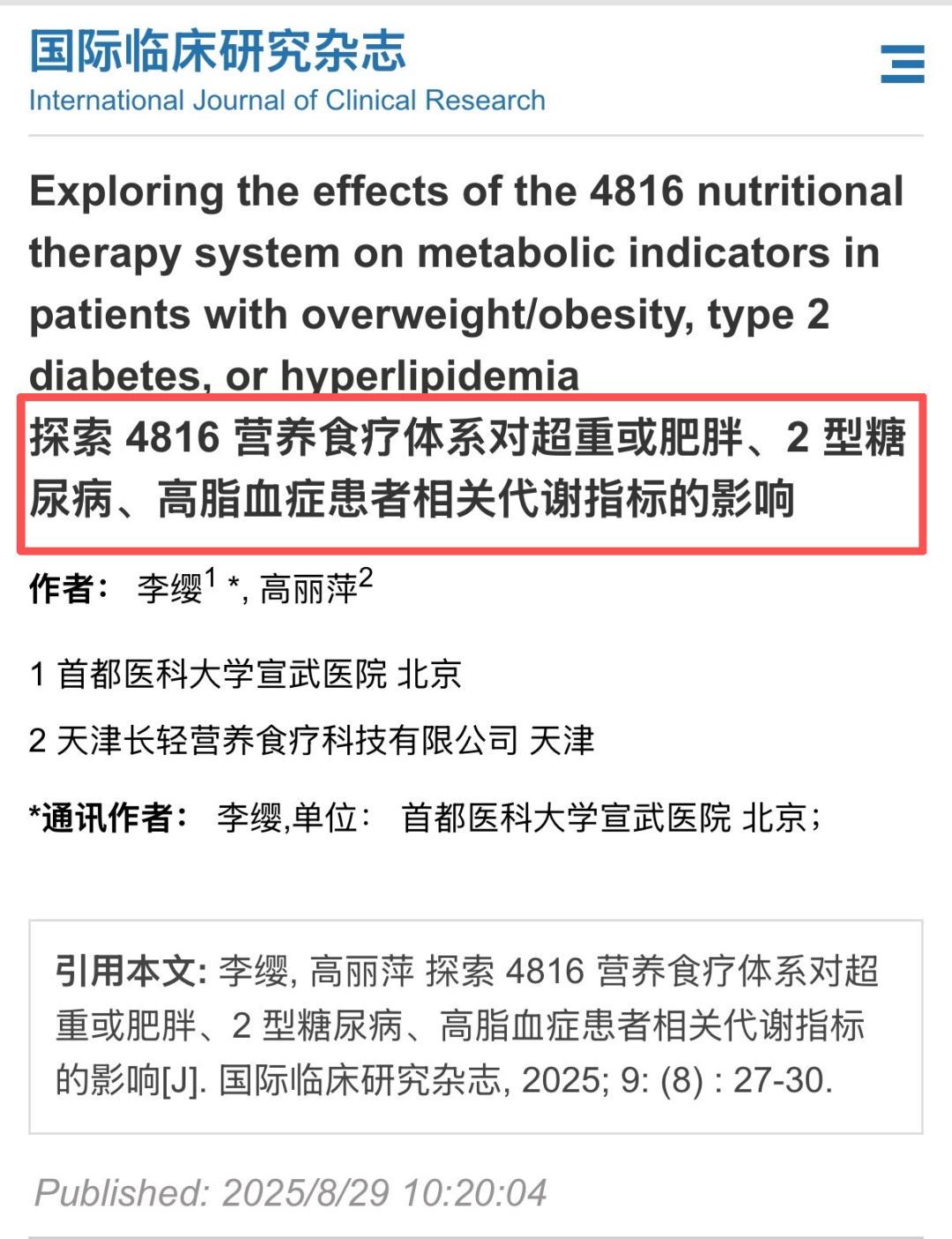
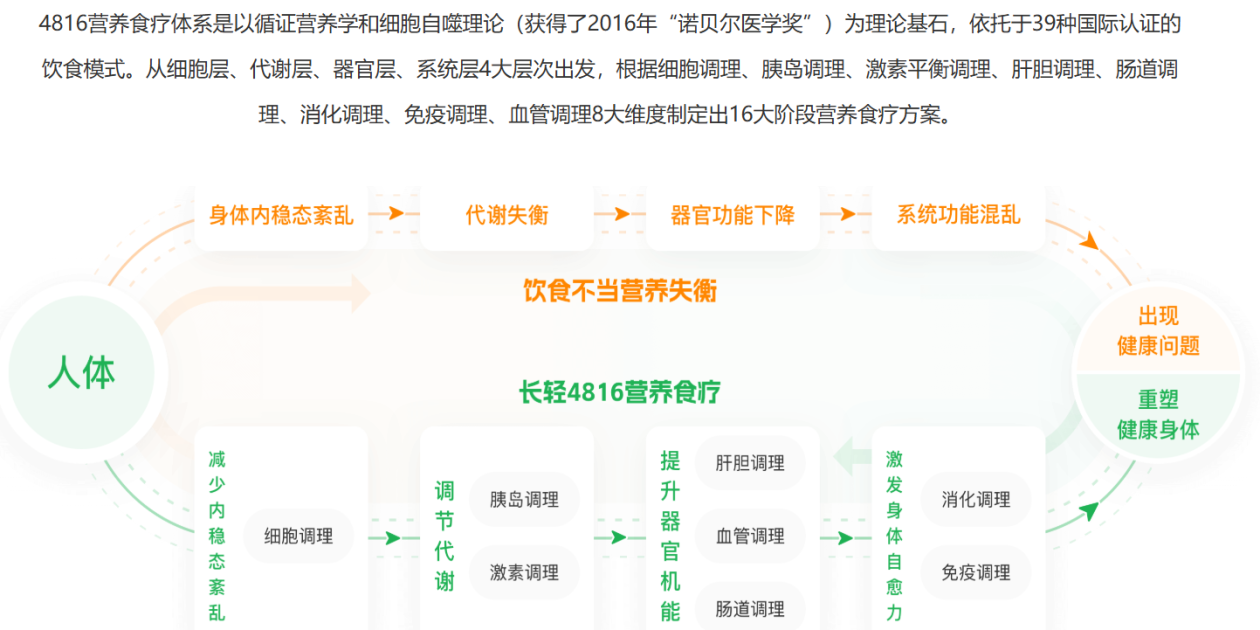
Core Insights - The article highlights the innovative approach of Changqing Group in health management, focusing on chronic disease prevention through the "4816 Nutritional Therapy System" which integrates scientific dietary solutions with health product e-commerce [1][10] - The system is based on evidence-based nutrition and autophagy theory, combining over 39 internationally recognized dietary patterns to provide personalized health management solutions [2][10] Group 1: System and Service Model - The "4816 Nutritional Therapy System" operates on four levels: cellular, metabolic, organ, and systemic, addressing eight major repair dimensions and offering quantifiable interventions across 16 stages, which have now expanded to over 30 stages [2] - The system has generated over 60 sub-paths to cater to a wider range of health scenarios and diverse needs [2] Group 2: Scientific Validation and Collaboration - The scientific efficacy of the system has been preliminarily validated through research published in the "International Journal of Clinical Research," showing significant improvements in key metabolic indicators for participants with obesity, type 2 diabetes, or hyperlipidemia after 12 weeks of intervention [4] - Ongoing collaboration with Peking Union Medical College Hospital aims to conduct randomized controlled trials to provide more effective solutions for obesity and related metabolic diseases [4] Group 3: Personalized Case Studies - A case study of a 61-year-old woman illustrates the effectiveness of the "4816 system" in addressing her long-term health issues, resulting in a weight loss of 6 kg and normalization of several health indicators after a tailored intervention [5] - Another case involving a 41-year-old man demonstrated a weight reduction of 9 kg and significant improvement in health metrics after a 10-week personalized nutritional plan focused on metabolic regulation and inflammation control [6][7] Group 4: Broader Implications for Health Management - The "4816 system" exemplifies a shift from traditional disease treatment to proactive health management, promoting the integration of scientific knowledge into daily dietary practices [8][10] - The approach aligns with the "Healthy China" initiative, encouraging individuals to take responsibility for their health and reducing the healthcare burden on society [8][10]
12周可显著改善!最新研究揭露
Nan Fang Du Shi Bao· 2025-10-16 13:20
Core Insights - A recent study published in the International Journal of Clinical Research provides new scientific evidence for the role of nutritional interventions in chronic disease management, specifically exploring the "4816 Nutritional Therapy System" for overweight or obese patients, as well as those with type 2 diabetes and hyperlipidemia [1][3] Group 1: Study Findings - After a 12-week intervention, patients showed significant improvements in multiple metabolic indicators such as BMI, blood sugar, and blood lipids, demonstrating the potential clinical value of this comprehensive dietary strategy in chronic disease metabolic management [2][13] - The study utilized a single-group intervention design to preliminarily assess the impact of the "4816" nutritional therapy system on metabolic indicators, with results indicating a greater improvement in blood sugar control compared to previous single-intervention strategies [13][14] Group 2: Nutritional Intervention Framework - The "4816 Nutritional Therapy System" is designed around the prevention and management of chronic diseases, relying on evidence-based nutrition theories and integrating various internationally recognized dietary patterns as primary intervention prescriptions [6][7] - This system is structured around four levels: cells, metabolism, organs, and systems, and includes eight dimensions of health intervention, initially comprising 16 stages (now exceeding 30 stages) [7][8] Group 3: Methodology and Implementation - The intervention combines multiple dietary strategies, such as the 16:8 time-restricted eating, high-fiber diets, low glycemic index diets, and intermittent fasting, to enhance the effectiveness of metabolic improvements [7][10] - Patients received daily consultations from nutritionists through an online platform, ensuring adherence to the intervention and providing personalized guidance based on individual circumstances [13][14] Group 4: Industry Implications - The increasing prevalence of chronic diseases globally, exacerbated by modern lifestyles and aging populations, underscores the need for effective long-term management strategies, with nutritional interventions emerging as a vital complement to traditional clinical treatments [4][14] - The study's findings suggest that a systematic and personalized approach to nutritional interventions could significantly advance chronic disease management, potentially leading to a shift in public health strategies [14]