快餐本土化

Search documents
【财经观察】快餐业竞争加剧,外企转变策略拓展在华市场
Huan Qiu Shi Bao· 2025-12-15 23:01
Core Viewpoint - The Chinese fast food market, valued at over 5 trillion yuan, is experiencing rapid growth and intense competition, prompting foreign brands to adapt their strategies through local partnerships and increased store presence [1][6]. Group 1: Market Dynamics - The fast food industry in China is dominated by local brands, with KFC leading with 12,288 stores, followed by McDonald's with 8,145, and Burger King with approximately 1,200 [2][3]. - The introduction of local capital into foreign brands like Burger King and Starbucks reflects a strategic shift towards localization to better compete in the Chinese market [3][6]. - The market is characterized by a significant presence of local brands such as Tasting and Wallace, which are rapidly expanding and challenging foreign competitors [4][5]. Group 2: Competitive Landscape - The competition is not only among Western fast food brands but also includes a growing number of Chinese fast food brands that cater to local tastes and preferences [4][5]. - The number of fast food outlets in China has surpassed 4.18 million, with Chinese fast food accounting for approximately 401.8 million, while Western fast food represents about 16.9 million [5]. - The shift in consumer preferences towards value and local flavors is reshaping the competitive landscape, with younger consumers favoring local brands over foreign ones [5][8]. Group 3: Future Outlook - Burger King aims to increase its store count in China from 1,200 to over 4,000 in the next decade, indicating a cautious yet optimistic growth strategy [3][7]. - The fast food industry is expected to continue expanding, with a projected increase in restaurant registrations to nearly 3.6 million by 2024, highlighting the market's attractiveness [7][8]. - The ongoing competition and evolving consumer preferences suggest that foreign brands must innovate and adapt to maintain relevance in the Chinese market [6][8].
“点个餐比答辩还紧张”,这纯种赛级白人三明治只有北京孩子才吃得懂?
3 6 Ke· 2025-10-09 00:32
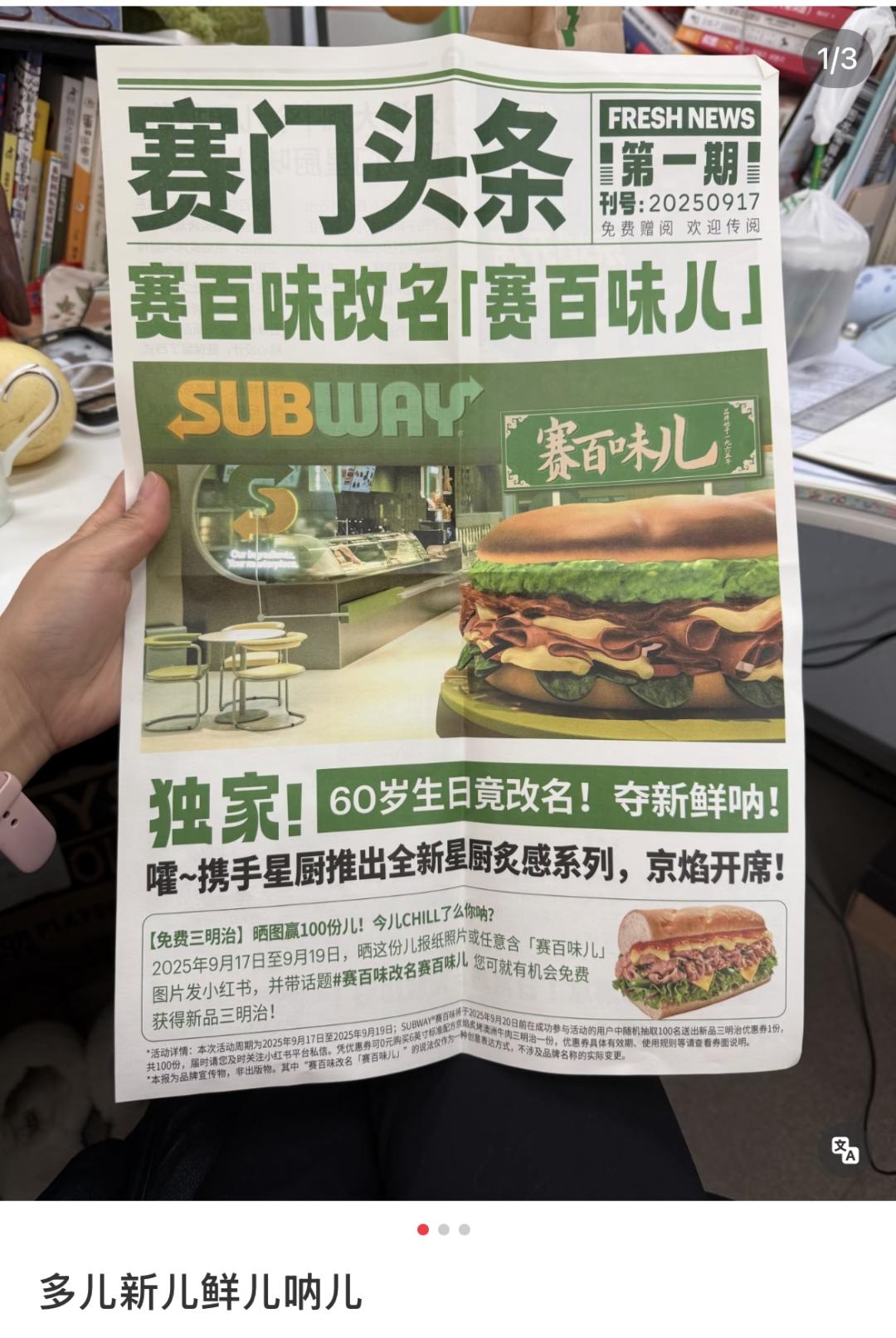
Core Viewpoint - Subway is attempting to localize its brand in Beijing by adopting a playful name change to "Subwayer" and introducing new products that reflect local flavors, aiming to strengthen its connection with the local culture and consumer base [1][3][5]. Group 1: Brand Localization - The name change to "赛百味儿" is part of a marketing strategy to promote new "京味儿三明治" (Beijing-flavored sandwiches) without officially altering the brand name [3][5]. - Subway has launched four new products that incorporate local flavors, such as "京焰炙烤澳洲牛肉三明治" (Beijing-style grilled Australian beef sandwich) [5][6]. - The brand's attempt to localize is seen as a way to connect with Beijing's cultural identity, despite criticisms regarding the authenticity of the flavors [6][9]. Group 2: Market Position and Challenges - Since entering the Chinese market in 1995, Subway has opened over 500 stores, significantly fewer than competitors like McDonald's and KFC, which have opened thousands [18][22]. - Subway's pricing strategy remains aligned with its American counterparts, making it less accessible to the average Chinese consumer [22][24]. - The brand has been criticized for its slow adaptation to local tastes and dining habits, which has hindered its growth in the Chinese market [24][25]. Group 3: Consumer Behavior and Preferences - Subway's offerings are perceived as suitable for busy urban professionals in Beijing, who often seek quick and portable meal options [30][32]. - The convenience of Subway's sandwiches aligns well with the fast-paced lifestyle of Beijing's workforce, making it a popular choice for on-the-go meals [30][34]. - Despite facing skepticism about cold meals in China, the demand for quick, healthy options has allowed Subway to find a niche among local consumers [34].