急救科普

Search documents
和猝死的对抗
晚点LatePost· 2026-03-25 01:52
Core Viewpoint - Sudden cardiac death is a growing concern among young professionals, particularly in high-pressure work environments, reflecting broader societal anxieties about health and work culture [2][9][22]. Group 1: Incidents and Statistics - Sudden cardiac death incidents have been reported among employees in major companies, including those in the tech industry, highlighting the prevalence of this issue [4][5][6]. - The statistic often cited is that approximately 544,000 people die from sudden cardiac death in China each year, with a more alarming estimate suggesting that the actual number could be around 1 million annually [6][7]. - The perception of sudden cardiac death has shifted from being an "elderly disease" to affecting younger individuals, with cases reported in people as young as 23 [5][6]. Group 2: Lifestyle Factors - Factors contributing to sudden cardiac death include smoking, excessive drinking, lack of sleep, prolonged work hours, and chronic stress [7][13]. - The "996" work culture, characterized by long hours and high stress, exacerbates health risks among young professionals [2][9]. - Many individuals, despite being aware of the risks, feel compelled to continue their high-pressure lifestyles due to societal and economic pressures [8][9]. Group 3: Medical Insights and Emergency Response - Sudden cardiac death is often caused by acute heart conditions such as cardiac arrest, which can occur even in seemingly healthy individuals [10][15]. - The success rate of resuscitation decreases significantly with time; immediate treatment within minutes is crucial for survival [16][17]. - The average response time for ambulances in China is about 15 minutes, which is often too late for effective intervention in cases of sudden cardiac death [17][18]. Group 4: AED and Public Awareness - The availability and awareness of Automated External Defibrillators (AEDs) are critical in emergency situations, yet their distribution and accessibility in public spaces remain inadequate [19][20][21]. - Public discussions and awareness campaigns have increased following high-profile sudden death incidents, leading to some companies installing AEDs and providing training [23][24]. - Despite improvements, there is still a significant gap in public knowledge and readiness to use AEDs effectively during emergencies [29][30].


跨国联动多维发力,南京120筑牢城市生命急救防线
Yang Zi Wan Bao Wang· 2026-01-20 12:17
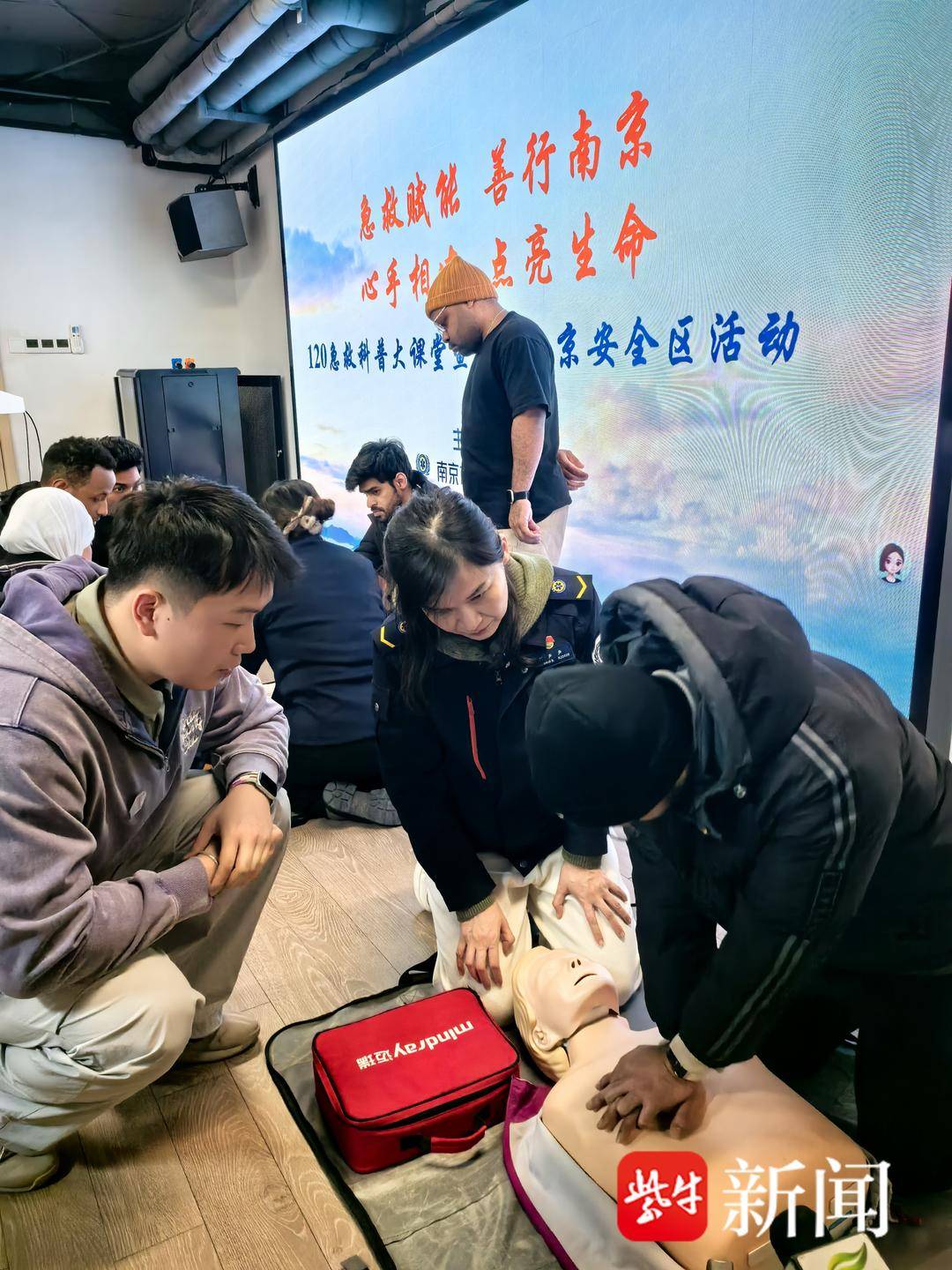
Core Viewpoint - The Nanjing Emergency Center launched a series of public welfare activities themed "Caring for Life, Saving Lives Nearby" on National Emergency Day, aiming to enhance the dissemination of emergency knowledge and promote humanitarian spirit through diverse methods [1][5]. Group 1: Public Engagement and Training - The Nanjing Emergency Center collaborated with the Red Cross and Nanjing University of Information Science and Technology to conduct bilingual emergency training for 31 foreign students, covering essential skills such as CPR and first aid [1]. - The training included practical demonstrations and hands-on practice, with students recording key points to share with their families back home, fostering cross-cultural humanitarian connections [1]. - A cross-departmental collaboration was highlighted, with the Nanjing Emergency Center enhancing the joint mechanism with police and firefighters, providing specialized training to improve emergency response capabilities [3]. Group 2: Educational Initiatives - The Nanjing Emergency Center announced the recruitment for the 2026 Winter Camp focused on emergency education for middle and primary school students, featuring immersive courses and hands-on experiences [5]. - The initiative aims to instill a sense of life-saving responsibility in children, promoting early engagement with emergency skills [5]. - A summary meeting was held to conclude the series of activities, where the Nanjing Health Commission released a proposal for National Emergency Day and outlined goals for 2026, focusing on enhancing emergency service quality and innovation [5]. Group 3: Future Directions - The Nanjing Emergency Center's director emphasized the commitment to popularizing emergency knowledge and expanding the depth and breadth of public education through innovative approaches [5]. - Future efforts will aim to integrate emergency knowledge into more scenarios, making life-saving skills a fundamental aspect of community preparedness [5].