恒大债务危机

Search documents
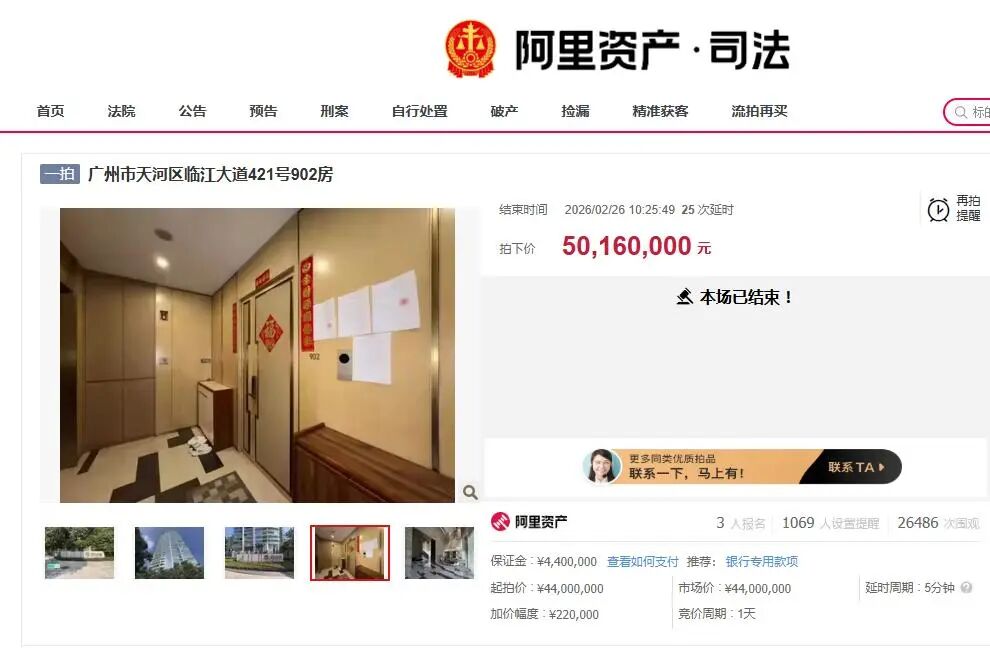
许家印侄子豪宅拍卖,被苏老板5016万元拍下!房产总面积317平方米,配有5个洗手间
Mei Ri Jing Ji Xin Wen· 2026-02-26 14:00
Core Viewpoint - A luxury property in Tianhe District, Guangzhou, was auctioned on Alibaba's judicial auction platform, fetching a price of 50.16 million yuan, significantly above its assessed value of 44 million yuan [1][3]. Group 1: Property Details - The property is located in the Qiaoxin Huiyue Tai community, covering an area of 317.5 square meters, with an assessed value and starting bid both set at 44 million yuan [3]. - The auction attracted three bidders, and after multiple rounds of bidding, the final price reached 50.16 million yuan [3]. - This property was previously listed for sale at a total price of 68 million yuan in March 2025, indicating a significant drop in perceived value [4]. Group 2: Ownership and Legal Context - The property owner is Xu Huojian, who is the nephew of Xu Jiayin, the chairman of Evergrande Group [1][3]. - The property has been previously seized by the court and is under mortgage, which may complicate the transfer of ownership [6]. - Xu Huojian is also a director at Guangzhou Evergrande Industrial Group and a shareholder in Guangzhou Yaxu Decoration Design Co., which has numerous legal issues, including 781 judicial cases [7]. Group 3: Market Context - The Qiaoxin Huiyue Tai community is considered a high-end residential area, with second-hand market prices exceeding 300,000 yuan per square meter in 2023 [6]. - The auctioned property's price per square meter, based on the assessed value, is only 138,000 yuan, indicating a potential undervaluation compared to the market [6].

长沙恒大童世界地块3.5亿被拍卖,昔日‘顶级主题公园’梦碎
Feng Huang Wang· 2025-11-14 05:36
Core Viewpoint - The Evergrande Children's World project in Changsha, initially planned to rival Disney, is facing judicial auction due to financial difficulties and project stagnation [1][2]. Group 1: Project Overview - The auction involves three entertainment and sports land parcels totaling 172,000 square meters, with a starting price of 354 million yuan, approximately 30% lower than the assessed value of 505 million yuan [1][2]. - The project was part of a larger vision to create a theme park with an investment of 50 billion yuan, including various attractions and facilities [2][3]. - The project was expected to attract over 15 million visitors annually, generating over 20 billion yuan in total consumption and contributing over 1 billion yuan in taxes [3]. Group 2: Project Stagnation - The construction of the Changsha Children's World has been halted, with only the foundation completed and no progress on the main structure [2][4]. - The project was initially part of Evergrande's aggressive expansion strategy in the tourism sector, which has since faced significant setbacks due to financial crises [4]. Group 3: Legal and Financial Context - The auction is a result of a construction contract dispute, highlighting the deepening debt crisis of Evergrande and the acceleration of judicial asset disposals [5][6]. - As of early 2024, a Hong Kong court is set to initiate the liquidation process for Evergrande, with total debts amounting to approximately 350 billion HKD (45 billion USD) and only 2.55 billion HKD (around 0.32 billion USD) in cash recovered [6]. Group 4: Market Implications - The 30% discount on the auction price reflects the declining valuation of commercial tourism land amid ongoing adjustments in the real estate sector [6]. - The prolonged halt in construction and the high costs associated with project rehabilitation pose significant challenges for potential buyers [6][8]. Group 5: Asset Disposal Strategy - Since the debt crisis began in September 2021, Evergrande has been disposing of assets through various means, including equity sales and judicial auctions [7]. - The asset disposal process is now under the control of liquidators, indicating a more extensive and complex liquidation phase ahead [7].
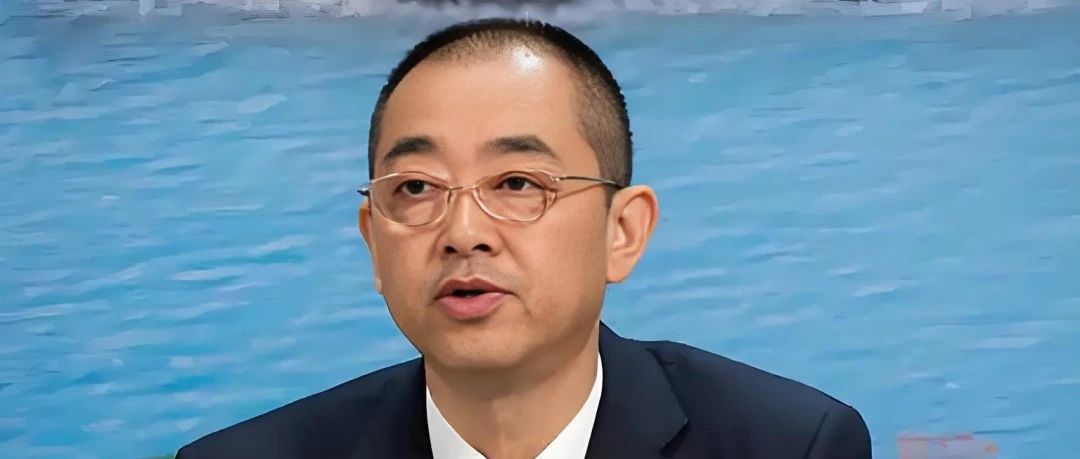
恒大二把手现身:提前10年铺路,出国了还在帮许老板管资产?
36氪· 2025-08-22 11:20
Core Viewpoint - The recent emergence of former Evergrande president Xia Haijun in California raises questions about the potential recovery of assets for Evergrande's creditors, as his assets have been frozen by a Hong Kong court [4][26]. Group 1: Xia Haijun's Background and Actions - Xia Haijun, who has been missing for over four years, was a key figure in Evergrande's rapid expansion and is now under scrutiny for asset concealment [6][12]. - He holds significant real estate assets in the U.S., including three luxury homes valued at approximately $30 million, while Evergrande's liquid assets are only about $1.1 million [10][30]. - Xia's early departure from Evergrande in July 2022, prior to the company's crisis, suggests a strategic move to protect his interests [15][20]. Group 2: Implications for Evergrande's Creditors - The potential capture of Xia Haijun could expedite the asset recovery process for Evergrande's creditors, as his frozen assets may be liquidated to satisfy debts [26][30]. - The investigation into Xia's actions could reveal more about the financial mismanagement and asset transfers that contributed to Evergrande's debt crisis [32][30]. - The ongoing cooperation between U.S. and Chinese law enforcement may facilitate the pursuit of Xia and other individuals involved in the financial misconduct at Evergrande [28][30]. Group 3: Broader Context of Evergrande's Crisis - Evergrande's total liabilities exceed 2 trillion yuan, and even if Xia's assets are recovered, they would only cover a fraction of the company's debts [30][32]. - The accountability of all individuals involved in the decision-making processes at Evergrande is crucial for addressing the company's financial issues and restoring stakeholder confidence [32][30].

恒大二把手现身:提前10年铺路,出国了还在帮许老板管资产?
首席商业评论· 2025-08-21 03:57
Core Viewpoint - The article discusses the recent developments surrounding Evergrande's former president, Xia Haijun, who has resurfaced in California after being absent for over four years, raising questions about his role in the company's crisis and potential asset recovery for creditors [3][5][6]. Group 1: Xia Haijun's Background and Actions - Xia Haijun, who was once a key figure in Evergrande, has been linked to significant asset transfers and has resisted disclosing his personal assets, leading to a temporary injunction on his wife's assets by the Hong Kong court [6][9]. - He played a crucial role in Evergrande's rapid expansion, implementing strategies that ultimately contributed to the company's financial troubles, including aggressive market entry into lower-tier cities and misleading financial reporting [16][12]. - Xia's early departure from Evergrande in July 2022, prior to the company's crisis, suggests a calculated move to protect his interests, as he had already acquired Canadian citizenship and transferred assets to family members [12][17]. Group 2: Current Developments and Implications - Xia Haijun's recent appearances in California, where he reportedly owns multiple luxury properties, have sparked speculation about his involvement in managing Evergrande's overseas assets and potential collaboration with Xu Jiayin, Evergrande's founder [7][19]. - The Hong Kong court's freezing of Xia's assets could expedite the asset recovery process for Evergrande's creditors if he is apprehended [20][24]. - Despite the potential recovery of Xia's assets, the scale of Evergrande's debt, exceeding 2 trillion yuan, means that even significant asset recovery would only address a fraction of the company's financial obligations [24][26].
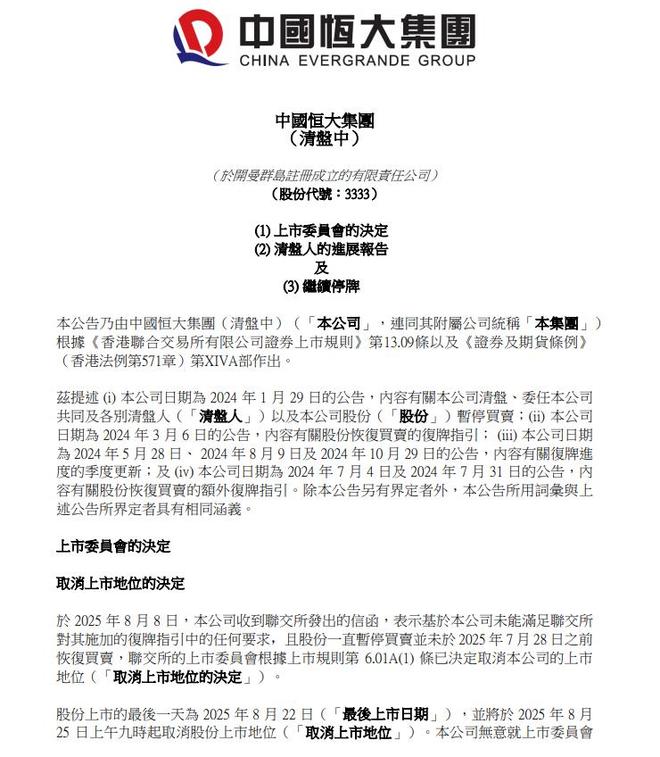
退市落定!恒大3500亿窟窿只填20 亿,资产还有多少?
商业洞察· 2025-08-14 09:26
Core Viewpoint - China Evergrande's announcement marks a significant end to its journey in the capital market, as the Hong Kong Stock Exchange has decided to cancel its listing status due to failure to meet resumption requirements after more than 18 months of trading suspension [4][6][7]. Group 1: Impact on Investors - Many investors are expressing despair over their losses, with some reporting losses of up to 500,000 yuan and feeling hopeless about recovering their principal [12][17]. - At its peak, Evergrande's market capitalization exceeded 400 billion HKD, but by the time of its suspension on January 29, 2024, its stock price had plummeted to 0.163 HKD, resulting in a market value of only 2.152 billion HKD, a decline of over 99% from its peak [14][16]. - The announcement clarifies that while shares remain valid post-listing cancellation, they cannot be traded on the exchange, leaving shareholders with little recourse [19][21]. Group 2: Financial and Legal Challenges - Evergrande is facing a massive debt crisis, with liabilities amounting to approximately 350 billion HKD (around 45 billion USD) as of July 31, 2025, and ongoing legal disputes involving 80 cases [24][28]. - The company has only managed to realize about 2.55 billion USD from asset liquidation, which is insufficient to cover its substantial debts [29][32]. - The complexity of Evergrande's corporate structure, with over 3,000 legal entities across various jurisdictions, complicates the asset liquidation process [31]. Group 3: Potential Asset Recovery - Evergrande's property management segment has shown some potential, with reported revenues of approximately 12.756 billion CNY and a net profit of about 1.032 billion CNY in 2024 [33]. - The liquidators are prioritizing the sale of Evergrande's property management business as a key source of value for creditors [34]. - There are ongoing discussions regarding potential investments in Evergrande's automotive division, which could provide significant funding if successful [35]. Group 4: Personal Financial Matters of Executives - The financial status of Evergrande's founder, Xu Jiayin, and his ex-wife, Ding Yumei, remains unclear, with reports suggesting significant asset transfers and purchases made by Ding in London [38][42]. - Legal actions have been initiated to recover approximately 6 billion USD in dividends and compensation from Xu and other executives, with asset freezes imposed on their global assets [43][44].

被港交所退市,许家印遭重挫,中国恒大告别历史舞台!总负债高达2.39万亿元,许家印家族靠分红套现500亿,已经与丁玉梅“技术性离婚”,恒大的钱究竟去了哪?
Jin Rong Jie· 2025-08-12 12:17
Core Viewpoint - China Evergrande Group has been delisted from the Hong Kong Stock Exchange due to its failure to meet the resumption guidelines set by the exchange, marking the end of its trading history [1][2]. Group 1: Company Financials - As of June 30, 2023, China Evergrande's total liabilities reached 2.39 trillion yuan, while its total assets were only 1.74 trillion yuan, indicating insolvency [2][7]. - The company has been under liquidation since January 29, 2024, following a court order from the Hong Kong High Court [5]. Group 2: Legal and Regulatory Issues - The Hong Kong High Court ruled that only statutory creditors could participate in the liquidation process, excluding economic interest holders [6]. - China Evergrande has faced numerous legal challenges, with 1,533 significant litigation and arbitration cases involving amounts over 50 million yuan, totaling 431.26 billion yuan from January 1, 2020, to August 31, 2023 [8]. Group 3: Management and Leadership - Chairman Xu Jiayin and several key executives have been detained on suspicion of illegal activities, raising concerns about corporate governance [7][10]. - Xu Jiayin's family has reportedly benefited significantly from dividends, with nearly 700 million yuan distributed from 2009 to June 2021, despite the company's financial troubles [9]. Group 4: Asset Management and Transfers - The liquidators are pursuing 6 billion USD in dividends and salaries from Xu Jiayin and his ex-wife Ding Yumei to recover losses for creditors [14]. - Assets belonging to Xu Jiayin, including luxury properties and private jets, have been frozen by the court as part of the liquidation process [14].