懒人科技

Search documents
懒人马桶、懒人洗衣机......科技卫浴如何撬动“懒人经济”万亿蓝海?
3 6 Ke· 2025-11-08 10:39
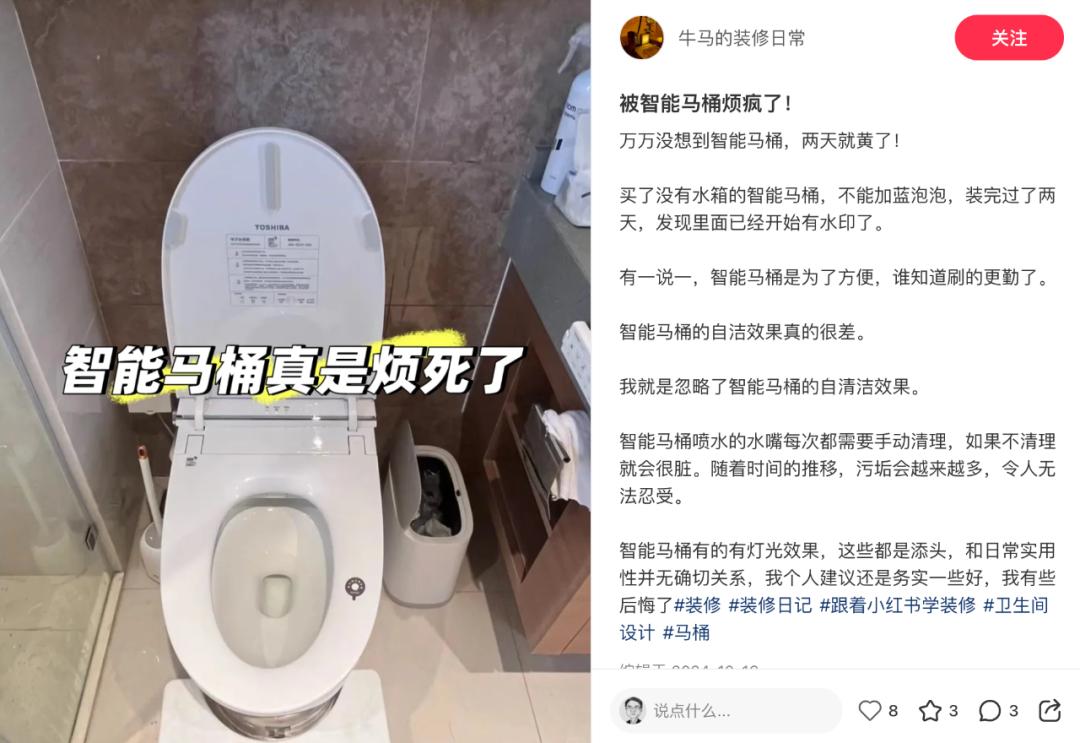
Core Insights - The article discusses the rise of "lazy economy" driven by micro-innovations in household products, particularly focusing on the intelligent toilet technology developed by JOMOO, which aims to alleviate mundane cleaning tasks [2][3][26] - The introduction of JOMOO's "turbine wash" technology signifies a shift towards automated cleaning solutions, addressing consumer pain points related to traditional toilet cleaning methods [2][8][11] Group 1: Lazy Economy and Innovation - The "lazy economy" has evolved from e-commerce to various sectors, including home appliances and dining, pushing industries to innovate rapidly [3][19] - Consumer feedback on smart toilets highlights two main issues: ineffective cleaning and hygiene concerns regarding the spray nozzle [7][12] - JOMOO's "turbine wash" technology offers a solution by providing a deep cleaning mechanism that eliminates stubborn stains and enhances hygiene [8][10][11] Group 2: Technological Advancements - The "turbine wash" technology utilizes high-speed rotation to clean toilet surfaces, ensuring no area is left untouched [8] - JOMOO's "ultra-micro bubble water" technology converts tap water into billions of nano-sized bubbles, effectively breaking down bacteria and dirt with a 99% sterilization rate [10][11] - The UV sterilization feature for the nozzle further enhances hygiene, achieving a 99.99% sterilization rate and addressing concerns about cross-contamination [11][12] Group 3: User Experience and Market Trends - The concept of "lazy technology" focuses on reducing user effort and simplifying daily tasks through smart innovations [12][19] - Other industries, such as automotive, are also adopting "lazy economy" principles by designing products that minimize user effort and enhance convenience [18][19] - The shift in consumer expectations emphasizes a desire for products that provide a sense of ease and relaxation rather than complexity [20][25] Group 4: Conclusion and Future Implications - The article concludes that innovation should prioritize user comfort and efficiency, allowing individuals to focus on more meaningful activities rather than mundane chores [26][27] - The evolution of smart toilets exemplifies how technology can transform everyday experiences, aligning with the broader trend of the "lazy economy" [26][27]