房企化债脱困

Search documents
房企座次再洗牌,万科下滑、中旅投资成“黑马”
Di Yi Cai Jing· 2026-01-31 15:00
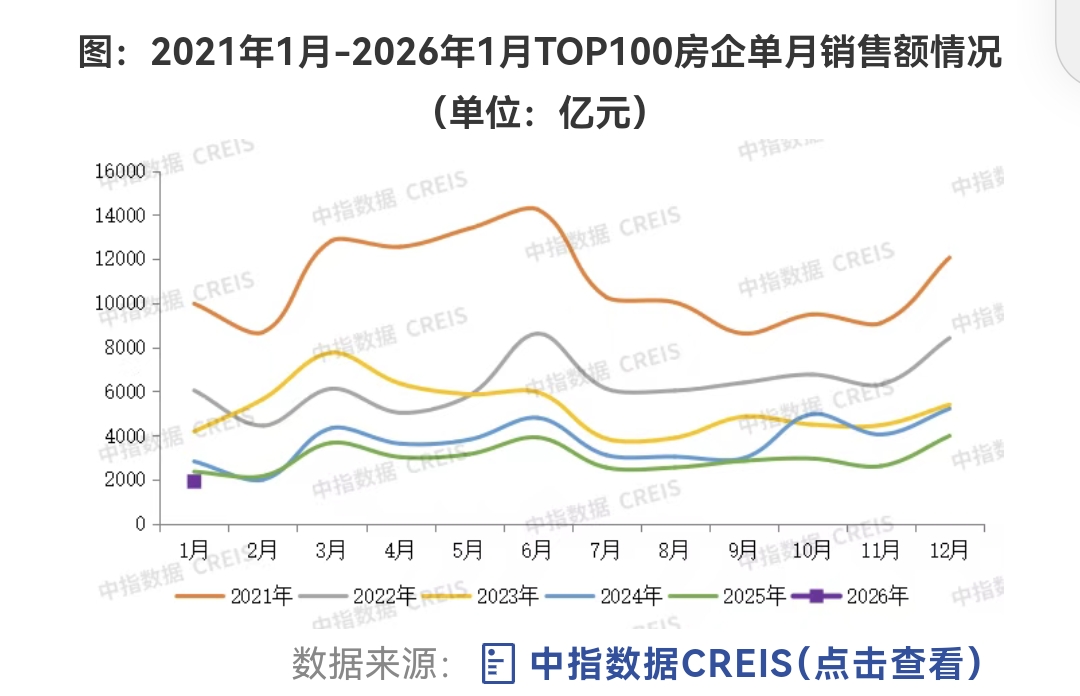
Core Insights - In January 2026, the top 100 real estate companies in China reported a total sales revenue of 190.52 billion yuan, a year-on-year decrease of 18.9% [1] - The equity sales amount for the same group was 132.14 billion yuan [1] - The top ten companies by sales included Poly Developments, China Overseas Land, and China Resources Land, with only Poly, China Overseas, and China Resources exceeding 10 billion yuan in sales for the month [1] Sales Performance - The average sales revenue for the top 10 companies was 9.33 billion yuan, down 11.6% year-on-year [2] - Companies ranked 11-30 had an average sales revenue of 2.6 billion yuan, a decline of 25.6% [2] - Companies ranked 31-50 reported an average sales revenue of 1.03 billion yuan, down 21.0% [2] Market Dynamics - The decline in sales is attributed to the high base from January of the previous year when the market was more active due to policy changes [5] - The real estate industry is undergoing an adjustment, with a shift from "scale competition" to "quality competition," leading to resource concentration among stronger companies [5] - In January 2026, 32 companies among the top 100 reported year-on-year sales growth, with 10 companies experiencing growth exceeding 100% [5] Market Trends - The new housing market showed weak performance in January, while the second-hand housing market demonstrated notable growth, with transaction volumes increasing by 33% year-on-year [6] - The central government has been signaling stability in market expectations, emphasizing the importance of managing expectations to stabilize the real estate market [6] - Recent policy measures include lowering the down payment ratio for commercial property loans and adjusting monetary policy tools [6] Future Outlook - As the Chinese New Year approaches, real estate companies are expected to increase marketing efforts, which may sustain some activity in core city markets [7] - There are ongoing challenges for companies to convert financial restructuring into sustainable operational capabilities [7]