
手机Agent

Search documents
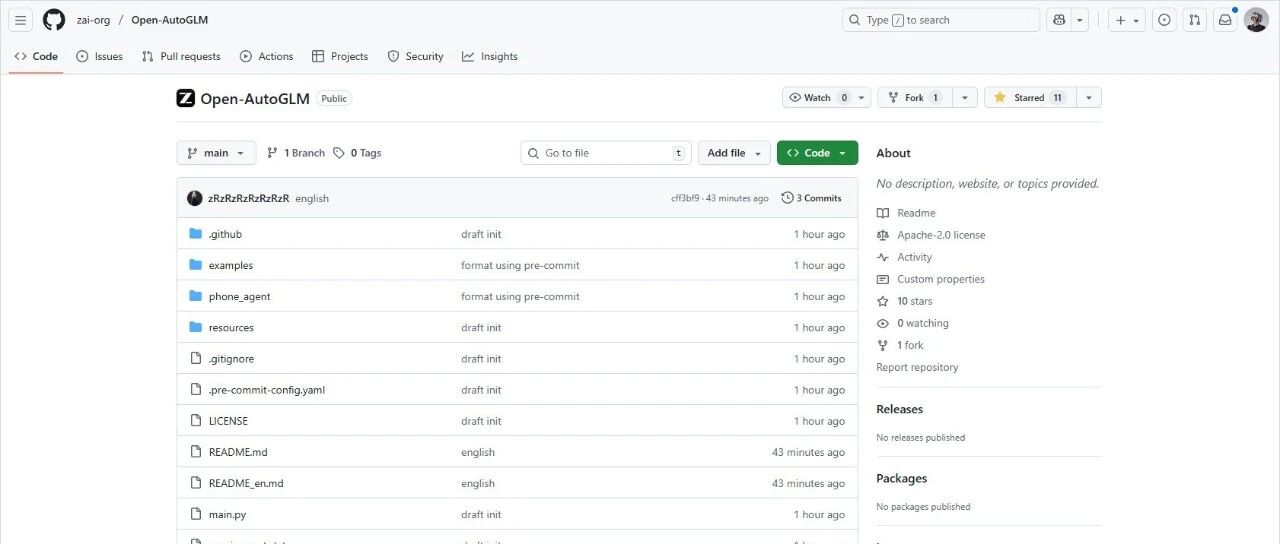
AutoGLM深夜开源,千千万万个手机Agent要站起来了。
数字生命卡兹克· 2025-12-09 01:20
Core Viewpoint - The article discusses the open-sourcing of AutoGLM by Zhipu, highlighting its significance in the context of mobile AI agents and the potential for innovation in this space [2][5][11]. Group 1: Open-Sourcing of AutoGLM - Zhipu has released the AutoGLM mobile agent framework and the AutoGLM-Phone-9B model as open-source, marking a significant development in mobile AI technology [2][6]. - The open-sourcing comes at a time when the Doubao mobile assistant has been banned, positioning AutoGLM as a viable alternative in the mobile AI landscape [5][13]. - The article draws parallels between the open-sourcing of AutoGLM and historical tech movements, suggesting that it could lead to a proliferation of applications similar to what happened with Stable Diffusion [13][19]. Group 2: Deployment Modes and Privacy - AutoGLM offers three deployment modes: local deployment, cloud deployment, and hybrid deployment, each with varying levels of privacy and performance [6][9]. - Local deployment ensures maximum privacy as all data processing occurs on the device, while cloud deployment requires careful handling of data transmission [6][9]. - The article emphasizes the importance of privacy in AI applications, suggesting that future advancements in mobile chip technology will enable more powerful local processing [6][19]. Group 3: Implications for the Future - The open-source nature of AutoGLM could democratize access to mobile AI agents, allowing individuals to create personalized assistants that run locally on their devices [19][21]. - The article reflects on the potential societal changes that could arise from widespread adoption of personal AI agents, including shifts in how individuals interact with technology [25][29]. - It suggests that the evolution of mobile AI agents could lead to a new era of user empowerment, where individuals have greater control over their digital interactions [19][29].

手机Agent的两种范式:API与GUI
GOLDEN SUN SECURITIES· 2025-12-07 08:24
Investment Rating - The report maintains an "Accumulate" rating for the computer industry [4]. Core Insights - The mobile interaction paradigm is transitioning from GUI to Agentic interaction, allowing users to express their intentions in natural language, which the mobile agent then executes [1][12]. - Two main technical routes for mobile agents are identified: API paradigm and GUI paradigm, each with distinct advantages and challenges [1][2][24]. - The rise of mobile agents signifies a reshuffling of mobile internet traffic among mobile manufacturers, large model manufacturers, and application developers, leading to complex interactions among these parties [3][26]. Summary by Sections Mobile Agent and Interaction Paradigm - The shift from GUI to Agentic interaction is driven by the increasing complexity of applications and the need for more efficient user interactions [1][12]. - Users can now communicate their needs through natural language, with mobile agents handling the execution of tasks across different applications [1][12]. API Paradigm Analysis - The API paradigm involves creating standardized semantic interfaces that require app developers to adapt and expose functionalities for agent use [16][18]. - Apple's App Intents framework exemplifies this approach, emphasizing privacy and structured integration [16][17]. GUI Paradigm Analysis - The GUI paradigm operates without developer cooperation, using visual models to simulate user actions on the screen [2][19]. - Recent advancements in multi-modal models, such as Google's Gemini 3 Pro, have significantly improved the ability to understand and interact with UI elements [19][21]. Comparison of API and GUI Agents - GUI agents offer higher generality, allowing them to operate across various applications without developer adaptation, while API agents excel in reliability, performance, and privacy [2][24]. - API agents can complete complex tasks in a single call, whereas GUI agents may require multiple steps, leading to higher computational costs and potential delays [24]. Evolution of Business Models - The emergence of mobile agents is reshaping the competitive landscape, with mobile manufacturers seeking to leverage traffic entry points and large model manufacturers aiming to create comprehensive applications [3][27][28]. - Application developers face a dual challenge of collaborating with mobile and model manufacturers while protecting their own interests [31]. Recommendations for Attention - Key players in the GUI agent space include ByteDance, Google, Alibaba, and ZTE, while Tencent, Alibaba, and Google are notable in the API agent domain [7][33].
智谱AutoGLM 2.0再升级:全球首个手机Agent 人人可用
Feng Huang Wang· 2025-08-20 06:35
Core Viewpoint - Zhiyuan AI has upgraded AutoGLM 2.0, introducing significant advancements in AI capabilities, including the world's first mobile agent that is accessible to everyone and a new technology paradigm that integrates agents with cloud phones/computers without occupying user devices [1] Group 1: Product Features - AutoGLM 2.0 can operate across any device and in any scenario, helping users perform tasks without hardware limitations [1] - The product is powered by domestic models (GLM-4.5, GLM-4.5V) that possess comprehensive capabilities in reasoning, coding, and multimodal functions [1] Group 2: User Interaction - Unlike previous AI that primarily focused on dialogue, AutoGLM 2.0 enables users to execute tasks with simple commands, allowing operations on popular applications like Meituan, JD.com, Xiaohongshu, and Douyin [1] - In office settings, AutoGLM 2.0 can perform end-to-end tasks across websites, including information retrieval, content creation, and direct publishing on social media platforms [1]