端侧推理

Search documents
未知机构:东北计算机20260128智元VLA端侧推理性能提速15倍并于精灵G-20260129
未知机构· 2026-01-29 02:20
Summary of Key Points from Conference Call Records Industry Overview - The humanoid robot solid-state battery demand is projected to exceed 74 GWh by 2035, indicating significant growth potential in the robotics and battery sectors [1] - Shandong aims to achieve a scale of over 200 billion yuan in the robotics and intelligent equipment industry by 2026, highlighting regional ambitions for industry expansion [2] Company Highlights - ZhiYuan reported a 15-fold increase in VLA edge inference performance, validated through the Spirit G2 robot, showcasing advancements in AI and robotics technology [1] - AutomationAnywhere is in discussions to acquire C3.ai, which would facilitate its entry into the public market, indicating strategic moves in the AI software sector [1] - LG Energy will supply batteries for humanoid robots to Tesla, reflecting partnerships that could enhance product offerings in the robotics market [1] Financial Performance - Xiangxin Technology has projected a net profit for the year between 168 million yuan and 200 million yuan, representing a decline of 53.26% to 44.36%, which may indicate challenges in the company's financial health [3]



目标取代AirPods,OpenAI新硬件正式曝光
3 6 Ke· 2026-01-13 12:09
Core Insights - OpenAI is developing an AI headset codenamed "Sweetpea," which is designed to replace AirPods and redefine personal interaction in the AI era [2][4] - The headset will feature a unique pebble-shaped design made of metal, housing advanced technology for AI computations, including a 2nm chip for local AI processing [4][6] - OpenAI aims to ship 40-50 million units in the first year post-launch, indicating strong confidence in market potential [4][6] Product Development - The "Sweetpea" headset is being designed by Jony Ive, former Chief Design Officer at Apple, and is intended to provide a new form of interaction without relying on screens [4][6] - The device will utilize built-in microphones and cameras for environmental awareness, aiming to offer proactive AI services rather than reactive responses [6][7] Market Context - The AI headset market is experiencing rapid growth, with a projected increase in global market size from $217 million in 2025 to $680 million by 2031, reflecting a compound annual growth rate of 20.99% [6] - In Q1 2025, online sales of AI headsets in China are expected to surge by 960.4% year-over-year, surpassing total sales for 2024 [6] Competitive Landscape - The AI headset market has three main camps: innovative design-focused companies, established hardware manufacturers like Huawei and Apple, and traditional acoustic firms enhancing their products with AI capabilities [7] - The key competitive advantage in the AI headset market is the ability to provide "active intelligence," moving beyond passive command-response systems [7][8] Challenges - Privacy concerns are a significant challenge due to continuous environmental sensing and data collection, necessitating a balance between user experience and privacy protection [8] - Technical challenges include achieving a balance between battery life and performance, ensuring smooth multi-device collaboration, and maintaining interaction accuracy in noisy environments [8] - OpenAI faces supply chain integration challenges, particularly in scaling production to meet its ambitious shipping targets, despite partnering with Foxconn for capacity assurance [8][9]


独家 | 清华00后博士融资数千万,打造全球现象级端侧算力引擎,性能领跑行业
Z Potentials· 2025-12-26 03:43
Core Insights - The article discusses the shift from cloud-based AI models to edge computing, emphasizing the need for local processing power to reduce costs, latency, and enhance privacy [3][4][6] - The company, Wange Zhiyuan, is developing an edge computing engine capable of running large models (30B, 50B parameters) on consumer-grade hardware, aiming to democratize AI access [4][5][14] - The breakthrough achieved by the company includes a 300 billion parameter model with only 4GB memory usage and a throughput of 30 tokens/s, making local devices comparable to cloud-based models [5][24] Group 1: Industry Trends - AI is transitioning from merely answering questions to delivering results, leading to an exponential increase in token consumption and computational demands [3][6] - The cost and unpredictability of cloud-based inference are significant challenges, prompting a reevaluation of where computational power should reside [3][4] - The future of AI is seen as a shift towards local capabilities, where users can leverage their own devices for AI processing, thus reducing reliance on expensive cloud services [6][21] Group 2: Company Developments - Wange Zhiyuan is focused on creating a local inference engine that can efficiently run large models on limited hardware, challenging the notion that only small models can operate on edge devices [4][15] - The company has successfully optimized its inference engine to allow for high-performance processing on consumer-grade devices, enabling a new level of AI interaction [5][28] - Recent funding of several million yuan in seed financing will accelerate the development of their edge computing solutions [5][30] Group 3: Competitive Landscape - The competitive landscape is primarily focused on cloud-based solutions, but Wange Zhiyuan differentiates itself by targeting consumer hardware for large model inference [28] - The company aims to eliminate the token-based pricing model by enabling local processing, which could make AI services more affordable and accessible [21][27] - The ability to run large models locally not only reduces costs but also enhances user privacy by keeping data on the device [27][28]
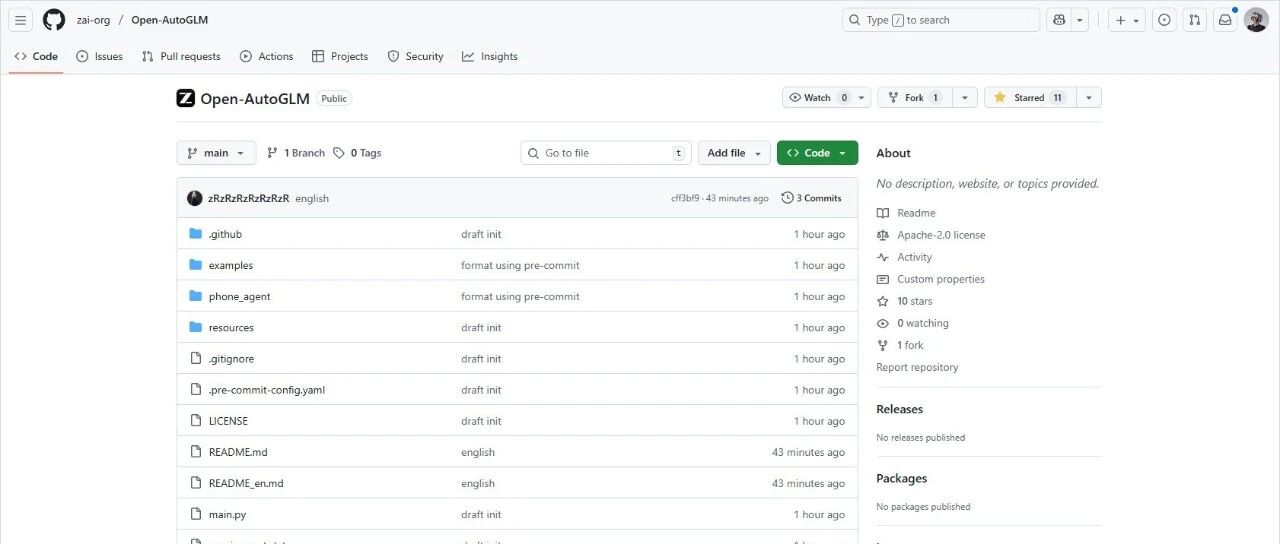
AutoGLM深夜开源,千千万万个手机Agent要站起来了。
数字生命卡兹克· 2025-12-09 01:20
Core Viewpoint - The article discusses the open-sourcing of AutoGLM by Zhipu, highlighting its significance in the context of mobile AI agents and the potential for innovation in this space [2][5][11]. Group 1: Open-Sourcing of AutoGLM - Zhipu has released the AutoGLM mobile agent framework and the AutoGLM-Phone-9B model as open-source, marking a significant development in mobile AI technology [2][6]. - The open-sourcing comes at a time when the Doubao mobile assistant has been banned, positioning AutoGLM as a viable alternative in the mobile AI landscape [5][13]. - The article draws parallels between the open-sourcing of AutoGLM and historical tech movements, suggesting that it could lead to a proliferation of applications similar to what happened with Stable Diffusion [13][19]. Group 2: Deployment Modes and Privacy - AutoGLM offers three deployment modes: local deployment, cloud deployment, and hybrid deployment, each with varying levels of privacy and performance [6][9]. - Local deployment ensures maximum privacy as all data processing occurs on the device, while cloud deployment requires careful handling of data transmission [6][9]. - The article emphasizes the importance of privacy in AI applications, suggesting that future advancements in mobile chip technology will enable more powerful local processing [6][19]. Group 3: Implications for the Future - The open-source nature of AutoGLM could democratize access to mobile AI agents, allowing individuals to create personalized assistants that run locally on their devices [19][21]. - The article reflects on the potential societal changes that could arise from widespread adoption of personal AI agents, including shifts in how individuals interact with technology [25][29]. - It suggests that the evolution of mobile AI agents could lead to a new era of user empowerment, where individuals have greater control over their digital interactions [19][29].
用豆包手机的这两周,我好像卷入了一场新与旧的战争。
数字生命卡兹克· 2025-12-08 02:47
Core Viewpoint - The article discusses the recent experiences and challenges faced by users of the Doubao mobile assistant, highlighting its initial appeal and subsequent issues with major apps like WeChat and Alipay, which led to user restrictions and account bans [1][2][19][25]. Group 1: Product Experience - Doubao mobile assistant has gained popularity, with Nubia phones equipped with it selling out quickly, indicating strong market interest [2]. - The initial user experience was positive, with features like task automation and integration with apps being well-received [3][5][7]. - However, after a live demonstration, users faced significant issues, including account restrictions from major platforms, severely impacting usability [19][25][26]. Group 2: Industry Dynamics - The article draws parallels between the current situation and historical battles for control over digital entry points, emphasizing that the competition is shifting from traditional platforms to AI assistants [29][30][61]. - Major platforms view the emergence of AI assistants as a threat to their business models, leading to aggressive actions against such technologies [28][46]. - The narrative suggests that the rise of AI assistants could disrupt existing power structures in the app ecosystem, potentially benefiting users but threatening the survival of established platforms [41][46][55]. Group 3: Future Outlook - The author expresses optimism about the technological advancements in AI, suggesting that improvements in processing power will eventually address current limitations and privacy concerns [63][64]. - There is a cautionary note about the unpredictability of how AI will manifest in the future, urging users to be careful with sensitive information until more robust solutions are available [67]. - The article concludes with a reflection on the chaotic nature of emerging technologies, suggesting that while current experiences may be frustrating, they are part of a larger evolution towards a more integrated AI-driven future [70][74].

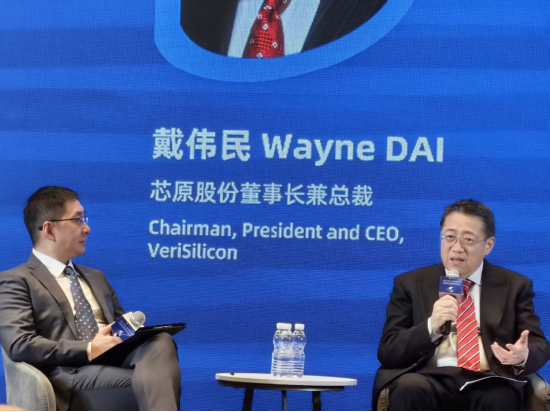
“读万卷书”不如“行万里路”!芯原股份掌舵人戴伟民详解AI芯片下一站:端侧推理与场景落地
Xin Lang Zheng Quan· 2025-11-14 04:08
Core Insights - The Shanghai Stock Exchange International Investor Conference highlighted the significant growth in demand for AI customized chips (AI ASIC) as articulated by Dai Weimin, Chairman and CEO of Chipone [1][3] - The relationship between GPU and AI ASIC was clarified, emphasizing that they complement each other rather than operate independently, with AI ASIC offering cost-effectiveness and GPU providing flexible deployment [3][4] - The evolution of AI requires a "world model" that goes beyond text and image processing to include spatial, physical, and contextual information, thus demanding diverse computational power [4][5] Industry Trends - The industry is witnessing a clear division in computational power needs between "cloud" and "edge" computing, with edge computing representing a significant value opportunity [5][7] - The rise of edge inference is seen as a critical area for AI applications, particularly in devices like smartphones, cars, and IoT devices, which will drive AI commercialization [5][6] - Chipone is focusing on core IP and AI ASIC solutions to support the shift towards edge computing, positioning itself strategically in this emerging market [8] Market Opportunities - The potential for AI applications in smart glasses and AI toys was highlighted, showcasing how customized chips can enhance user experiences and address market gaps [7][8] - The company believes that empowering end devices in various industries will lead to the next trillion-dollar market opportunity, emphasizing the importance of offline capabilities for privacy and security [7][8]