
打击犯罪

Search documents
审结涉黑涉恶案件129件 追缴“黑财”5.8亿元
Xin Lang Cai Jing· 2026-02-08 00:57
Group 1 - The Anhui Provincial Court handled a total of 2.024 million cases in 2025, with 1.883 million cases concluded, and the Supreme Court received 16,000 cases, concluding 14,000 cases [1] - The court intensified efforts against serious public safety and violent crimes, concluding 2,389 cases, and increased the crackdown on drug-related crimes, concluding 335 cases [1] - The court maintained a focus on combating organized crime, concluding 129 cases related to gang-related activities and recovering 580 million yuan in illicit assets [1] Group 2 - The court strictly regulated enterprise-related law enforcement, concluding 548,000 enterprise-related cases, and addressed issues related to market access and anti-competitive behavior [2] - A total of 1,186 bankruptcy cases were concluded, with government and court collaboration revitalizing assets worth 15.29 billion yuan and releasing 12,000 acres of idle land [2] - The court enhanced judicial protection for innovation in key sectors such as artificial intelligence and integrated circuits, concluding 20,000 intellectual property cases [2]
去年前11个月全国检察机关起诉财务造假、内幕交易、操纵市场等证券犯罪380人
Zheng Quan Ri Bao Wang· 2026-01-19 12:09
Group 1 - The core viewpoint of the news is that the judicial and financial regulatory authorities are actively combating illegal financial activities and enhancing the legal framework for financial development in China [1] Group 2 - From January to November 2025, 22,000 individuals were prosecuted for financial fraud and crimes that disrupt financial management order [1] - A total of 380 individuals were prosecuted for securities crimes, including financial fraud, insider trading, and market manipulation during the same period [1] - The authorities prosecuted 2,684 individuals for money laundering crimes and 12,000 individuals for tax-related crimes [1] - Joint actions were taken with the tax authorities to regulate tax issues in retail oil enterprises and with the Coast Guard to combat maritime smuggling, resulting in 8,972 prosecutions for smuggling crimes [1]
公安部A级通缉犯,狱中被揪出
Huan Qiu Wang· 2026-01-17 03:18
Core Viewpoint - The article highlights the successful identification and apprehension of a fugitive, Liu, who had been evading justice for 13 years while incarcerated in Xingyi Prison, using false identities and information to conceal his criminal past [1][13]. Group 1: Criminal Identification - Liu was initially sentenced to death with a two-year reprieve in 2008 for drug trafficking, specifically for selling over 7,500 grams of drugs [1]. - Upon entering Xingyi Prison in 2012, discrepancies in his claimed identity raised suspicions among prison officials, leading to a deeper investigation [1][3]. - Liu's use of fabricated names, addresses, and personal history exemplified a typical "three-fake" criminal, complicating the identification process [1][3]. Group 2: Investigation Process - The prison authorities established a special task force to investigate Liu's true identity, pledging to leave no stone unturned in their pursuit of the truth [3]. - Despite extensive efforts, including reviewing records and sending out alerts nationwide, initial investigations yielded no substantial leads [3][5]. - The breakthrough came with the application of big data technology, allowing investigators to compare Liu's photographs with national databases, ultimately linking him to another fugitive, Gu [5][13]. Group 3: Evidence Gathering - Family connections were established through DNA testing and historical records, confirming Liu's true identity as Gu [5][9]. - The emotional confrontation with Gu's family led to Liu's eventual admission of his real identity, further solidifying the evidence against him [9][13]. - Following the confirmation of his identity, the prison authorities promptly corrected the legal documents and reported additional drug-related offenses to law enforcement [13]. Group 4: Conclusion - The case underscores a commitment to justice, with the investigation spanning over a decade, reflecting the dedication of law enforcement to uncover the truth [15]. - The successful resolution of this case eliminated a significant security risk within the prison system, demonstrating the effectiveness of modern investigative techniques [13].


厄瓜多尔部署约1万名军人打击犯罪团伙
Xin Lang Cai Jing· 2026-01-17 01:14
Core Viewpoint - The Ecuadorian government has launched a significant security operation named "Comprehensive Offensive" to combat active criminal gangs in the provinces of Guayas, Los Ríos, and Manabí, deploying approximately 10,000 military personnel to restore public order and ensure citizen safety [1]. Group 1: Government Actions - The Ministry of Defense of Ecuador announced the initiation of a security operation focusing on the crackdown of local criminal organizations [1]. - Troops will first gather in Guayaquil, Guayas province, before being deployed to various cities and regions for patrols and surprise inspections [1]. - The government emphasizes the implementation of the strictest measures against criminals to quickly restore social order [1]. Group 2: Context and Implications - This operation represents one of the most forceful actions taken by the Ecuadorian government in response to the worsening security situation [1].
秘鲁多地进入紧急状态以打击犯罪行为
Yang Shi Xin Wen Ke Hu Duan· 2025-12-05 03:39
Core Viewpoint - The Peruvian government has declared a 60-day state of emergency in specific regions to enhance measures against illegal mining, drug trafficking, organized crime, and border threats [1] Group 1: Government Actions - The emergency state is implemented in the provinces of La Libertad, Madre de Dios, and Loreto [1] - The government aims to strengthen its presence in critical areas to protect citizens and combat threats to national security [1]
各类装备齐出动,人员伤亡破纪录,巴西里约开展大规模剿匪行动
Huan Qiu Shi Bao· 2025-10-29 23:05
Core Viewpoint - A large-scale police operation in Rio de Janeiro resulted in significant casualties, with at least 60 suspects and 4 police officers dead, marking one of the deadliest anti-crime actions in recent years [1][2]. Group 1: Police Operation Details - Over 2,500 police officers were deployed in the Alemao and Penha communities to target the "Red Command" gang, aiming to arrest leaders involved in organized crime such as drug trafficking and murder [1]. - The operation was planned over a year and involved 60 days of meticulous preparation, with police having identified 94 members of the gang hiding in the targeted areas [1]. - Following the police action, the "Red Command" retaliated by erecting barricades, using drones to drop explosives, and setting fires, which disrupted traffic and forced changes to over 100 bus routes [1][2]. Group 2: Government and Public Response - Rio de Janeiro declared a state of secondary alert as tensions escalated, with reports of gunfire and chaos in public transport systems [2]. - The Secretary of Public Security, Victor Santos, acknowledged the unfortunate injuries to innocent bystanders but emphasized the necessity of the operation, stating the commitment to a crime-free Rio [2]. - The state governor, Claudio Castro, noted that the operation was conducted without federal assistance, while the Minister of Justice and Public Security expressed willingness to support the state [2]. Group 3: Context and Reactions - The timing of the operation coincides with upcoming major events in the city, including activities related to the COP30 climate conference, suggesting a pattern of preemptive crime control [3]. - The operation has drawn strong reactions domestically and internationally, with the UN Human Rights Office highlighting the deadly consequences of police actions in marginalized communities and calling for effective investigations [3]. - The Human Rights and Citizen Protection Committee of the Rio State Assembly has demanded explanations from the government regarding the operation and expressed concerns over the potential for increased violence [3].
秘鲁总统宣布利马与卡亚俄进入30天紧急状态
Yang Shi Xin Wen· 2025-10-22 01:59
Core Viewpoint - The President of Peru, José Yeri, declared a 30-day state of emergency in the capital cities of Lima and Callao to address severe crime issues affecting the population [1] Group 1 - The emergency decree will implement a series of urgent measures aimed at effectively combating the current serious crime problem in Peru [1]
特朗普再向芝加哥施压,伊利诺伊州州长回应:美总统竟威胁要与美国一城市“开战”
Huan Qiu Wang· 2025-09-07 04:32
Core Viewpoint - The article discusses the strong opposition from Chicago city officials against the U.S. government's plan to deploy federal law enforcement and National Guard personnel in Chicago, amidst President Trump's pressure on social media [1][3]. Group 1: Government Actions - President Trump signed an executive order on August 5 to rename the U.S. Department of Defense to the "Department of War" [3]. - Trump has threatened to deploy National Guard troops to Chicago, claiming that the city "needs help" due to its crime situation [5]. - Chicago Mayor Brandon Johnson signed an executive order on August 30, rejecting cooperation with the federal government's plan to deploy law enforcement and National Guard personnel [5]. Group 2: Political Reactions - Illinois Governor J.B. Pritzker responded to Trump's threats by stating that the state "will not be intimidated" and is prepared to legally oppose the deployment of federal personnel in Chicago [3][5]. - Pritzker criticized Trump's rhetoric, emphasizing that the president's threats of "war" against a U.S. city are abnormal and not a joke [3]. - Trump's social media posts included a controversial AI-generated image, further escalating tensions between state and federal authorities [3].
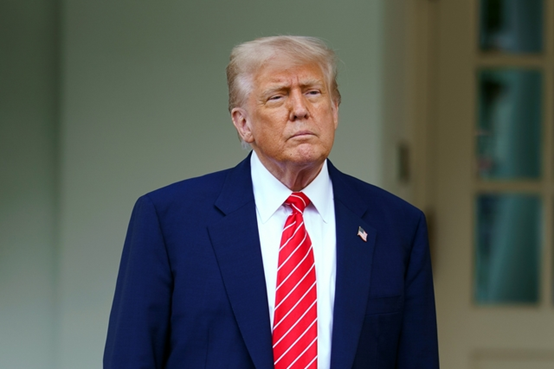
考虑派兵!特朗普,突然发声!
Zheng Quan Shi Bao Wang· 2025-09-04 02:07
Group 1: Military Deployment Decisions - President Trump is considering deploying federal troops to cities like Chicago and New Orleans to combat crime, with a decision expected in about two weeks [2][3] - Trump criticized local governments for rejecting federal assistance, claiming that crime has spiraled out of control in these cities [2][3] - The Illinois Governor has stated that the state's leadership opposes federal troop deployment, arguing it may exacerbate tensions between residents and law enforcement [3] Group 2: Legal Issues with Harvard University - A federal judge ruled that the Trump administration's freezing of over $2 billion in federal funding to Harvard University was illegal, citing violations of due process and free speech rights [6] - The White House responded by asserting that Harvard has failed to protect students and does not have a constitutional right to taxpayer funding [6] Group 3: Relocation of U.S. Space Command - Trump announced the relocation of the U.S. Space Command headquarters from Colorado to Huntsville, Alabama, citing dissatisfaction with Colorado's mail-in voting practices as a factor in the decision [7][8] - The move is expected to cost several hundred million dollars and will involve the transfer of approximately 1,400 jobs to the new location [7]
特朗普打黑除恶,轮到罪恶之都芝加哥了
Hu Xiu· 2025-09-01 11:41
Core Viewpoint - The article discusses President Trump's plans to deploy federal troops to cities governed by Democrats, including Chicago, under the pretext of combating crime, highlighting the political implications of crime rates in these areas [1][10]. Group 1: Crime and Political Response - Trump has threatened to send troops to Chicago, claiming the city needs help due to high crime rates, with a specific mention of six murders and 24 shootings in the previous week [1][3]. - Chicago's Democratic leaders, including Governor Pritzker and Mayor Johnson, have expressed strong opposition to Trump's actions, with Johnson stating that the Chicago police will not cooperate with federal forces [3][4]. - The White House criticized Democrats for politicizing crime issues instead of addressing them effectively in their cities [3][10]. Group 2: Factors Contributing to Crime in Chicago - Chicago's high crime rate is attributed to its large population, industrial and trade activity, and the presence of various ethnic gangs [4]. - The city's geographical advantages, such as its location by the lake and transportation access, make it attractive to criminal organizations [4]. - Historical factors, including deindustrialization and high unemployment rates, have also contributed to the crime problem [4]. Group 3: Political Dynamics and Identity Politics - The article suggests that identity politics in Democratic-controlled cities like Chicago distract from addressing fundamental issues such as income inequality and political corruption [5][7]. - Both Democratic and Republican politicians are accused of perpetuating systems that benefit a select few while neglecting broader social issues [6][7]. - Trump's crime-fighting agenda is seen as a strategy to undermine the Democratic Party's credibility regarding crime and governance [10]. Group 4: Historical Context of Crime Control - Trump's approach to crime control is compared to former New York City Mayor Giuliani's tough-on-crime policies, which significantly reduced crime rates during his tenure [8][9]. - Giuliani's methods, including the "broken windows" theory, are cited as effective in combating crime, providing Trump with a model to follow [8][9].