技术与伦理关系

Search documents
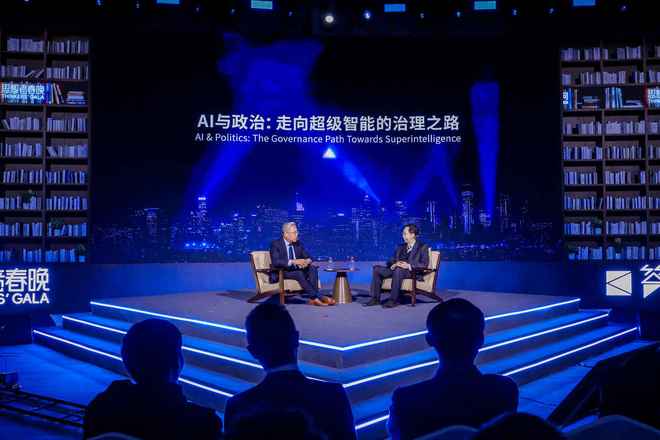
中美AI发展路径,有这些明显的分歧
Guan Cha Zhe Wang· 2026-01-18 00:54
Core Viewpoint - The discussion highlights the divergent paths of AI development between China and the United States, focusing on the underlying ideological and technical differences that may lead to distinct governance and ethical frameworks in AI [1][5][7]. Group 1: AI Development Paths - The emergence of ChatGPT and DeepSeek represents the contrasting AI development trajectories of the US and China, with each country adopting different technological philosophies [3][5]. - The US approach is characterized by "brute force computing," relying heavily on hardware, while China's strategy emphasizes "smart computing," focusing on programming capabilities and efficiency [5][6]. - The historical context of technological competition is referenced, comparing current AI developments to past industrial revolutions, indicating that differing foundational beliefs can lead to divergent technological outcomes [5][6]. Group 2: Scientific and Ethical Discrepancies - There is a significant scientific divergence, with the US adhering to a "material science paradigm" while China is moving towards an "information science paradigm," which may influence the future of AI technologies [6][12]. - Ethical considerations in AI development reveal a divide, with the US leaning towards technological libertarianism, while China emphasizes embedding ethical considerations into technology design [7][12]. - The potential for a "clash of civilizations" is acknowledged, suggesting that deep-rooted cultural differences may shape the future of AI governance and development [12][18]. Group 3: Global Cooperation and Governance - The urgency for global cooperation in AI governance is emphasized, as fragmented standards could lead to inefficiencies and conflicts similar to historical colonial disputes [14][20]. - The need for a unified approach to AI standards and protocols is critical to avoid technological fragmentation and ensure mutual benefits for all nations involved [14][20]. - The discussion suggests that AI should not merely be viewed as a technology but as a complex relationship between technology and humanity, necessitating a collaborative governance framework [18][20]. Group 4: Future Implications - The potential for AI to significantly impact social and economic structures is acknowledged, with differing timelines for the realization of these impacts in the US and China [20][21]. - The emphasis on practical applications in China may lead to more sustainable AI development compared to the US's focus on theoretical advancements [20][21]. - The overarching theme is that technology should serve humanity, with the importance of human agency in guiding AI development being paramount [21].