
全球AI治理

Search documents
印度举办峰会,15国首脑将出席,中方收到邀请,卖了莫迪一个面子
Sou Hu Cai Jing· 2026-02-05 00:55
Core Viewpoint - India is hosting the "AI Impact Summit" from February 16 to 20, marking the first international AI governance forum led by Global South countries, with participation from over 140 nations including China [1][3]. Group 1: Summit Details - The summit is expected to have over 15 heads of state and government leaders in attendance, including tech giants like Bill Gates and Demis Hassabis [1]. - India has formally invited China to participate, with a delegation led by the Vice Minister of Science and Technology expected to attend [1][3]. Group 2: India's Strategic Calculations - India's AI industry ranks fourth globally but faces significant challenges, including a shortage of GPUs compared to the US and China, and a lack of innovation in top algorithms and high-end chip capabilities [3]. - The invitation to both the US and China aims to attract continued investment from major tech companies and secure technical support for local model development [3]. Group 3: Diplomatic Implications - The summit is positioned as a platform for the Global South, with less than 20% of global AI governance rules originating from these countries, highlighting the dominance of Western decision-making [3]. - Inviting China is a strategic move to enhance the summit's international credibility and strengthen India's bargaining power in North-South dialogues [3][5]. Group 4: Economic Context - India is projected to reach a GDP of $4.18 trillion by the end of 2025, surpassing Japan to become the fourth-largest economy [5]. - The simultaneous invitation to China reflects India's ambition to boost domestic confidence and international visibility through economic growth and hosting the AI summit [5]. Group 5: China's Perspective - China's participation is not merely supportive; it aims to address structural imbalances in global AI governance that favor Western interests while neglecting the needs of developing countries [5][7]. - Chinese AI models, such as DeepSeek and Tongyi Qianwen, offer high performance at a lower cost, aligning with the needs of Global South countries [7]. Group 6: Potential Impact on Global AI Governance - The summit could reshape the discourse on global AI governance, merging China's technological strengths with India's diplomatic ambitions [9]. - The collaboration between India and China in the AI sector signals a pragmatic approach to cooperation and a significant shift in the global technology governance landscape [9].


观察者网2026答案秀|全球AI治理:是走向“两极对抗”,还是“多边共治”?
Xin Lang Cai Jing· 2026-01-18 00:57
Core Viewpoint - The discussion highlights the divergent paths of AI development between China and the United States, emphasizing the underlying ideological and technical differences that may lead to distinct governance and ethical frameworks in AI [1][5][7]. Group 1: AI Development Paths - The emergence of ChatGPT and DeepSeek represents the contrasting AI development trajectories of the US and China, with the former focusing on "brute force computing" and the latter on "smart computing" [3][5]. - The US relies on a "material science paradigm" for AI, while China is moving towards an "information science paradigm," indicating a fundamental scientific divergence [6][11]. - The differences in AI development are not only technical but also rooted in deeper philosophical beliefs about the relationship between technology and ethics [7][11]. Group 2: Ethical and Governance Considerations - The ethical implications of AI development are significant, with differing views on whether technology should be pursued without ethical constraints or if ethical considerations should be integrated into technological design [7][12]. - The urgency for global cooperation in AI governance is highlighted, as failure to establish common standards could lead to fragmentation similar to historical colonial conflicts [13][19]. - The need for a collaborative approach to AI governance is emphasized, with a focus on embedding human values into AI systems to prevent potential negative outcomes [17][19]. Group 3: Strategic and Economic Implications - The US's "small yard, high wall" policy is pushing Chinese AI companies to adopt alternative, more innovative paths, potentially leading to a competitive advantage in the long run [8][10]. - The discussion suggests that while the US aims for advanced general AI, China is focusing on practical applications of AI across various industries, which may lead to more sustainable development [19][20]. - The concept of a "community of shared future for mankind" is proposed as a framework for fostering cooperation in AI development, which could enhance collective benefits [19][20].
中美AI发展路径,有这些明显的分歧
Guan Cha Zhe Wang· 2026-01-18 00:54
Core Viewpoint - The discussion highlights the divergent paths of AI development between China and the United States, focusing on the underlying ideological and technical differences that may lead to distinct governance and ethical frameworks in AI [1][5][7]. Group 1: AI Development Paths - The emergence of ChatGPT and DeepSeek represents the contrasting AI development trajectories of the US and China, with each country adopting different technological philosophies [3][5]. - The US approach is characterized by "brute force computing," relying heavily on hardware, while China's strategy emphasizes "smart computing," focusing on programming capabilities and efficiency [5][6]. - The historical context of technological competition is referenced, comparing current AI developments to past industrial revolutions, indicating that differing foundational beliefs can lead to divergent technological outcomes [5][6]. Group 2: Scientific and Ethical Discrepancies - There is a significant scientific divergence, with the US adhering to a "material science paradigm" while China is moving towards an "information science paradigm," which may influence the future of AI technologies [6][12]. - Ethical considerations in AI development reveal a divide, with the US leaning towards technological libertarianism, while China emphasizes embedding ethical considerations into technology design [7][12]. - The potential for a "clash of civilizations" is acknowledged, suggesting that deep-rooted cultural differences may shape the future of AI governance and development [12][18]. Group 3: Global Cooperation and Governance - The urgency for global cooperation in AI governance is emphasized, as fragmented standards could lead to inefficiencies and conflicts similar to historical colonial disputes [14][20]. - The need for a unified approach to AI standards and protocols is critical to avoid technological fragmentation and ensure mutual benefits for all nations involved [14][20]. - The discussion suggests that AI should not merely be viewed as a technology but as a complex relationship between technology and humanity, necessitating a collaborative governance framework [18][20]. Group 4: Future Implications - The potential for AI to significantly impact social and economic structures is acknowledged, with differing timelines for the realization of these impacts in the US and China [20][21]. - The emphasis on practical applications in China may lead to more sustainable AI development compared to the US's focus on theoretical advancements [20][21]. - The overarching theme is that technology should serve humanity, with the importance of human agency in guiding AI development being paramount [21].
2025年度热门行业数据简报(小红书平台)
Sou Hu Cai Jing· 2026-01-13 21:10
Core Insights - The report highlights the booming development of popular industries on the Xiaohongshu platform and global AI governance, indicating a synergistic relationship that drives consumption and technological upgrades [1][5]. Fashion Industry - The fashion sector shows a significant increase in brand engagement, with a 56% rise in average monthly brand placements compared to the previous year [9]. - Vintage fashion topics have garnered over 500 million views, indicating a strong consumer interest in retro styles [9]. - The trend of "softcore aesthetics" and "Asian retro" is emerging, with related content achieving high engagement levels, reflecting a shift towards comfort and attitude in fashion choices [12]. Beauty and Personal Care - The beauty industry maintains a robust performance, with a 76% increase in average monthly likes on beauty-related posts [16]. - The focus has shifted from facial care to comprehensive body care, with significant growth in interest for scalp and hand care products [16]. - The rise of sensitive skin as a key topic, with engagement levels for related content increasing by over 123%, indicates a growing consumer demand for specialized skincare solutions [19]. Parenting and Childcare - The parenting sector shows a notable increase in engagement, with a 54% rise in likes for parenting-related content [21]. - Topics such as "slow parenting" and "relaxed parenting" have gained significant traction, reflecting a shift in parenting philosophies among new parents [24]. - The concept of "resilient parenting" is emerging, focusing on children's physical and emotional development through outdoor activities and sports [24]. Food and Beverage - The food and beverage sector has seen a remarkable 80% increase in the number of posts, with average monthly interactions exceeding 300 million [27]. - Trends such as "herbal health" and "easy cooking" are gaining popularity, with related topics achieving over 460 million views [30]. - The demand for innovative recipes and health-focused ingredients is driving new product development in the food industry [29].

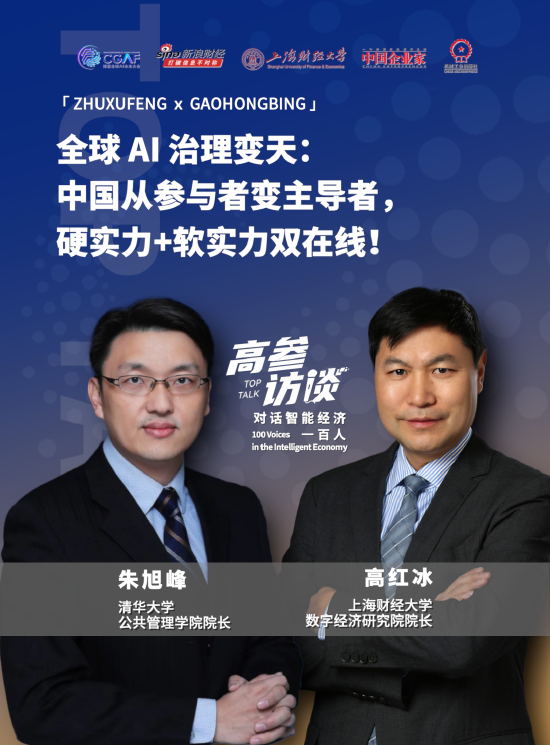
全球AI治理变天:中国从参与者变主导者,硬实力+软实力双在线!
Xin Lang Cai Jing· 2025-12-31 06:57
Core Viewpoint - China has demonstrated the ability to independently initiate topics and foster international consensus, even in the absence of the United States, highlighting a shift in global governance dynamics [1][2][4]. Group 1: International Cooperation - China has collaborated with European countries in Shanghai, resulting in significant declarations, action statements, and the establishment of an international organization for artificial intelligence, indicating a trend of seeking unity in the international community during the U.S. absence [1][2]. Group 2: Global Governance and Leadership - The changes in global governance necessitate an evaluation of China's leadership role and capabilities in the new global order, which holds significant research value for political scholars [4]. Group 3: Role in Artificial Intelligence - China has played a central role in the World Artificial Intelligence Conference, emphasizing the impact of AI development on human society and the importance of establishing forward-looking and impactful regulations [4]. - The transition of China from a participant in meetings to a primary driver of reports and roadmap formulation has received widespread recognition and support [4].
全球AI治理陷入“叙事竞争”,学者警示人类面临主体性危机
Nan Fang Du Shi Bao· 2025-12-20 05:26
Core Insights - The discussion on AI has transcended technical aspects, touching upon fundamental issues of human existence and dignity, as highlighted by Huang Renxun's warning about the potential erosion of human subjectivity by AI [1] - Zhang Xin's keynote at the Ninth Woodpecker Data Governance Forum emphasized the need for AI governance to address the crisis of human subjectivity, marking a shift from traditional ethical discussions to core existential questions regarding AI's transformative principles [1] Group 1: Global AI Competition and Governance - AI is profoundly reshaping global industries, trade, and power dynamics, becoming a central battleground for major powers, with China breaking traditional Western technological monopolies through intelligent industrial chains [3] - The rapid iteration of AI technology has outpaced global governance efforts, leading to a multi-faceted governance model that includes government, market, and AI enterprises, thus transforming societal operational rules [3][4] - AI safety has emerged as a critical aspect of global governance, as it fundamentally relates to the acceptance, diffusion, and application of technology, with the current competition characterized by four key elements: talent, technology, products, and safety systems [3][4] Group 2: Narrative Competition in AI - The logic behind AI governance is framed as a competition of narratives, with different countries constructing their own narratives around AI, such as the U.S. promoting "democratic and free AI" and the EU emphasizing "human rights and high standards" [4] - Trust is essential for the global expansion of AI technologies, and without it, even the most efficient products cannot drive the international spread of Chinese AI technology [4][5] - The competition in AI technology is no longer superficial but encompasses the entire technology stack, with actual competition depending on a country's broad technological application capabilities and talent foundation [4] Group 3: China's Approach to AI Governance - China advocates for an AI narrative centered on "human-centric, benevolent intelligence, and inclusive technology," which should guide technology development, product implementation, and international cooperation [5][7] - The current global AI governance landscape is characterized by both multilateral cooperation and geopolitical competition, with AI safety governance evolving beyond mere technical aspects to become integral to national governance modernization [6] - China aims to enhance its discourse power in global AI governance through initiatives like the Belt and Road, and by establishing safety standards and international alignment, particularly in technology benchmarks and "new soft law" [7]
