
投顾模式

Search documents
超八成投资者盈利!京东财富打造“产品+技术+服务”新生态
Zhong Jin Zai Xian· 2026-01-08 10:19
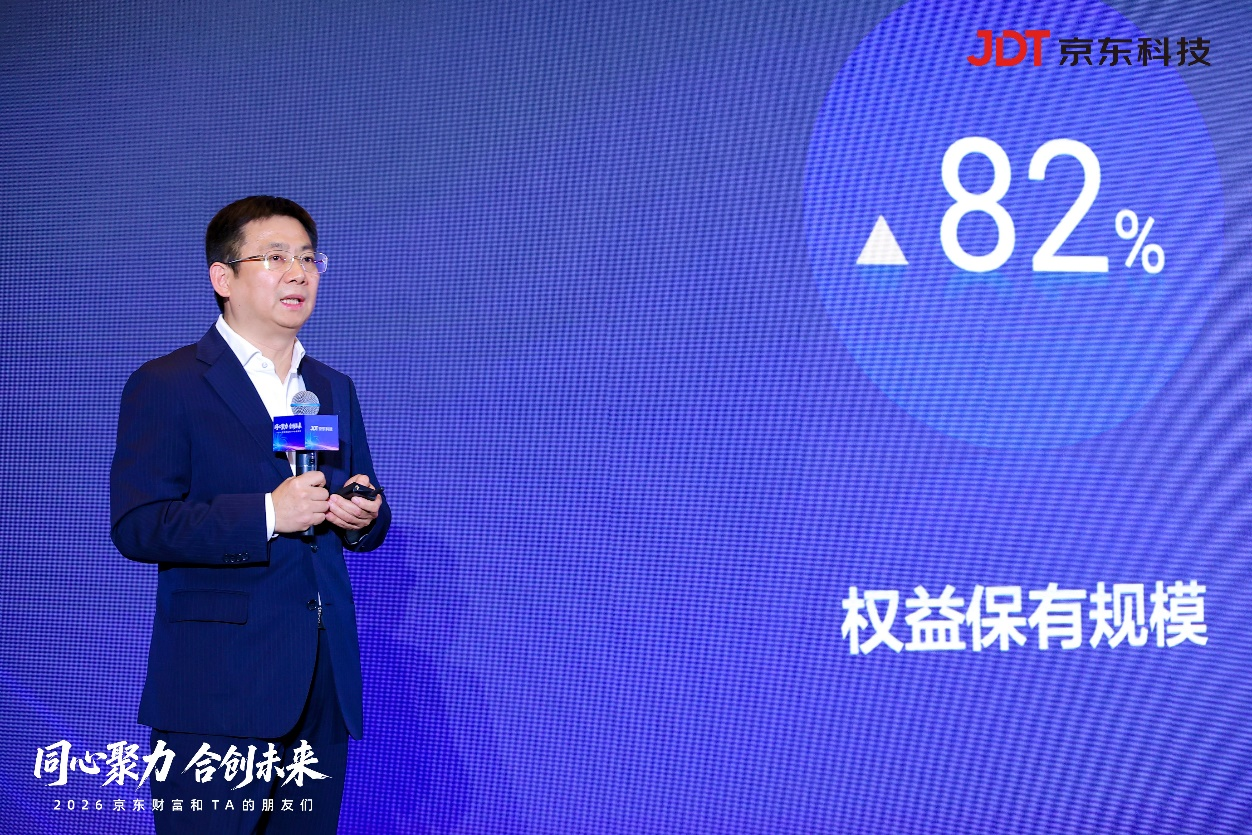
Core Insights - In the context of the challenge where "funds make money, but investors do not," JD Wealth reported that over 80% of equity fund clients achieved profitability in 2025 [1][2] - The wealth management industry is transitioning from a "shelf model" to an "asset allocation and user service advisory model," with a strong emphasis on AI application to enhance personalized services [1][4] Group 1: Performance Metrics - JD Wealth's equity fund client profitability rate reached 84%, while the average return for personal pension users was 15% [4] - The business saw significant growth in various asset categories: equity holdings increased by 82%, index fund holdings by 105%, stable income + holdings by 206%, and personal pension holdings by 241% [2][4] Group 2: Strategic Focus - The focus of JD Wealth is not on expanding its own scale but on enhancing investor satisfaction and experience [4] - The company aims to upgrade its core capabilities in "products, services, and pricing" while leveraging AI technology to deepen its wealth ecosystem [6][8] Group 3: TAMP Model Development - JD Wealth is actively exploring the TAMP (Total Asset Management Platform) model, which integrates investment research, allocation, trading, and operations to provide customized asset management solutions [10] - In 2025, the TAMP model added 210,000 new clients, with a repurchase rate of 52% and an average holding period of 235 days, achieving nearly 88% profitability among holding clients [10] Group 4: AI Integration and Service Enhancement - The integration of AI is set to redefine wealth management services, enabling features like instant account opening and automated risk alerts [8][11] - JD Wealth is enhancing its service capabilities by providing personalized support through AI tools, which assist financial advisors in delivering tailored services to clients [11]

平均管理费率下降8% 银行理财打响“费率价格战”
Zhong Guo Jing Ying Bao· 2025-06-09 12:43
Core Viewpoint - A "fee price war" led by bank wealth management companies is emerging in a continuously declining interest rate environment, with many firms reducing management and service fees for their products to enhance competitiveness and adapt to market pressures [1][3]. Group 1: Fee Reductions - Several wealth management companies, including Bank of China Wealth Management and Everbright Wealth Management, have significantly lowered management fees for various products, with reductions such as Bank of China's fixed management fee dropping from 0.30% to 0.05% [2]. - According to data from Puyi Standard, the average management fee rate for bank wealth management products is expected to decrease by approximately 8% year-on-year in Q1 2025, with fixed income and mixed products seeing declines of 7.82% and 11.65%, respectively [2][3]. Group 2: Market Dynamics - The reduction in fees is attributed to intensified market competition and a return to the essence of asset management, as firms seek to attract customers amid increasing pressure from new entrants and product homogenization [3][4]. - The trend reflects a shift from extensive growth to refined operations within the wealth management industry, driven by market forces, competitive pressures, and regulatory guidance [3][5]. Group 3: Long-term Implications - While larger institutions can more easily absorb the pressure of fee reductions, smaller firms may face greater profitability challenges, leading to increased industry differentiation [5]. - The long-term strategy for wealth management firms should focus on evolving their fee structures and fostering customer loyalty, potentially through enhanced advisory services [5][6]. Group 4: International Insights - Drawing from international experiences, high fees for equity asset management products have become unsustainable, with U.S. equity product fees dropping from over 100 basis points to 50 basis points over the past 20 years [6]. - The introduction of investment advisory models, which emphasize long-term client relationships and a composite fee structure, is becoming increasingly relevant in the context of declining interest rates and the need for innovative asset management solutions [6].