折叠屏手机技术

Search documents
从“猎奇”到“信赖”:折叠屏手机用户发展洞察报告
艾瑞咨询· 2026-02-05 00:00
Core Insights - The global foldable smartphone market is experiencing continuous growth, particularly in China, driven by technological advancements and an improved supply chain, leading to product diversification [1] - China has emerged as the main growth engine for the global foldable smartphone market, with Huawei maintaining a significant market share [1][18] - User willingness to purchase foldable smartphones is increasing, with higher expectations for product functionality and experience [1] Market Overview - The global smartphone market has transitioned into a saturated phase since 2017, with annual shipment volumes declining by approximately 2.52%, projected to reach 1.22 billion units by 2024 [2] - The foldable smartphone segment is seen as a strategic direction to overcome market growth bottlenecks, with expected high growth in shipments from 2022 to 2024 [5] Competitive Landscape - The foldable smartphone industry chain includes upstream raw material supply, midstream design and manufacturing, and downstream sales [7] - Chinese manufacturers, led by Huawei and Samsung, are driving the industry forward through strong technological capabilities and market influence [7][8] User Behavior and Preferences - The user demographic for foldable smartphones shows a preference among high-education individuals, with over 75% of users holding a bachelor's degree or higher [20] - The majority of users spend between 5,000 to 9,000 yuan on foldable smartphones, with Huawei being the most popular brand, accounting for 62.3% of usage [22] - Key reasons for purchasing foldable smartphones include a stronger sense of technology and innovation, with 44.7% of users citing this as a primary factor [24] Brand Recognition and Perception - Huawei leads in brand recognition across various metrics, significantly ahead of competitors like Samsung, Xiaomi, and OPPO [26] - In terms of brand image, Huawei excels in high-end perception, business appeal, and innovation, reinforcing its leadership in the foldable smartphone sector [28] User Satisfaction and Future Intentions - User satisfaction is highest for Huawei, indicating strong brand loyalty, followed by Xiaomi and Samsung [30] - Over 90% of consumers are considering purchasing a foldable smartphone for their next device, with a focus on reliability and battery life [41] Market Transition - The foldable smartphone market is transitioning from a niche segment to mainstream practicality, driven by hardware maturity and software ecosystem improvements [43] - The hardware is evolving from merely functional to providing a comprehensive user experience, with innovations in hinge and screen technology [45] - Consumers are shifting from "novelty" to "regular use," with 95.5% expressing willingness to switch to foldable smartphones in the future [47]


华为折叠屏国内份额超70%,苹果今年能带来惊喜吗?
Guan Cha Zhe Wang· 2026-01-22 09:12
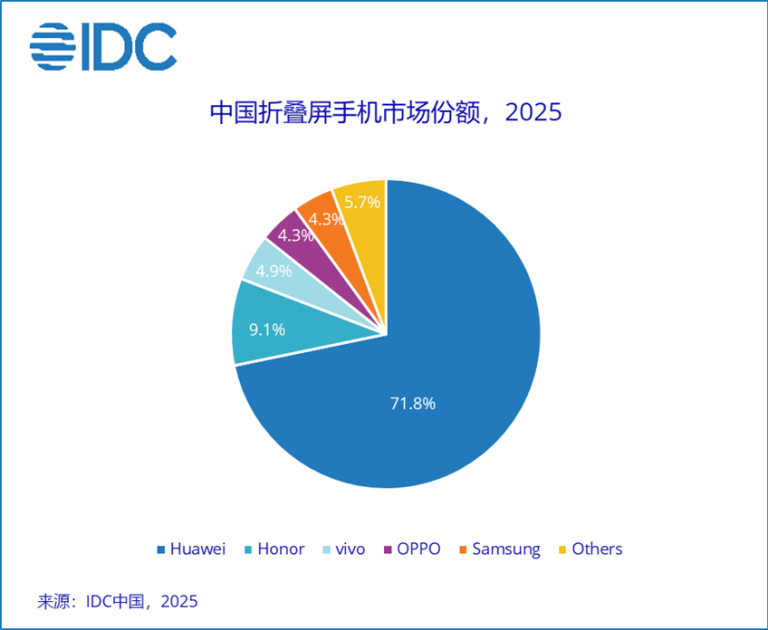
Core Insights - The Chinese foldable smartphone market is projected to see a shipment of approximately 10.01 million units in 2025, marking a year-on-year growth of 9.2%, contrasting with a slight decline of 0.6% in the overall smartphone market [1] - Huawei leads the market with a significant share of 71.8%, while other brands like Honor, Vivo, and OPPO have much smaller shares, with Xiaomi dropping out of the top five [1][3] - The foldable smartphone segment is experiencing a bottleneck phase, with hardware improvements no longer sufficient to drive significant sales growth, leading to a decline in market performance [3][4] Market Dynamics - Huawei's dominance is attributed to its comprehensive product lineup, including various foldable designs and a focus on balanced capabilities rather than just lightweight models [4] - Other manufacturers have introduced innovative products, such as OPPO's Find N5 and Vivo's lightweight foldable, but these have not significantly challenged Huawei's market position [3][4] - The foldable smartphone market only accounts for 3.5% of total smartphone shipments in China, leading some companies like Xiaomi to reconsider their strategies in this niche [4][6] Technological Innovations - Manufacturers are focusing on soft-hard collaboration to enhance user experience, with Huawei's MateX7 introducing AI capabilities to improve functionality [6] - Competitors like OPPO and Vivo are also exploring compatibility with Apple ecosystems to attract users [6] - The anticipated entry of Apple's foldable phone, expected in 2026, is generating significant market interest, with expectations for superior hardware and software integration [7][9] Future Outlook - The smartphone market is expected to face cost pressures due to rising storage prices, potentially leading to a noticeable decline in shipments in 2026 [9] - The success of Apple's foldable device and its impact on the market remains a key point of interest for industry stakeholders [9]

华为折叠屏引领行业七年进化,重塑折叠主力机心智标杆
财联社· 2025-12-25 10:56
Core Insights - The folding screen smartphone market is transitioning from a niche curiosity to a mainstream practical choice, driven by technological maturity and decreasing prices [1][5][26] - The user base is expanding, with 17.9% of users aged 18-24, and over 90% of consumers considering a folding screen for their next phone [1][14] - Huawei leads the market with nearly 70% share and has become the first brand to exceed 15 million cumulative shipments of folding screen devices [3][8] Market Trends - In 2024, China's folding screen smartphone shipments are expected to reach 9.69 million units, with 7.62 million units shipped in the first three quarters of 2025 [3] - The market is showing steady recovery, particularly in the high-end segment priced above 10,000 yuan [3] Technological Advancements - The transition from "niche curiosity" to "mainstream practicality" is driven by advancements in hardware technology, software ecosystems, and innovative product forms [5][26] - Huawei has pioneered the development of key technologies such as the water-drop hinge and the Tian Gong hinge system, which have become mainstream in folding screen design [9][26] Consumer Demographics - Folding screen smartphones are increasingly appealing to younger consumers, who view them as symbols of innovation and personal taste [10][14] - Among young users, a higher percentage purchase folding screens for entertainment and innovative experiences compared to the overall consumer base [10][14] User Preferences - 95.5% of consumers express willingness to switch to a folding screen phone, with reliability, battery life, and hardware specifications being key decision factors [14] - Huawei is the preferred brand for 67.4% of consumers considering a folding screen device [14][16] Software and Ecosystem - Huawei's Mate XTs integrates PC-level applications, enhancing productivity in various scenarios and providing a desktop-like experience on mobile devices [18] - The integration of AI capabilities is expected to revolutionize the interaction and productivity of folding screen devices, making them more efficient and user-friendly [19][21] Future Outlook - The combination of AI and folding screens is anticipated to drive a new wave of growth, transforming smartphones into intelligent hubs capable of handling complex tasks [23][28] - As the market matures, folding screen smartphones are expected to shed their niche status and become mainstream consumer choices, with Huawei continuing to define industry standards [26][28]

苹果首款折叠屏iPhone售价或为2399元,预计2026年推出
Xin Lang Cai Jing· 2025-11-26 00:46
Group 1 - The global smartphone market is expected to continue shrinking in 2026, but Apple's first foldable iPhone is anticipated to be a market highlight with a projected price of $2399 and a lifecycle sales estimate of 15.4 million units [1][3] - The high pricing of the foldable iPhone is attributed to the expensive core components such as the display, hinge, and lightweight materials, with a price forecast provided by Fubon Research [1][2] - Apple's foldable iPhone, known as iPhone Fold, has reportedly achieved a breakthrough in foldable screen technology, featuring a no-fold design that could make it the world's first truly crease-free foldable phone [1][2] Group 2 - The iPhone Fold's internal display is supplied exclusively by Samsung, while Apple leads the design and manufacturing processes for the panel structure and materials [2] - To address the common issue of screen creasing in traditional foldable phones, Apple collaborated with key suppliers to develop critical components that prevent permanent creases [2] - The iPhone Fold prototype features a 7.74-inch inner screen and a 5.49-inch outer screen, with a battery capacity of 5400-5800mAh, surpassing the iPhone 17 Pro Max [2] Group 3 - The mass production cost of the foldable iPhone's hinge is estimated to be between $70 and $80, significantly lower than the previously expected cost of $100 to $120 [3] - Fubon Research predicts a 4% year-on-year decline in global smartphone shipments, with an estimated 1.2 billion units in 2026, and a 3% decline in the Chinese market, projecting around 275 million units [3] - Despite the overall decline, Fubon Research maintains an optimistic outlook for the foldable iPhone, estimating a 7% market penetration rate and projecting 540,000 units to be shipped in 2026 [3]
苹果 iPhone Fold 传新进展:有望成业界首款无折痕折叠屏手机
Huan Qiu Wang Zi Xun· 2025-11-25 03:57
Core Insights - Apple has made significant progress in the development of its first foldable smartphone, the iPhone Fold, achieving a key breakthrough with a no-fold design, potentially making it the world's first truly crease-free foldable phone [1][2] - This technological advancement lays a solid foundation for the official launch of the iPhone Fold next year, further enriching the high-end foldable smartphone market supply [1] Technology and Innovation - The breakthrough in foldable screen technology is attributed to the innovative integration of the screen and hinge system, with the inner screen supplied exclusively by Samsung, while Apple leads the design, material processing, and lamination processes [2] - To address the common issue of screen creasing in traditional foldable devices, Apple collaborated with key suppliers to develop critical components that optimize the panel and bearing compatibility, fundamentally avoiding permanent creases [2] - In hinge technology, Apple and its partners have successfully mastered the core technology of creating high-strength hinge components using liquid metal, which enhances the durability of the foldable screen and maintains a refined feel during use [2] Production and Supply Chain - The supply chain has been aligned with the development of the iPhone Fold, with Foxconn establishing a dedicated production line for the foldable iPhone, indicating that the product has moved beyond the experimental phase into engineering validation and pre-production processes [2]
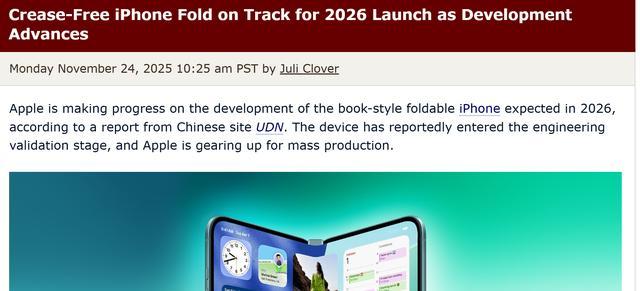
宜安科技:公司具备生产非晶合金(液态金属)铰链结构件的能力和实力
Zheng Quan Ri Bao Wang· 2025-11-10 09:41
Core Viewpoint - The company, Yian Technology, has the capability to produce amorphous alloy (liquid metal) hinge structural components and is actively collaborating with major brands in the development of new foldable smartphones [1] Group 1: Company Capabilities - The company has the strength and ability to manufacture amorphous alloy hinge structural components [1] - It is a partner for hinge structural components with brand manufacturers, continuously supporting the development of various new foldable smartphones [1] Group 2: Market Development - The company is increasing its efforts to expand the market for amorphous alloy hinge structural components and has already begun bulk supply to customers [1] - In 2024, the company will collaborate with well-known domestic manufacturers to develop lighter and thinner foldable smartphones [1] Group 3: Industry Impact - The amorphous alloy hinges play a crucial role in achieving lightweight designs for foldable smartphones [1] - The company has engaged in extensive cooperation with leading manufacturers in the series of products derived from the foldable smartphone sector [1]

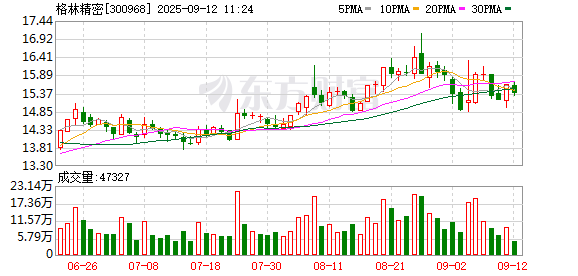
格林精密:公司生产的智能手机精密结构件产品已应用于联想(MOTO)及北美G公司的多款折叠屏手机
Mei Ri Jing Ji Xin Wen· 2025-09-12 03:23
Group 1 - The company, Green Precision (300968.SZ), specializes in manufacturing precision structural components for smart terminals and providing comprehensive technical solutions [1] - The precision structural components produced by the company for smartphones are characterized by being lightweight, thin, and having high airtightness [1] - These components have been applied in several foldable smartphones from Lenovo (MOTO) and North American G Company [1] Group 2 - There is a growing focus on hardware innovation, particularly in the mid-to-high-end segment, shifting towards foldable smartphones, with Chinese manufacturers expected to maintain the largest global market share for foldable smartphones [3] - According to IDC, the compound annual growth rate (CAGR) for China's foldable smartphone shipments is projected to reach 19.8% over the next five years [3] - The company has established technical reserves and production capacity for foldable smartphones, indicating a strong competitive edge in this area [3]
折叠屏手机逐渐从高端向主流消费群体渗透
Zheng Quan Shi Bao Wang· 2025-08-21 14:16
Core Insights - The foldable smartphone market is maturing, with decreasing prices and increasing adoption among mainstream consumers [1][2] - Honor has launched the Magic V Flip 2, featuring advanced specifications and a competitive price point, indicating a shift towards affordability in foldable devices [1] - The global foldable smartphone shipment is projected to grow at a compound annual growth rate (CAGR) of 49.48%, reaching 102 million units by 2027, with China expected to see significant growth [1][2] Industry Trends - Foldable smartphones are becoming a key innovation in consumer electronics, transitioning from high-end to mainstream markets [1] - The hinge and flexible screen technologies are critical areas of innovation, with major players like Huawei and Samsung leveraging self-developed hinge technology for competitive advantage [1] - The foldable smartphone hinge market is expected to reach a value of $1.2 billion by 2025, with hinge costs accounting for approximately 5%-8% of the bill of materials (BOM) per device [2] Competitive Landscape - Apple's entry into the foldable smartphone market is anticipated to enhance market penetration, with expectations of a rise in foldable smartphone penetration from 1.6% in 2025 to over 3% by 2027 [2][3] - The focus will shift towards manufacturing efficiency, cost control, and supply chain integration as Apple aims to differentiate its offerings in a more stable market [3] - Suppliers that can manage technology, production capacity, and price flexibility will be key beneficiaries in the upcoming growth cycle [3]
首款折叠屏iPhone,2026年推出?
DT新材料· 2025-05-11 16:10
Group 1: Apple and Foldable Phones - Apple is expected to launch its first foldable iPhone in the second half of 2026, according to supply chain sources [1] - The demand for Apple's foldable iPhone is anticipated to be high due to its large customer base, but actual sales will depend on the final pricing [1] - Currently, competitors like Samsung, Huawei, Xiaomi, Vivo, OPPO, and Honor have already released multiple foldable phones, creating market anticipation for Apple's entry [1] Group 2: Market Trends and Competitor Analysis - According to TechInsights, global foldable phone shipments are projected to decline by 18% year-on-year to 3.8 million units in Q4 2024 [2] - Huawei has surpassed Samsung to become the market leader with a 31.2% market share, while Samsung's share has dropped to 26.7% [2] - Analysts from Goldman Sachs and Changjiang Securities express optimism about the future growth of the foldable phone market, highlighting the need for smartphone brands to innovate in the high-end segment [2] Group 3: Opportunities for Suppliers - The potential entry of Apple into the foldable phone market presents new growth opportunities for related supply chain material companies [2] - Apple's focus on innovative technology aims to address issues like screen creases and fragility, which could drive advancements in related materials [2]