
拉马克进化论

Search documents
中国科学家发现基因封条
Xin Lang Cai Jing· 2026-01-11 12:04
Core Viewpoint - Recent research by a team led by Academician Cao Xiaofeng from the Chinese Academy of Sciences provides significant evidence supporting Lamarckian evolution, suggesting that environmental pressures can trigger and select for epigenetic variations, allowing species to adapt and survive over time [1] Group 1 - The study indicates that rice varieties from warmer southern regions developed increased cold resistance when moved to the colder northeastern regions of China [1] - Initially, scientists suspected that the cold-resistant rice had undergone genetic mutations, but the genes responsible for cold resistance did not change [1] - The research revealed that the cold-resistant traits were originally present but were "locked" by specific chemical groups, akin to a "seal" on the genes [1] Group 2 - The process of experiencing cold conditions allowed the rice to "remove" the chemical seal on the cold-resistant genes, enabling not only immediate cold resistance but also the permanent inheritance of this trait to future generations [1] - This finding challenges the traditional view that evolution relies solely on random genetic mutations, highlighting the role of environmental factors in activating latent biological capabilities [1]
拓展达尔文进化论框架 中国科学家发现关键证据
Xin Lang Cai Jing· 2026-01-11 05:53
Core Viewpoint - Recent research by a team led by Academician Cao Xiaofeng from the Chinese Academy of Sciences provides significant evidence supporting Lamarck's theory of evolution, challenging the long-standing dominance of Darwin's natural selection theory [1][5]. Group 1: Evolutionary Theories - Darwin's theory posits that evolution is a lengthy and harsh "lottery," where random genetic mutations create differences that are then selected by the environment, encapsulated in the phrase "survival of the fittest" [4]. - In contrast, Lamarck's theory suggests that organisms can actively change in response to environmental pressures, and these acquired traits can be passed on to future generations [4][5]. Group 2: Key Findings - The research team discovered that rice plants from warmer southern regions developed increased cold resistance after being exposed to the colder northeastern environment, and this trait was inherited by their offspring [5]. - Initially, scientists suspected that genetic mutations were responsible for this cold resistance, but they found that the genes of the cold-resistant rice did not change. Instead, the resistance was linked to a specific chemical modification (DNA methylation) that had previously "locked" the cold-resistant genes [5]. - The environmental pressure experienced by the rice plants led to the "unlocking" of these genes, allowing them to express cold resistance and pass this trait on to their descendants [5][9]. Group 3: Implications for Evolution - The findings serve as a bridge between Darwin's and Lamarck's theories, indicating that evolution is influenced not only by random genetic mutations but also by environmental pressures that can trigger and select for epigenetic variations, thereby enhancing the survival of species [9]. - This complexity in the evolutionary process suggests that life is more intricate and refined than previously understood [9].


转发!中国科学家发现基因封条
Xin Lang Cai Jing· 2026-01-11 03:47
Core Viewpoint - Recent research by a team led by Academician Cao Xiaofeng from the Chinese Academy of Sciences provides significant evidence supporting Lamarckian evolution, suggesting that environmental pressures can trigger and select for epigenetic variations, allowing species to adapt and survive over time [1] Group 1: Research Findings - The study indicates that rice varieties from warmer southern regions have developed increased cold resistance after being relocated to the colder northeastern regions of China [1] - Initially, scientists suspected that the cold-resistant rice had undergone genetic mutations; however, the genes responsible for cold resistance did not change [1] - The research revealed that these southern rice varieties inherently possessed cold-resistant traits, which were previously "locked" by specific chemical groups acting as a "seal" on the genes [1] Group 2: Mechanism of Adaptation - When subjected to the cold environment in the northeast, the rice plants were forced to "remove" the chemical seals on their cold-resistant genes, enabling them to withstand cold temperatures [1] - This adaptation not only allows the rice to survive in harsher conditions but also ensures that the cold-resistant traits can be passed on to future generations [1] - The findings highlight that evolution is not solely dependent on random genetic mutations but can also be influenced by environmental factors that activate latent biological capabilities [1]
中国科学家重要发现拓展达尔文进化论框架
Huan Qiu Wang Zi Xun· 2026-01-11 03:43
Core Viewpoint - A recent discovery by a research team from the Chinese Academy of Sciences provides significant evidence supporting Lamarck's theory of evolution, challenging the long-standing dominance of Darwin's natural selection theory [1][5]. Group 1: Evolutionary Theories - Darwin's theory posits that evolution is a long and harsh "lottery," where random genetic mutations create differences that are then selected by the environment, encapsulated in the phrase "survival of the fittest" [3]. - In contrast, Lamarck's theory suggests that organisms can actively change in response to environmental pressures, and these acquired traits can be passed on to future generations [3][5]. Group 2: Key Findings - The research team discovered that rice plants, when moved from warmer southern regions to the colder northeast, developed increased cold resistance, which could be inherited by their offspring [5][7]. - Initially, scientists suspected that genetic mutations were responsible for this cold resistance, but they found that the genes of the rice plants did not change [5][7]. Group 3: Mechanism of Inheritance - The study revealed that southern rice plants possessed inherent cold-resistant genes that were "locked" by specific chemical groups in a warm environment, akin to sealing a genetic capability [7]. - When exposed to cold conditions, the persistent environmental pressure caused the rice plants to "unlock" these genes, allowing them to exhibit cold resistance and pass this trait on to their descendants [7][9]. Group 4: Implications for Evolution - The findings bridge the gap between Darwin's natural selection and Lamarck's acquired inheritance, suggesting that evolution is influenced not only by random genetic variations but also by environmental pressures that can trigger and select epigenetic changes [9].
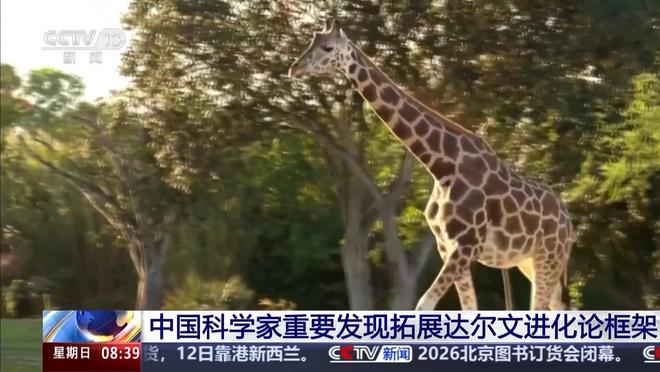
重大进展!科学家发现进化论两大争议观点关键证据
Yang Shi Wang· 2026-01-11 02:58
Core Viewpoint - A recent discovery by a Chinese research team provides key evidence supporting Lamarck's theory of evolution, which contrasts with Darwin's theory of natural selection [1] Group 1 - The article discusses the long neck of giraffes and questions whether it developed through the need to reach food, aligning with Lamarck's evolutionary perspective [1] - It highlights the significance of this discovery in the context of evolutionary theory, suggesting a potential shift in understanding evolutionary mechanisms [1]