表观遗传变异

Search documents
中国科学家发现基因封条
Xin Lang Cai Jing· 2026-01-11 12:04
Core Viewpoint - Recent research by a team led by Academician Cao Xiaofeng from the Chinese Academy of Sciences provides significant evidence supporting Lamarckian evolution, suggesting that environmental pressures can trigger and select for epigenetic variations, allowing species to adapt and survive over time [1] Group 1 - The study indicates that rice varieties from warmer southern regions developed increased cold resistance when moved to the colder northeastern regions of China [1] - Initially, scientists suspected that the cold-resistant rice had undergone genetic mutations, but the genes responsible for cold resistance did not change [1] - The research revealed that the cold-resistant traits were originally present but were "locked" by specific chemical groups, akin to a "seal" on the genes [1] Group 2 - The process of experiencing cold conditions allowed the rice to "remove" the chemical seal on the cold-resistant genes, enabling not only immediate cold resistance but also the permanent inheritance of this trait to future generations [1] - This finding challenges the traditional view that evolution relies solely on random genetic mutations, highlighting the role of environmental factors in activating latent biological capabilities [1]
拓展达尔文进化论框架 中国科学家发现关键证据
Xin Lang Cai Jing· 2026-01-11 05:53
Core Viewpoint - Recent research by a team led by Academician Cao Xiaofeng from the Chinese Academy of Sciences provides significant evidence supporting Lamarck's theory of evolution, challenging the long-standing dominance of Darwin's natural selection theory [1][5]. Group 1: Evolutionary Theories - Darwin's theory posits that evolution is a lengthy and harsh "lottery," where random genetic mutations create differences that are then selected by the environment, encapsulated in the phrase "survival of the fittest" [4]. - In contrast, Lamarck's theory suggests that organisms can actively change in response to environmental pressures, and these acquired traits can be passed on to future generations [4][5]. Group 2: Key Findings - The research team discovered that rice plants from warmer southern regions developed increased cold resistance after being exposed to the colder northeastern environment, and this trait was inherited by their offspring [5]. - Initially, scientists suspected that genetic mutations were responsible for this cold resistance, but they found that the genes of the cold-resistant rice did not change. Instead, the resistance was linked to a specific chemical modification (DNA methylation) that had previously "locked" the cold-resistant genes [5]. - The environmental pressure experienced by the rice plants led to the "unlocking" of these genes, allowing them to express cold resistance and pass this trait on to their descendants [5][9]. Group 3: Implications for Evolution - The findings serve as a bridge between Darwin's and Lamarck's theories, indicating that evolution is influenced not only by random genetic mutations but also by environmental pressures that can trigger and select for epigenetic variations, thereby enhancing the survival of species [9]. - This complexity in the evolutionary process suggests that life is more intricate and refined than previously understood [9].

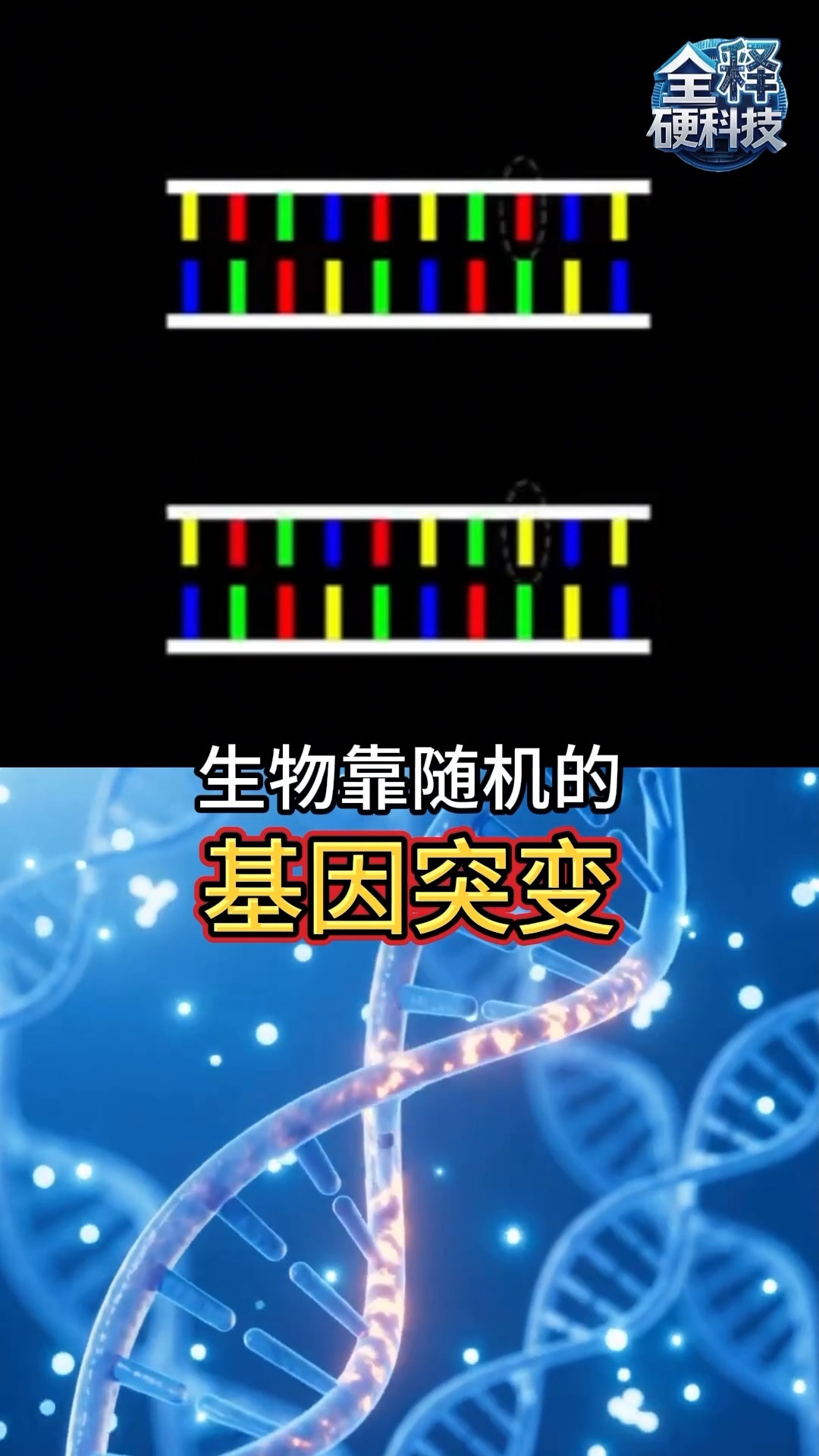
转发!中国科学家发现基因封条
Xin Lang Cai Jing· 2026-01-11 03:47
Core Viewpoint - Recent research by a team led by Academician Cao Xiaofeng from the Chinese Academy of Sciences provides significant evidence supporting Lamarckian evolution, suggesting that environmental pressures can trigger and select for epigenetic variations, allowing species to adapt and survive over time [1] Group 1: Research Findings - The study indicates that rice varieties from warmer southern regions have developed increased cold resistance after being relocated to the colder northeastern regions of China [1] - Initially, scientists suspected that the cold-resistant rice had undergone genetic mutations; however, the genes responsible for cold resistance did not change [1] - The research revealed that these southern rice varieties inherently possessed cold-resistant traits, which were previously "locked" by specific chemical groups acting as a "seal" on the genes [1] Group 2: Mechanism of Adaptation - When subjected to the cold environment in the northeast, the rice plants were forced to "remove" the chemical seals on their cold-resistant genes, enabling them to withstand cold temperatures [1] - This adaptation not only allows the rice to survive in harsher conditions but also ensures that the cold-resistant traits can be passed on to future generations [1] - The findings highlight that evolution is not solely dependent on random genetic mutations but can also be influenced by environmental factors that activate latent biological capabilities [1]
2025年度中国生命科学十大进展
仪器信息网· 2025-12-12 09:03
Core Insights - The article highlights the annual selection of the "Top Ten Advances in Life Sciences in China" by the Chinese Association for Science and Technology, showcasing significant innovations in the field aimed at enhancing public health and addressing critical issues in life sciences [2][36]. Group 1: Innovations in Cancer Treatment - A new strategy for enhancing and reducing toxicity in nasopharyngeal cancer immunotherapy has been developed, demonstrating a 44% reduction in failure risk and an increase in survival rate from 77.3% to 86.9% through the use of PD-1 monoclonal antibodies [4]. - The research also led to a decrease in chemotherapy-induced vomiting rates from 59.8% to 26.2% and reduced severe radiation therapy side effects from 33.2% to 21.6% [4]. Group 2: Caloric Restriction and Longevity - Research from Xiamen University identified a molecule called taurocholic acid that significantly increases in serum after caloric restriction, promoting health and longevity across various animal models [7]. - The study revealed that taurocholic acid activates the TULP3 receptor, which in turn activates Sirtuins, linking to the AMPK pathway, thus providing a theoretical basis for developing interventions that mimic caloric restriction effects [9]. Group 3: Neuroregeneration in Stroke Treatment - A novel "brain repair gel" developed by a collaborative team aims to improve the microenvironment post-stroke, promoting the regeneration of neurons and restoring sensory-motor functions [11]. - This approach marks a paradigm shift from passive protection to active regeneration in stroke treatment, with ongoing clinical trials validating its safety and efficacy [13]. Group 4: Metabolite Diversity and Disease Intervention - A team from Peking University discovered new gut microbiota-derived metabolites that regulate metabolic diseases, identifying orphan receptors as new targets for intervention [15]. - The research utilized AI to uncover specific synthetic enzymes, leading to the development of targeted intervention strategies for metabolic disorders [15]. Group 5: Advances in Genetic Engineering - The Chinese Academy of Sciences has developed an AI-driven protein engineering method that enables large-scale precise editing of DNA, which could revolutionize genetic disease treatment and crop breeding [24]. - This breakthrough represents a significant advancement in the application of AI in life sciences, showcasing the potential for deep learning to address biological challenges [24]. Group 6: Aging Interventions - Research teams have created a "protein scale" to quantify organ aging and identified key mechanisms driving aging, including the role of betaine as a "exercise mimetic" that slows multi-organ aging [26]. - The study also developed engineered anti-aging stem cells that can provide systemic protection against inflammation, contributing to the advancement of precision medicine in aging research [26]. Group 7: Insect Pheromone Research - A comprehensive analysis of locust aggregation pheromones has been conducted, leading to the development of specific inhibitors that can effectively control locust behavior [19]. - This research provides a foundational understanding for developing precise pest control strategies, marking a significant achievement in the field of entomology [19]. Group 8: Deep-Sea Evolutionary Mechanisms - A collaborative study has decoded the evolutionary processes of deep-sea animals, revealing how they adapt to extreme environments and providing insights into biodiversity [34]. - The findings challenge previous notions about deep-sea evolution, highlighting it as a site of innovation rather than a terminus for life [34].