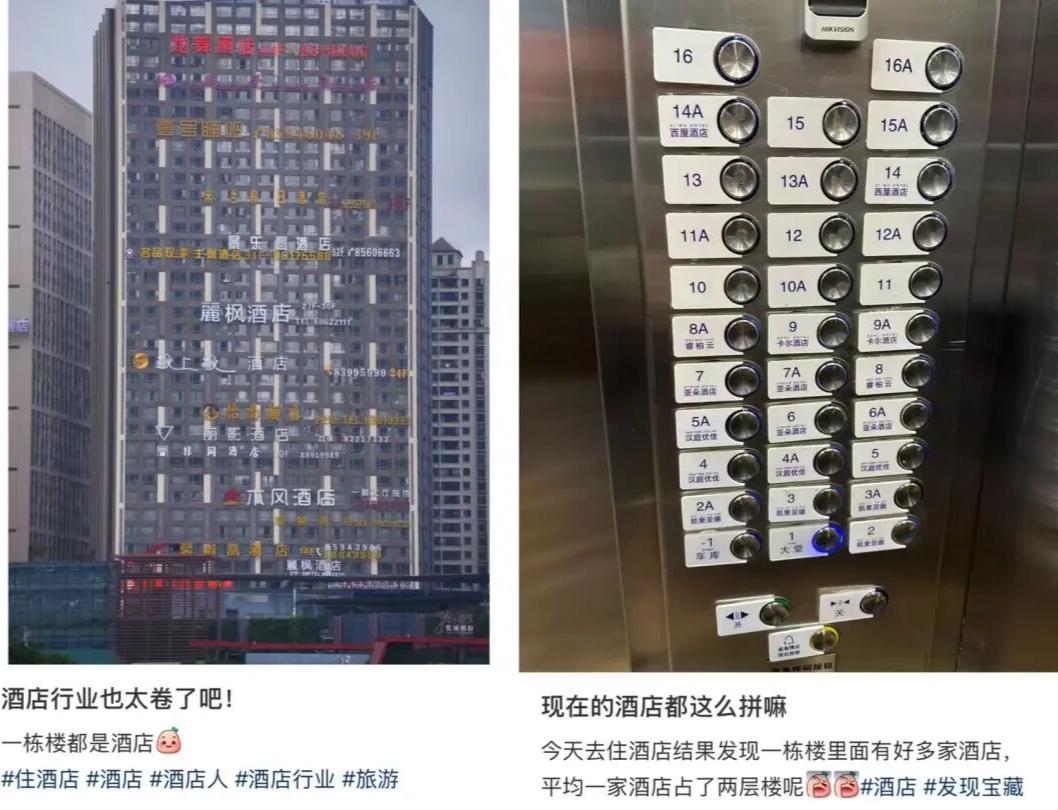
拼楼酒店

Search documents
年轻人抢住“拼楼酒店”,家居行业迎新风口
3 6 Ke· 2025-10-23 03:00
Group 1: Market Trends - The rise of "拼楼酒店" (shared building hotels) is transforming old properties, such as former corporate headquarters and vacant office buildings, into hotels, creating new opportunities for the home furnishing and building materials industry [1][2] - The hotel industry is entering a phase of stock competition, prompting major groups to seek low-cost, high-efficiency expansion methods, with old properties becoming attractive due to their prime locations and established facilities [2][3] Group 2: Business Model Innovations - The "拼楼" model allows for shared public facilities, reducing operational costs and catering to a broader consumer base, while also creating a demand for customized home furnishing solutions [3][4] - Different hotel brands within the same building require diverse furnishing solutions, leading to increased demand for tailored products across various market segments [4][5] Group 3: Cost Efficiency and Investment - Renovating existing properties is significantly more cost-effective than new constructions, allowing hotel investors to allocate more budget towards enhancing home furnishing and decor quality [5][6] - The trend of incorporating multifunctional spaces, such as cafes and bookstores within hotels, is gaining popularity, further driving demand for innovative furnishing solutions [5][6] Group 4: Industry Response - Leading home furnishing companies are adjusting their strategies to capture the emerging market opportunities presented by the hotel industry's transformation [7] - Companies like 雅柏家具 and 华耐智装 are positioning themselves to provide comprehensive solutions for high-end hotel furnishings and industrialized interior design, respectively [7][8] Group 5: Technological Advancements - The rise of modular construction is reshaping the traditional supply chain for hotel furnishings, significantly reducing renovation timelines and costs [8][9] - The modular approach allows for efficient assembly and customization, meeting the diverse needs of various hotel brands while maintaining high standards of quality [8][9] Group 6: Future Outlook - The domestic modular renovation market is projected to reach 639 billion yuan by 2025, with a compound annual growth rate of 67.19% over seven years, highlighting the potential for growth in this sector [10] - Companies must balance personalized customization with standardized production to capitalize on the opportunities presented by the shared hotel model [10]