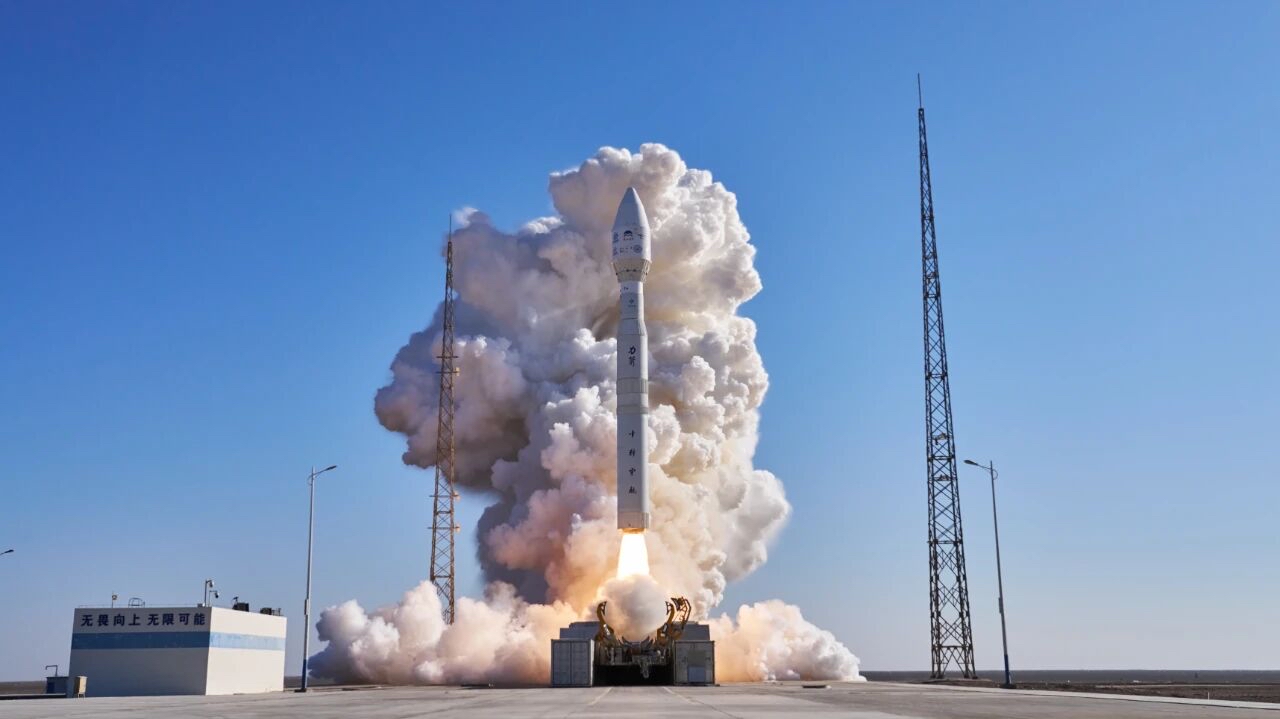
拼车发射

Search documents
与SpaceX抢海外市场,中国商业航天出海接单!多家企业积极布局
Di Yi Cai Jing· 2025-12-12 03:22
Core Viewpoint - The article highlights the increasing participation of Chinese commercial space companies in international satellite launch markets, driven by the need to compete with established players like SpaceX, which is expanding its Starlink project and preparing for an IPO [1][6]. Group 1: International Launches and Market Expansion - The recent launch of the "one rocket, nine satellites" mission by the Chinese commercial rocket, Kuaizhou-1A, included satellites from Egypt, Nepal, and the UAE, marking a significant step in China's international satellite launch capabilities [1]. - The Chinese government has encouraged commercial space enterprises to "go global" and engage in international competition and cooperation through the "Action Plan for Promoting High-Quality and Safe Development of Commercial Space (2025-2027)" [1]. - Companies like Galaxy Space and Star River Dynamics are actively pursuing international partnerships, with agreements signed for launch services with entities in Germany, Malaysia, and Thailand [2]. Group 2: Cost Efficiency and Competitive Landscape - The "rideshare" model used in the recent launch allows multiple satellites to share the same rocket, reducing costs and improving efficiency, with current launch costs for Chinese rockets at approximately 50,000-60,000 RMB per kilogram, potentially decreasing by 30% with more liquid rockets entering the market [2]. - In comparison, SpaceX's Falcon 9 launch costs range from $3,000 to $5,000 per kilogram, indicating that Chinese companies still have competitive pricing advantages in certain contexts [2]. - The competitive landscape is intensifying as SpaceX's revenue from its Starlink business is projected to reach $7.8 billion in 2024, with total revenues estimated between $22 billion and $24 billion, prompting Chinese firms to enhance their market strategies [6]. Group 3: Challenges and Strategic Considerations - Chinese companies face higher international standards and must adapt to different commercial launch processes and management practices in emerging markets, emphasizing the need for reliability and transparency in their operations [3]. - The international market presents both a commercial opportunity and a strategic imperative for Chinese firms, as it serves as a platform to validate their rocket reliability and stability while enhancing their influence in global space governance [7]. - Emerging markets in Asia, Latin America, the Middle East, and Africa are seeking diverse suppliers, creating opportunities for Chinese commercial space companies to secure more international orders [7].


与SpaceX抢海外市场,中国商业航天出海接单
Di Yi Cai Jing· 2025-12-12 01:28
只有在可靠性、交付周期以及全流程服务上做到可预期,才能真正赢得更多海外客户的信任。 埃及、尼泊尔、阿联酋。 在力箭一号遥十一商业运载火箭近日完成的"一箭九星"发射任务中,有三颗卫星分别来自上述国家。第一财经记者注意到,这并不是中国的商业航天火箭第 一次执行国际卫星发射任务。除了中科宇航的力箭一号之外,星河动力、垣信卫星等商业航天产业链企业也正在试图拓展海外市场。 外国卫星在中国商业火箭上"拼车" "一次发射任务中,这三颗来自海外的卫星都采用了'拼车'方式升空。"一位民营商业航天企业的工程师向第一财经记者介绍道。本次发射中,来自埃及、尼 泊尔和阿联酋的卫星共同搭载在同一枚火箭上,以共享运力的方式进入轨道,这种形式在业内被称为"拼车发射"。 他解释,这种"拼车"模式能够降低单颗卫星的发射成本,也有助于提升火箭剩余运力的利用效率,"也能够帮助企业缩短对海外订单的响应周期"。 11月底,国家航天局发布《推进商业航天高质量安全发展行动计划(2025—2027年)》明确提及鼓励中国商业航天企业"走出去",参与国际竞争与合作。 在国际市场当中,SpaceX的星链项目正在以一年超160次的发射频率建设星链,而马斯克承认Spa ...