商业航天出海

Search documents
中国蓝观察丨杭州也要造火箭!看商业航天在浙江开启新篇
Xin Lang Cai Jing· 2026-01-07 10:07
Core Viewpoint - Beijing Arrow Yuan Technology Co., Ltd. has established a large-scale liquid carrier rocket production and testing base in Zhejiang, marking a significant step in China's commercial aerospace sector [1][2]. Company Overview - Arrow Yuan Technology is the first commercial aerospace company in China to successfully develop the "liquid oxygen-methane + stainless steel + soft landing recovery" technology, enabling full reuse of medium and large rockets [2][12]. - The core product, the "Yuanxing No. 1" stainless steel liquid rocket, is designed for 20-time reuse, with successful sea recovery tests conducted in May and July [2][12]. Investment and Infrastructure - The new base has a total investment of 5.2 billion yuan and covers approximately 72,000 square meters, aiming to achieve an annual production capacity of 25 "Yuanxing No. 1" rockets [4][13]. - The facility will include a recovery and reuse center, inspection center, and manufacturing center, facilitating rapid testing, maintenance, and reuse of rockets post-recovery [4][13]. Cost Efficiency - The current market price for a single rocket launch in China is approximately 220 million yuan, with payload costs ranging from 80,000 to 100,000 yuan per kilogram. Reusable rockets could reduce launch costs by nearly 70% when reused 20 times [4][13]. Industry Context - The global demand for launch services is significant, and the ability to provide cost-effective and reliable services will be crucial for future competitiveness in the commercial aerospace sector [6][16]. - Zhejiang province has unique advantages for developing commercial aerospace, including abundant patient capital, a strong industrial base, and growing research capabilities [6][16]. Policy Support - The recent "Action Plan for Promoting High-Quality and Safe Development of Commercial Aerospace (2025-2027)" issued by the National Space Administration aims to support commercial aerospace enterprises in expanding internationally [8][18]. - Local policies have been established to encourage private capital participation in aerospace, enhancing the overall industry ecosystem [6][18]. Future Prospects - The "Yuanxing No. 1" rocket is scheduled for assembly and testing in Hangzhou by August 2026, with a launch expected by the end of the year [8][18]. - The establishment of Arrow Yuan Technology in Hangzhou is anticipated to attract more companies in the rocket and satellite manufacturing sectors, fostering a concentrated aerospace industry in the region [11][21].


与SpaceX抢海外市场,中国商业航天出海接单!多家企业积极布局
Di Yi Cai Jing· 2025-12-12 03:22
Core Viewpoint - The article highlights the increasing participation of Chinese commercial space companies in international satellite launch markets, driven by the need to compete with established players like SpaceX, which is expanding its Starlink project and preparing for an IPO [1][6]. Group 1: International Launches and Market Expansion - The recent launch of the "one rocket, nine satellites" mission by the Chinese commercial rocket, Kuaizhou-1A, included satellites from Egypt, Nepal, and the UAE, marking a significant step in China's international satellite launch capabilities [1]. - The Chinese government has encouraged commercial space enterprises to "go global" and engage in international competition and cooperation through the "Action Plan for Promoting High-Quality and Safe Development of Commercial Space (2025-2027)" [1]. - Companies like Galaxy Space and Star River Dynamics are actively pursuing international partnerships, with agreements signed for launch services with entities in Germany, Malaysia, and Thailand [2]. Group 2: Cost Efficiency and Competitive Landscape - The "rideshare" model used in the recent launch allows multiple satellites to share the same rocket, reducing costs and improving efficiency, with current launch costs for Chinese rockets at approximately 50,000-60,000 RMB per kilogram, potentially decreasing by 30% with more liquid rockets entering the market [2]. - In comparison, SpaceX's Falcon 9 launch costs range from $3,000 to $5,000 per kilogram, indicating that Chinese companies still have competitive pricing advantages in certain contexts [2]. - The competitive landscape is intensifying as SpaceX's revenue from its Starlink business is projected to reach $7.8 billion in 2024, with total revenues estimated between $22 billion and $24 billion, prompting Chinese firms to enhance their market strategies [6]. Group 3: Challenges and Strategic Considerations - Chinese companies face higher international standards and must adapt to different commercial launch processes and management practices in emerging markets, emphasizing the need for reliability and transparency in their operations [3]. - The international market presents both a commercial opportunity and a strategic imperative for Chinese firms, as it serves as a platform to validate their rocket reliability and stability while enhancing their influence in global space governance [7]. - Emerging markets in Asia, Latin America, the Middle East, and Africa are seeking diverse suppliers, creating opportunities for Chinese commercial space companies to secure more international orders [7].

中国商业航天出海接单
第一财经· 2025-12-12 02:52
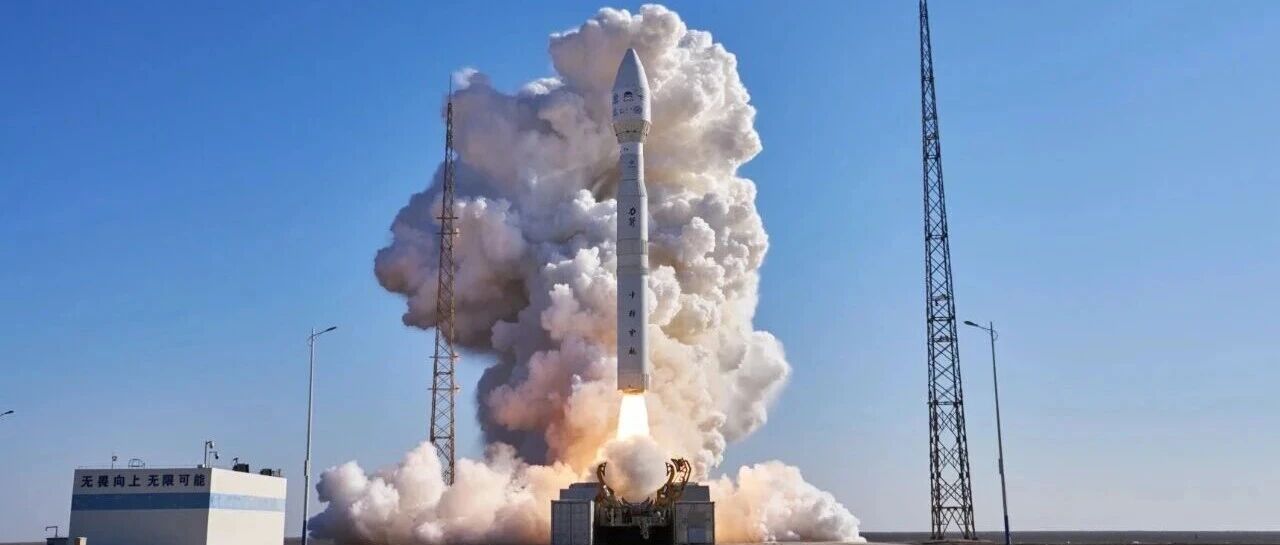
2025.12. 12 本文字数:1874,阅读时长大约3分钟 作者 | 第一财经 乔心怡 封图 来源 | 中科宇航官方微信公众号 外国卫星在中国商业火箭上"拼车" " 一次发射任务中,这三颗来自海外的卫星都采用了 ' 拼车 ' 方式升空。 " 一位民营商业航天企业的 工程师向第一财经记者介绍道。本次发射中,来自埃及、尼泊尔和阿联酋的卫星共同搭载在同一枚火 箭上,以共享运力的方式进入轨道,这种形式在业内被称为 " 拼车发射 " 。 他解释,这种 " 拼车 " 模式能够降低单颗卫星的发射成本,也有助于提升火箭剩余运力的利用效 率,"也能够帮助企业缩短对海外订单的响应周期"。 上述工程师向记者透露,目前国内有部分商业航天火箭的发射成本已经可以到 5-6 万元 / 公斤,"未 来有更多液态火箭投入市场,成本大概还会再降 30% 左右"。 " 对比起 SpaceX 猎鹰九号的 3000- 5000 美元 / 公斤在国际市场的竞争中还是有优势的。 " 除了中科宇航之外,星河动力也在今年 2 月和德国 FEM-Composites 、马来西亚 Distant Blue 等 签署发射服务合作相关协议,拓展国际市场业务。同月 ...
中马合建赤道航天港,中国商业航天出海新突破
Guan Cha Zhe Wang· 2025-04-28 05:49
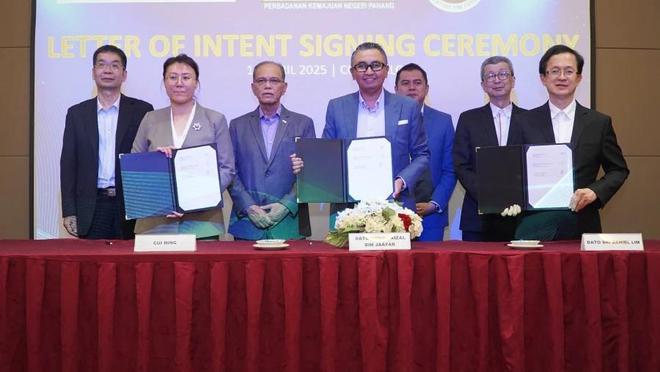
Core Points - Malaysia and China are collaborating to establish an international spaceport on the east coast of Malaysia, marking a significant milestone in regional aerospace development [1][3] - The project aims to enhance launch capabilities, particularly for equatorial launches, which can reduce costs and improve payload efficiency [3][6] - The construction of the spaceport is expected to create over 2,000 jobs and stimulate the local satellite industry, positioning Malaysia as a regional aerospace innovation hub [6][20] Summary by Sections Project Overview - The agreement was signed by the Pahang State Economic Development Corporation, Lestari Space Sdn Bhd, and China Great Wall Industry Corporation [1] - A feasibility study will be conducted following a visit to China's Wenchang Space Launch Site [3] Economic and Technical Benefits - The equatorial launch site will leverage the Earth's rotational speed, enhancing launch efficiency and reducing fuel costs for satellites [3][6] - The project is anticipated to take 3 to 5 years to complete, with significant commercial revenue potential for Malaysia [3][6] Historical Context - Previous attempts by other countries to establish equatorial launch sites in Southeast Asia have failed due to high costs and insufficient demand [4][6] - The current demand for satellite launches, driven by China's commercial space sector, has made this project feasible [6][20] Regional Implications - The spaceport is expected to strengthen Malaysia's position in the aerospace market and foster collaboration with other Southeast Asian nations [6][20] - The project aligns with China's broader strategy to expand its commercial space ecosystem into Southeast Asia, enhancing regional cooperation [20] Future Prospects - The establishment of the spaceport could serve as a model for resolving regional disputes through collaborative development [19][20] - The project is seen as a step towards integrating the Southeast Asian aerospace market with China's commercial space initiatives [20]