指数级增长

Search documents
企业如何实现指数级增长
Xin Lang Cai Jing· 2025-12-19 22:31
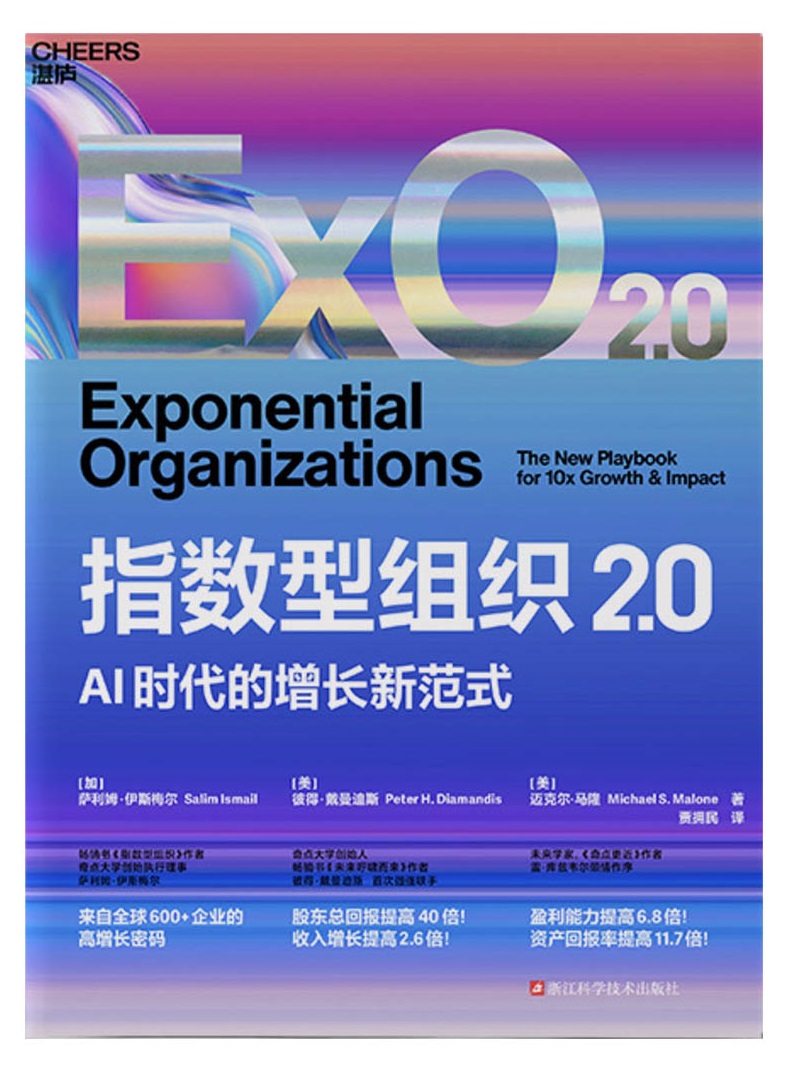
Core Insights - The book "Exponential Organizations 2.0" by Salim Ismail addresses how companies can achieve exponential growth in the future [1] - The author emphasizes the importance of establishing an "ecosystem" rather than a "single model" for exponential organizations, driven by advancements in information technology and AI [5][6] Group 1 - The author, Salim Ismail, is a renowned entrepreneur with experience in technology startups and investments in cutting-edge fields such as AI, blockchain, and biotechnology [4] - The book's co-authors include Peter H. Diamandis, a leader in commercial space exploration, and Michael S. Malone, a bestselling author focused on technology [5] - The concept of "exponential growth" is not limited to commercial companies but also applies to non-profit organizations, addressing sustainable development challenges [6] Group 2 - The book provides a toolkit for creating exponential organizations, including goal setting, talent attraction, leveraging AI and algorithms, and cultivating target users [7] - It highlights the shift in internet companies towards "middle platform strategies" and "small front-end" models, which help overcome traditional corporate inefficiencies [6] - The insights offered in the book are relevant for both mature enterprises seeking to break growth bottlenecks and startups aiming for sustainable development [7]

北极光创投林路:AI竞争从“技术领先”转向“产品体验”
Tai Mei Ti A P P· 2025-07-03 09:52
Core Insights - Technological development does not always exhibit exponential growth; after initial breakthroughs, growth tends to slow down [2][4] - As the gap in foundational models narrows, the focus of industry competition shifts from "technological leadership" to "product experience," creating opportunities for startups [2][6] - A product that fails to establish a strong data barrier or user experience moat is vulnerable to being integrated or replaced by foundational models [2][13] - AI will not change fundamental human needs but has the potential to reshape service delivery methods and service logic, leading to richer interactions and greater system extensibility [2][14] Industry Dynamics - The initial optimism surrounding technologies like ChatGPT has given way to caution as the industry faces pre-training bottlenecks, similar to past expectations in autonomous driving [4][5] - The current stage of AI development can be likened to the mobile internet's evolution, where the emergence of open-source models parallels the explosive growth of the Android platform [8][9] - Companies that enhance existing demand efficiency with new technologies are more likely to succeed than those that create demand for new technologies [9][11] - The infrastructure evolution, such as the rollout of 4G, significantly impacts the growth of applications, similar to how AI's development is currently unfolding [9][11] Competitive Landscape - Major companies are rapidly positioning themselves in key areas of the foundational model chain, which may limit opportunities for startups [10] - AI's ability to enhance business efficiency and penetrate deeply into various sectors suggests that its impact will surpass that of the mobile internet era [11][12] - The phrase "model equals application" highlights the fundamental shift in the competitive landscape, where model upgrades can quickly render certain startup projects obsolete [13][14] Service Innovation - AI's general capabilities are often insufficient for practical applications, revealing limitations that can become entry points for new innovations [14][15] - AI can fundamentally reconstruct service logic rather than merely digitizing existing processes, allowing for personalized service strategies with minimal marginal costs [15]