指数量化投资

Search documents
富国量化团队又一全新力作,有色ETF富国进一步完善产品线布局
Quan Jing Wang· 2026-01-22 05:16
Group 1 - The new infrastructure sector, represented by ultra-high voltage and grid upgrades, is gaining significant market attention, highlighting the strategic value of industrial non-ferrous metals [1] - The supply-demand dynamics of industrial non-ferrous metals are expected to improve, supporting a price increase and providing substantial investment opportunities [1] - The launch of the non-ferrous ETF by FuGuo Fund on January 26 aims to provide investors with an efficient tool to invest in the industrial non-ferrous metals sector, closely tracking the Industrial Non-Ferrous Metals Index [1] Group 2 - The Industrial Non-Ferrous Metals Index, which the non-ferrous ETF tracks, includes 30 leading companies in the copper, aluminum, rare earth, and lead-zinc sectors, focusing on industrial and rare metals while avoiding precious metals volatility [2] - As of January 21, 2026, the top ten constituents of the Industrial Non-Ferrous Metals Index account for 56.18% of the total weight, indicating a strong presence of large-cap leaders with advantages in resource reserves, cost control, and technological barriers [2] - The index is projected to achieve a return on equity (ROE) of over 15% by 2027, underscoring its investment value [2] Group 3 - FuGuo Fund, one of the established public fund companies in China, has a quantitative investment team that has been active in index quantitative investment for over 16 years [3] - The company is expanding its quantitative investment offerings to meet diverse investor needs, including index enhancement, passive index/ETF, absolute return, and active quantitative strategies [3]
拥抱全指投资新时代,东方红量化增强策略“指”掌先机
Sou Hu Cai Jing· 2025-11-26 08:01
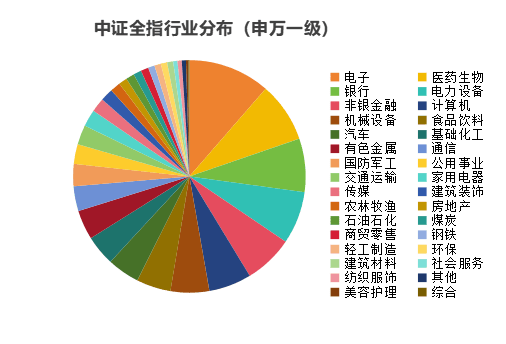
Core Viewpoint - The article emphasizes the advantages of investing in the CSI All Share Index Enhanced Fund as a more stable investment strategy amidst the volatility of industry rotation and style switching in the Chinese capital market [1][2]. Group 1: Overview of CSI All Share Index - The CSI All Share Index (000985) provides a comprehensive view of the Chinese capital market, covering stocks from the Shanghai, Shenzhen, and Beijing exchanges, aiming to benefit from the overall development of the Chinese economy [1][2]. - The index includes over 5,060 stocks, making it the most comprehensive and diversified index, reflecting the overall performance of A-share market companies [2][4]. - Compared to other broad-based indices, the CSI All Share Index has a wider coverage and a more balanced industry distribution, making it a better representation of the A-share market ecosystem [2][4]. Group 2: Advantages of CSI All Share Index - The index's broad coverage makes it a strong indicator of the Chinese capital market, unlike other indices that focus on specific market segments [4]. - The industry distribution of the CSI All Share Index aligns closely with the structure of the national economy, reducing risks associated with single industry shocks [6][7]. - The top ten industries in the CSI All Share Index account for 67.8% of its composition, with a lower concentration in top-weighted stocks compared to other indices, further diversifying risk [7]. Group 3: Investment Strategy and Performance - Investing in the CSI All Share Index allows investors to capture the overall market movements without missing out on any style or industry rotations [5][12]. - The index has shown significant long-term growth, with impressive performance compared to other indices over various time frames [10][11]. - The CSI All Share Index is suitable for long-term asset allocation, allowing investors to share in the comprehensive growth of the Chinese economy [12][14]. Group 4: Enhanced Fund Strategy - The Oriental Red CSI All Share Index Enhanced Fund (A Class 025911, C Class 025912) aims to achieve excess returns over the CSI All Share Index through quantitative strategies [15][18]. - The fund leverages a quantitative investment approach, utilizing multi-factor models and machine learning to enhance investment decisions and capture pricing inefficiencies [16][17]. - The fund's strategy includes two main types of enhancement: fundamental value discovery and trend-following based on price-volume patterns, ensuring diversified sources of returns [17].