排队免单模式

Search documents
排队免单与2+1拼团融合模式:创新融合,破局行业难题
Sou Hu Cai Jing· 2025-09-17 11:24
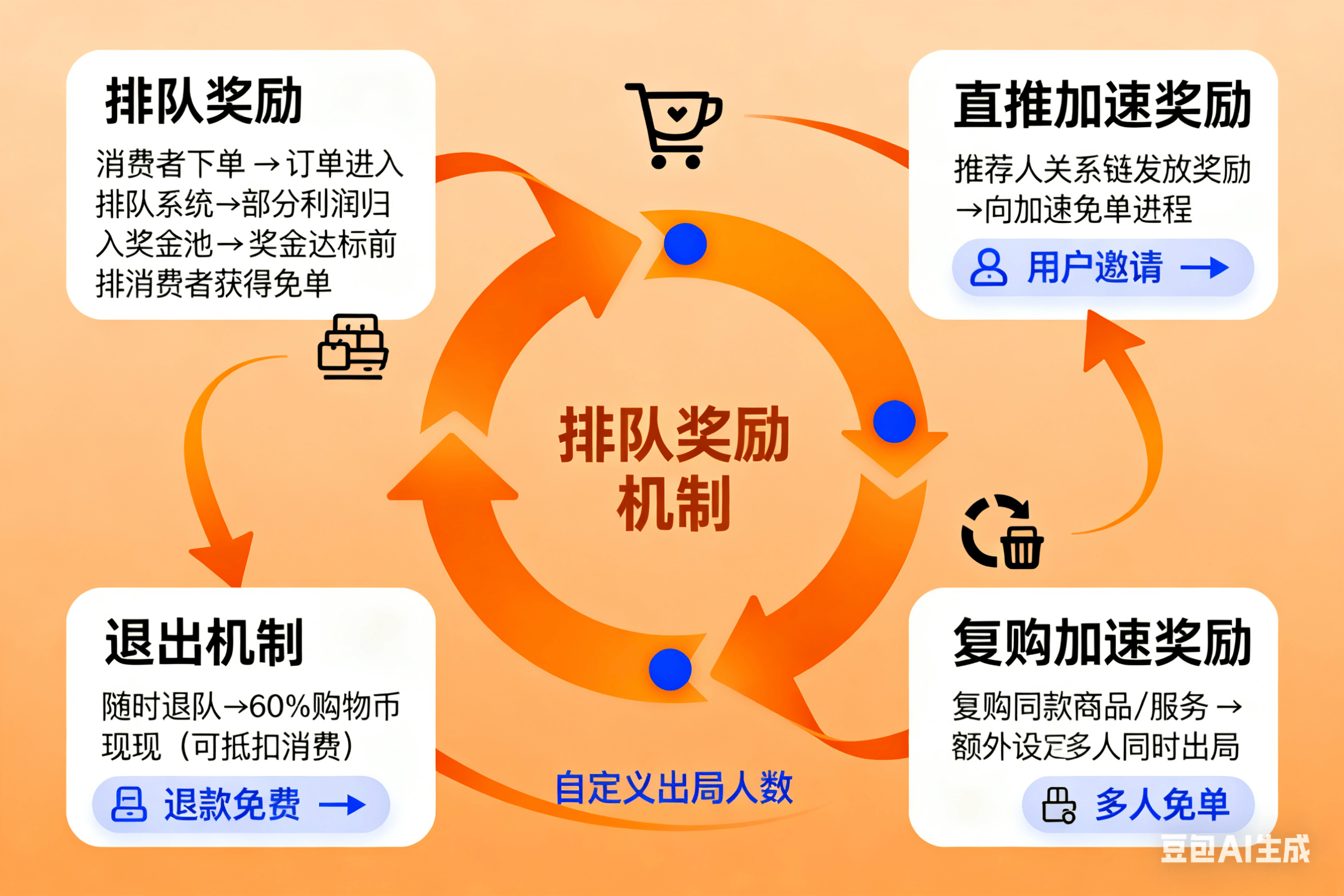
Key Points - The article discusses innovative consumer engagement models, specifically the "Queue-Free Order" and "2+1 Group Purchase" mechanisms, aimed at enhancing user participation and retention in the market [1][4][6]. Group 1: Queue-Free Order Model - The core mechanism involves a reward system where consumers' orders enter a queue, and profits contribute to a bonus pool, allowing early participants to qualify for free orders, thus stimulating consumption [4]. - Direct referral rewards accelerate the free order process, encouraging users to invite friends and expand platform influence [4]. - Users can receive additional rewards for repurchasing the same products or services, enhancing shopping enthusiasm and increasing sales and repurchase rates for merchants [4]. - Consumers can exit the queue at any time, receiving a percentage of their spending back in shopping credits, which can be used for online and offline purchases, ensuring user rights [4]. - Users can customize the number of people exiting the queue, allowing more users to benefit from the free order incentives [4]. Group 2: 2+1 Group Purchase Model - The model employs a sliding mechanism that combines group replication and support zones, allowing participants to fill three positions, including two group areas and one support area [6]. - Successful group formation of seven participants leads to rewards, incentivizing ongoing participation [6]. - The model supports automatic repurchase features, helping regular consumers maintain engagement and revenue generation [6]. - Participants must manage their three positions and group progress through effective recommendations and sliding operations to achieve group formation and subsequent repurchase cycles [6]. Group 3: Reward Mechanisms - Direct referral rewards provide 10% of the referred person's spending and 100 shopping points to the referrer, promoting active promotion [10]. - Sliding rewards are given when participants slide down to lower positions, offering 10% of the amount and 100 shopping points, creating passive income opportunities [10]. - Group formation rewards grant 20% for successfully forming a group of seven, equating to 1200 in rewards, which includes 1000 for automatic repurchase and 200 for discretionary shopping points [10]. - Support rewards are available for successful recommendations in the support area, providing 10% and 600 discretionary shopping points to the referrer, highlighting special incentives [10]. Group 4: Industry Challenges - The industry faces issues with insufficient user attraction due to severe product and business model homogenization, making it difficult to acquire new users and retain existing ones [15]. - Traditional group purchasing models impose high participation thresholds on ordinary consumers, limiting their engagement and hindering platform expansion [15]. - There is inadequate incentive for highly active users in traditional models, which can dampen their enthusiasm and negatively impact long-term platform operations [15]. - Handling dead-end positions in traditional models is challenging, affecting user advancement and overall platform engagement [15]. Group 5: Integrated Solutions - The integration of queue-free and 2+1 group purchase mechanisms aims to create a unique shopping experience, automatically granting consumers dual qualifications for both models after making a purchase [18]. - The 2+1 group purchase model is optimized to lower participation barriers, allowing large orders to be split for group participation and expanding referral channels [18]. - High-activity users can be incentivized through a membership system that enhances group purchase rewards and grants priority in queue-free orders, stimulating shopping enthusiasm [18]. - The use of team rewards and support mechanisms addresses dead-end positions, encouraging collaboration among users to ensure profitability for all, achieving a "win-win" scenario [18].

只需排队就能免费得商品的模式,今天它来了
Sou Hu Cai Jing· 2025-08-14 15:26
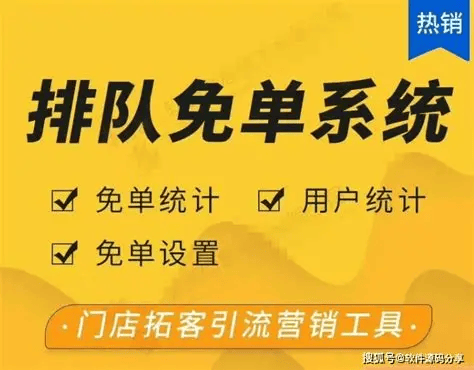
Group 1 - The core logic of the queue-free model is based on a "consumption equals queuing, queuing equals rebate" mechanism, creating a win-win ecosystem for consumers, merchants, and platforms [1] - The model operates on three main growth drivers: time priority principle, dynamic reward distribution, and traffic fission effect [1][3] - The queue-free model allows users to participate in a rebate system simply by making a purchase, without complex tasks [12][13] Group 2 - User participation requires a minimum spending threshold to ensure the reward pool remains substantial, preventing rapid dilution of funds [3][5] - The system employs a FIFO (First In, First Out) rule, ensuring transparency in the queuing process, where users can track their position and the status of the reward pool [5][6] - Users can exit the queue at any time, receiving 60% of their accumulated rebate as shopping credits, while 40% remains in the reward pool to support ongoing operations [6][13] Group 3 - Merchants can set their own rebate percentages, typically between 10% and 30%, allowing for flexible cost management based on industry profit margins [9][15] - The model encourages cross-industry alliances, enabling merchants to share customer traffic and enhance the reward pool through collective participation [10][16] - Data-driven optimization allows merchants to adjust their strategies based on real-time analytics, improving customer retention and sales performance [12][17] Group 4 - The platform ensures fund security through third-party supervision and compliance with legal frameworks, mitigating risks associated with fund misappropriation [14][19] - Transparency in operations is maintained by clearly communicating reward rules and fund flows to users, reducing the likelihood of disputes [21][22] - The potential for technological integration, such as blockchain, enhances trust and expands the model's applicability across various sectors [23]
从争议到上市:元气先锋凭什么港股上市估值50亿+
Sou Hu Cai Jing· 2025-08-14 09:34
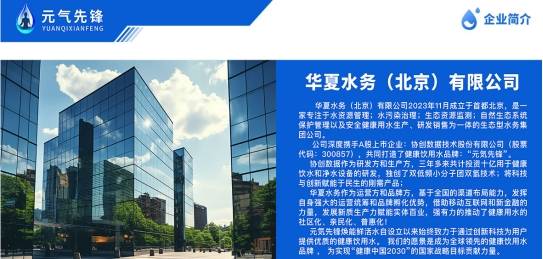
Core Insights - The article highlights the innovative business model of Yuanqi Pioneer, a subsidiary of Huaxia Water, which has successfully opened over 8,000 stores in nine months and sells 5 million bags of water daily, with a valuation exceeding 5 billion by July 2025 [1][3]. Business Model - Yuanqi Pioneer's main product is a 20 yuan (5L) health drinking water, which is priced higher than regular bottled water but transforms consumer spending into a potential return on investment [3]. - The "Queue Free Water" model allows users to buy water and enter a queue for cashback, where 10 yuan from each order goes into a reward pool to refund users until they recover their initial 20 yuan [5]. - Users can accelerate their cashback through referrals, earning 2 yuan for each new customer they bring in, and can receive additional cashback on repeat purchases [7][8]. User Engagement - The model encourages active sharing among users, with 80% of new customers coming from referrals by existing users [8]. - The platform allows users to exit the queue at any time, providing flexibility in participation [9]. Store Partnership - Store owners can join the platform with a deposit of 28,000 yuan instead of purchasing the water machine outright, earning 1 yuan for each bag sold, which creates a low-risk investment opportunity [10]. - Water machines are strategically placed in high-traffic areas like community supermarkets and convenience stores, making access easy for consumers [11]. Financial Transparency and Risk Management - The reward pool is monitored by an AI system, ensuring a cashback rate of 99.7% and preventing financial chain breaks by setting daily cashback limits [12]. - The system includes measures to prevent fraud and maintain compliance, such as limiting order splits and intercepting abnormal orders [13]. Market Strategy - Yuanqi Pioneer's approach of redistributing advertising funds directly to users and channels has resulted in a low customer acquisition cost, significantly lower than traditional advertising [17]. - The repeat purchase rate has increased from 15% to 65%, demonstrating the effectiveness of the consumption-reward-consumption cycle [17]. - The model is designed for rapid expansion with minimal capital investment, leveraging deposits and revenue sharing to scale operations quickly [17]. Conclusion - Yuanqi Pioneer exemplifies the power of innovative business models in redefining relationships among users, channels, and brands, creating a mutually beneficial ecosystem that drives growth [17].
探秘排队免单模式:创新消费机制,实现商业新突破
Sou Hu Cai Jing· 2025-06-28 09:06
Core Concept - The queue-free order model is an innovative business strategy that effectively addresses challenges such as user scarcity and conversion difficulties faced by platforms or merchants in their initial development stages [3] Operation Mechanism - Users automatically enter a queue after completing a purchase, with opportunities to receive free order rewards based on specific rules [5] - The model stimulates consumption and enhances user loyalty through a queue system and reward mechanisms, making it suitable for various scenarios including online malls and offline partnerships [8] - The order queue is managed through a backend system or dedicated software to ensure fairness [10] - Platforms can flexibly set the number of users participating in the free order process, distributing rewards in various forms such as cash, shopping vouchers, or points [12] - Users can exit the queue once their accumulated rewards equal their purchase amount, with options to withdraw or continue participating [14][16] Advantages of the Model - The queue-free order model attracts users by appealing to their desire for value and participation, increasing shopping engagement [18] - It enhances user stickiness and loyalty through continuous rewards and interactive experiences, leading to increased time spent on the platform and higher purchase frequency [18] - For merchants, this model drives significant foot traffic, boosts store visibility, and contributes to sustained revenue growth through repeat purchases [19] Win-Win Situation - The model creates a win-win scenario for platforms, merchants, and users, with platforms achieving profit growth, merchants gaining sales opportunities, and users enjoying benefits during their consumption [21] - The queue-free order model has substantial development potential and market value, promising numerous benefits for all parties involved [22]