
支付机构备付金

Search documents
支付机构备付金规模连续回升,后续如何波动
Bei Jing Shang Bao· 2025-11-25 12:13
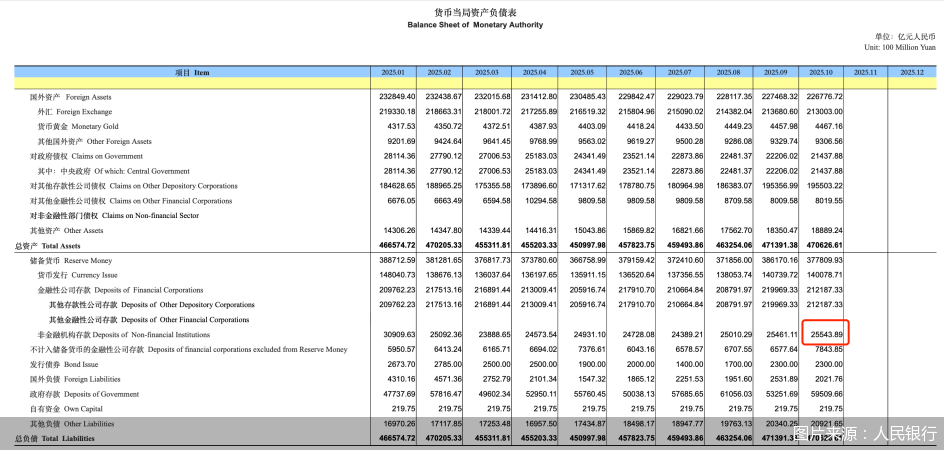
Core Insights - The payment industry is experiencing a recovery, as indicated by the increase in non-financial institution deposits, which reached 25,543.89 billion yuan as of October 2025, up by 82.78 billion yuan from September 2025 [1][2] Group 1: Payment Industry Trends - The increase in deposits reflects the transaction volume of payment institutions, with the scale of reserve funds growing for three consecutive months, driven by events like "Double 11" and the deepening of ecosystems by major platforms like WeChat and Alipay [2][3] - The overall reserve fund has shown a fluctuating growth trend, primarily around 25 trillion yuan, with peaks typically occurring in the fourth quarter and notable increases in January and April-May [2][3] Group 2: Regulatory Environment - The People's Bank of China has revoked a total of 107 payment licenses this year, including 11 in the current year, indicating a consolidation in the market, particularly among prepaid card institutions [3][4] - Compliance with reserve fund management regulations is critical, as evidenced by penalties imposed on institutions for violations, emphasizing the need for strict adherence to the 100% centralized deposit requirement [4]

5月备付金回升至2.49万亿元,消费旺季带动规模有力增长
Bei Jing Shang Bao· 2025-06-18 11:11
Core Viewpoint - The latest data from the People's Bank of China indicates a rise in non-financial institution deposits (payment institution reserve funds) to 24,931.1 billion yuan as of May 2025, reflecting a month-on-month increase of 357.56 billion yuan, driven by seasonal consumption trends and payment service enhancements [1][3]. Group 1: Payment Institution Reserve Funds - As of May 2025, the reserve funds for payment institutions reached 24,931.1 billion yuan, up from 24,573.54 billion yuan in April 2025, marking an increase of 357.56 billion yuan [1]. - The peak for payment institution reserve funds occurred in January 2025, surpassing 30,000 billion yuan, reaching a historical high of 30,909.63 billion yuan due to factors like the Spring Festival [2]. - After the January peak, reserve funds fell below 24,000 billion yuan in February and March 2025, but showed a recovery in April and May, stabilizing around 25,000 billion yuan [3]. Group 2: Economic and Regulatory Factors - The increase in reserve funds in May is attributed to seasonal consumption during holidays and the optimization of payment services, reflecting a positive economic outlook [3]. - Analysts suggest that the growth in reserve funds correlates with the increase in M1 money supply, indicating heightened market transaction activity since reserve funds were included in M1 statistics from January 2025 [3]. - The payment institution reserve funds exhibit clear cyclical fluctuations, influenced by seasonal consumer demand and regulatory pressures, with a trend towards normalization in growth due to stricter compliance requirements [4]. Group 3: Future Outlook - Short-term factors such as consumption promotions are expected to significantly impact reserve fund levels, while long-term projections suggest that reserve funds will stabilize around 25,000 billion yuan due to high mobile payment penetration [4]. - The potential for growth in niche areas like cross-border payments and B2B payments may provide additional increments to reserve funds in the future [4]. - Payment institutions are encouraged to enhance compliance with reserve fund management while focusing on consumer-driven policies to improve service quality [5].
