
支付系统

Search documents
金融大家评 | 周小川最新发声:用关税解决全球失衡或是条“弯路”
清华金融评论· 2026-03-27 00:53
Core Viewpoint - The article discusses the challenges and opportunities in international financial coordination, emphasizing the need for stronger global cooperation in the face of increasing capital flows and regional conflicts [2][3]. Group 1: Current Financial Landscape - Capital flows have significantly expanded, with cross-border financing becoming more common, indicating a higher degree of interdependence among economies [3]. - Traditional macroeconomic policies have been primarily domestic, but globalization is changing this dynamic, necessitating international policy coordination [3]. Group 2: Historical Context of Policy Coordination - Financial crises have historically driven the need for international policy coordination, with the G20 being established in response to the 1998 Asian financial crisis and elevated to a leaders' summit after the 2008 financial crisis [3]. Group 3: Current Challenges to Coordination - The urgency for coordination diminishes after crises, and current regional conflicts often stem from domestic issues, complicating international intervention [4]. - There is a lack of calls for the G20 to address these conflicts, which may exacerbate tensions among major powers and shift focus to domestic interests rather than international cooperation [4]. Group 4: Key Areas for International Cooperation - Climate Change: Despite the U.S. withdrawal from the Paris Agreement, many countries, especially in Europe and Asia, are keen on regional efforts to reduce carbon emissions [5]. - Payment Systems: Payment systems and digital currencies are seen as essential financial infrastructure, with ASEAN countries making progress in cross-border payment systems [5]. - Debt Issues: Developing countries continue to face significant debt challenges post-COVID-19, with G20 initiatives like debt payment deferrals and restructuring frameworks not fully resolving these issues [5]. - Global Imbalances: There is a need for multilateral solutions to address global imbalances, including discussions on the role of the IMF in managing these issues [6].


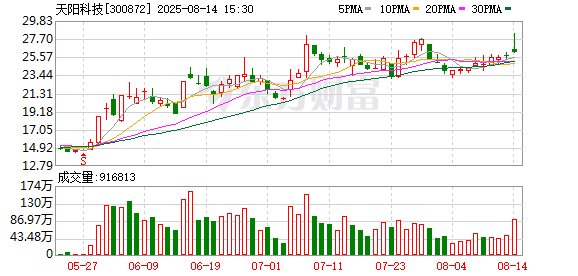
天阳科技:公司的信用卡解决方案是一套现代化的支付系统
Zheng Quan Ri Bao· 2025-08-14 11:45
Core Viewpoint - Tianyang Technology's credit card solution is a modern payment system that has received international certifications such as PCIDSS, making it particularly suitable for regional banks in emerging markets like Southeast Asia and the Middle East. The company's strategy includes expanding its credit card services internationally [2]. Group 1 - The credit card solution is designed to meet the needs of regional banks in emerging markets [2]. - The system has passed international certifications, ensuring its reliability and security [2]. - The company's established strategy focuses on international expansion of its credit card services [2].
7月18日电,美联储理事沃勒表示,稳定币为支付系统带来竞争,不认为稳定币构成威胁。
news flash· 2025-07-17 23:09
Core Viewpoint - The Federal Reserve Governor Waller stated that stablecoins introduce competition to the payment system and do not pose a threat [1] Group 1 - Stablecoins are seen as a competitive element in the payment system [1] - Waller does not consider stablecoins to be a threat [1]
美联储理事沃勒:稳定币将为支付系统带来更多竞争。
news flash· 2025-07-10 18:01
Core Viewpoint - Federal Reserve Governor Waller stated that stablecoins will introduce more competition into the payment system [1] Group 1 - Stablecoins are expected to enhance the efficiency and competitiveness of payment systems [1] - The introduction of stablecoins could lead to lower transaction costs and faster payment processing [1] - Waller emphasized the importance of regulatory frameworks to ensure the stability and security of stablecoins [1]