
汇率稳定

Search documents
金融大家评 | 周小川最新发声:用关税解决全球失衡或是条“弯路”
清华金融评论· 2026-03-27 00:53
Core Viewpoint - The article discusses the challenges and opportunities in international financial coordination, emphasizing the need for stronger global cooperation in the face of increasing capital flows and regional conflicts [2][3]. Group 1: Current Financial Landscape - Capital flows have significantly expanded, with cross-border financing becoming more common, indicating a higher degree of interdependence among economies [3]. - Traditional macroeconomic policies have been primarily domestic, but globalization is changing this dynamic, necessitating international policy coordination [3]. Group 2: Historical Context of Policy Coordination - Financial crises have historically driven the need for international policy coordination, with the G20 being established in response to the 1998 Asian financial crisis and elevated to a leaders' summit after the 2008 financial crisis [3]. Group 3: Current Challenges to Coordination - The urgency for coordination diminishes after crises, and current regional conflicts often stem from domestic issues, complicating international intervention [4]. - There is a lack of calls for the G20 to address these conflicts, which may exacerbate tensions among major powers and shift focus to domestic interests rather than international cooperation [4]. Group 4: Key Areas for International Cooperation - Climate Change: Despite the U.S. withdrawal from the Paris Agreement, many countries, especially in Europe and Asia, are keen on regional efforts to reduce carbon emissions [5]. - Payment Systems: Payment systems and digital currencies are seen as essential financial infrastructure, with ASEAN countries making progress in cross-border payment systems [5]. - Debt Issues: Developing countries continue to face significant debt challenges post-COVID-19, with G20 initiatives like debt payment deferrals and restructuring frameworks not fully resolving these issues [5]. - Global Imbalances: There is a need for multilateral solutions to address global imbalances, including discussions on the role of the IMF in managing these issues [6].


人民币汇率创三年新高,剑指6.3关口?单边升值背后有何隐患?
Sou Hu Cai Jing· 2026-02-26 08:43
Core Viewpoint - The recent strength of the Renminbi (RMB) against the US dollar is attributed to multiple factors, including a weaker dollar, improved external economic conditions, and increased domestic demand for currency exchange [1][3][5]. Group 1: Reasons for RMB Appreciation - The direct driver of RMB appreciation is the weakening of the US dollar, with the dollar index currently at 97.59, a low in recent years due to multiple interest rate cuts by the Federal Reserve [3]. - Improved external economic conditions, such as high-level visits to China and legal rulings against US tariffs, have contributed to stabilizing expectations for the RMB [3]. - Domestic enterprises are increasingly converting foreign currency to RMB, driven by narrowing interest rate differentials and expectations of RMB appreciation, leading to a surge in demand for RMB [3][5]. Group 2: Future Outlook and Risks - The factors supporting RMB strength are expected to persist, but there is uncertainty regarding whether it can break the 6.3 level reached in February 2022 [5]. - Rapid appreciation of the RMB may not benefit economic development, as it could act as a "double-edged sword" for an export-oriented economy, potentially reducing price competitiveness [5][8]. - Historical parallels are drawn with Japan's experience in the 1980s, where excessive currency appreciation led to prolonged economic stagnation [5][7]. Group 3: Policy Implications - Maintaining a stable exchange rate is a key policy goal, as unilateral appreciation or depreciation can disrupt market balance, with moderate fluctuations being ideal [8][10]. - The central bank previously intervened to curb rapid appreciation when the RMB reached 6.3, indicating that similar measures may be considered if the current appreciation accelerates [8][10]. - From a macro perspective, the exchange rate reflects the fundamental economic conditions of both countries, and a balanced approach is necessary to manage growth and currency stability [10][12].
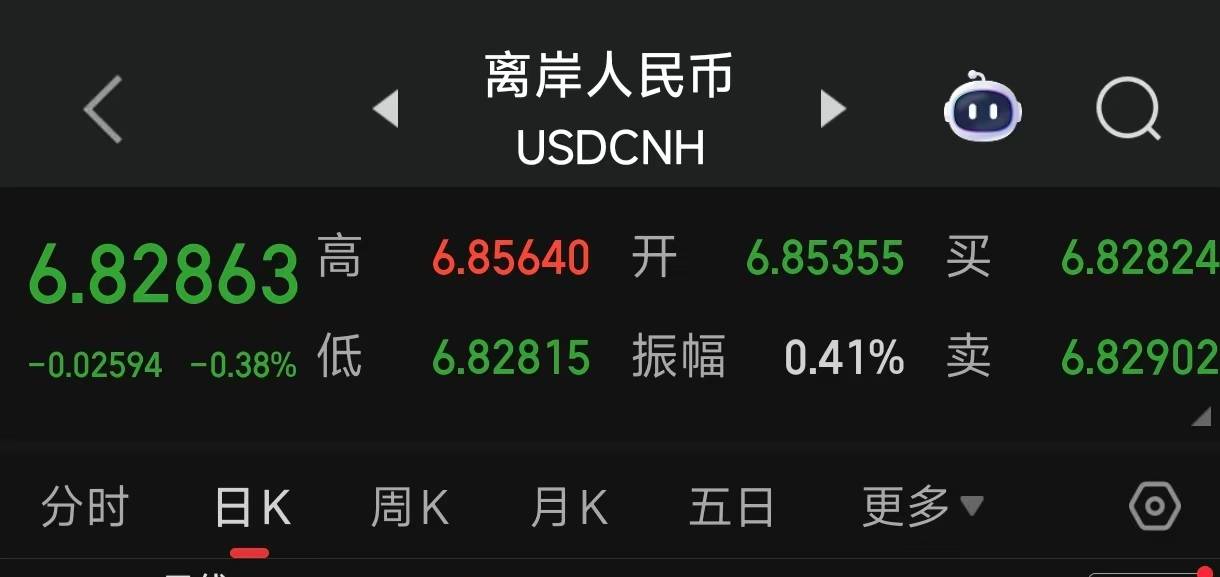
2026年2月19日印尼央行连续第四次维持4.75%基准利率不变
Sou Hu Cai Jing· 2026-02-19 10:55
Group 1 - The Bank of Indonesia has maintained the 7-day reverse repo rate at 4.75% for the fourth consecutive time, aligning with market expectations [1] - The decision aims to control inflation within the official target range of 2.5%±1%, stabilize the currency, and support economic growth amid global financial uncertainties [1] - The inflation rate in January 2026 was reported at 3.55% year-on-year, attributed to base effects, with the government and central bank coordinating measures to stabilize supply and prices [1] Group 2 - Since September 2024, the Bank of Indonesia has cut interest rates by a total of 150 basis points, reaching the lowest level since 2022 [1] - The central bank plans to continue interventions in the foreign exchange market to maintain currency stability and bolster market confidence, indicating that the Indonesian rupiah is undervalued relative to economic fundamentals [1] - The GDP growth forecast for 2026 remains unchanged at a range of 4.9% to 5.7%, with expectations of strengthened economic growth in the first quarter due to government stimulus and improved business confidence [2]
前日本财务省副大臣中尾武彦呼吁加息稳市场 2025年四季度日本GDP环比增长0.1%
Sou Hu Cai Jing· 2026-02-16 07:15
Core Viewpoint - The current monetary policy actions of the Bank of Japan are considered "behind the curve," and raising interest rates could help address inflation and stabilize the market [1] Group 1: Monetary Policy - Incremental interest rate hikes are suggested to combat inflation, curb excessive depreciation of the yen, and stabilize long-term bond yields [1] - The Bank of Japan's policy stance is viewed as lacking coherence in the context of persistent global inflation [1] - The need for the Bank of Japan to pay attention to exchange rate stability is emphasized, despite the absence of explicit legal requirements [1] Group 2: Economic Data - Preliminary data released by the Japanese government on February 16 indicates a 0.1% quarter-on-quarter growth in real GDP for the October to December 2025 period, following a contraction of 0.7% in the previous quarter [1] - This economic recovery provides the Bank of Japan with more room to tighten monetary policy [1] Group 3: Political Stance - The representative of the ruling coalition partner, Japan Innovation Party, stated that interest rate decisions should be made independently by the Bank of Japan without political interference [1] - The government is encouraged to implement fiscal measures to build a strong economy in response to potential impacts from interest rate hikes [1] - There is a push to advance the two-year plan to postpone the 8% food consumption tax [1]
重要信号!500亿元央票将在香港发行
Shang Hai Zheng Quan Bao· 2026-02-13 05:02
Core Viewpoint - The People's Bank of China (PBOC) will issue a total of 50 billion RMB in central bank bills through the Hong Kong Monetary Authority's debt instrument central settlement system on February 25, 2026, to manage offshore RMB liquidity and stabilize exchange rate expectations [1][2]. Group 1: Central Bank Bills Issuance - The first phase of the central bank bills will have a term of 3 months (91 days) with a fixed interest rate, totaling 30 billion RMB, starting from February 27, 2026, and maturing on May 29, 2026 [1]. - The second phase will have a term of 1 year, also with a fixed interest rate, totaling 20 billion RMB, starting from February 27, 2026, and maturing on February 27, 2027 [2]. Group 2: Market Impact and Significance - The issuance of offshore RMB central bank bills is expected to increase the cost for speculators to short the RMB, thereby helping to break potential one-sided depreciation expectations of the currency [1]. - Offshore central bank bills, backed by the central bank, are among the highest credit-rated RMB financial products in the offshore market, fulfilling two key roles: improving the yield curve for RMB assets and meeting the demand for offshore RMB asset allocation [2]. - The ongoing issuance of central bank bills in Hong Kong enhances the willingness of overseas entities to hold RMB, solidifying Hong Kong's position as a global hub for offshore RMB business [2].
【广发宏观钟林楠】2025年四季度货政报告的四个关注点
郭磊宏观茶座· 2026-02-11 06:58
Core Viewpoint - The central theme of the article revolves around the People's Bank of China's (PBOC) monetary policy adjustments and their implications for the economy, focusing on stabilizing short-term interest rates, promoting low financing costs, and leveraging exchange rates as automatic stabilizers for macroeconomic balance [5][6][10]. Group 1: Short-term Interest Rates - The PBOC aims to guide short-term money market rates to operate smoothly around the central bank's policy rates, specifically targeting DR001 and DR007, with a stable operation range defined as 20 basis points below and 50 basis points above the 7-day reverse repo rate [1][6]. - The report indicates that the key interest rates like DR001 and DR007 are expected to operate within a corridor of 70 basis points, which is considered acceptable by the central bank [1][6]. Group 2: Financing Costs - The PBOC emphasizes the need to maintain low comprehensive financing costs for society, suggesting that current financing costs are already at a relatively acceptable low level, making further rate cuts less likely without stronger triggers [2][8]. - The focus remains on stabilizing and expanding bank interest margins while ensuring sufficient liquidity for the banking system, indicating a low probability of significant increases in short-term rates like interbank certificates of deposit [2][8]. Group 3: Exchange Rate Stabilization - The PBOC calls for the exchange rate to function as an automatic stabilizer for the macroeconomy and international balance of payments, highlighting its role in adjusting trade conditions and absorbing external policy impacts [3][10]. - Emphasizing the need for exchange rate flexibility, the PBOC aims to maintain a balance between internal and external economic conditions, which requires a certain degree of exchange rate elasticity [3][10]. Group 4: Response to Deposit Migration - The PBOC addresses the issue of "deposit migration," noting that as direct financing develops and financing channels diversify, the allocation of household savings between bank deposits and other financial assets will become more varied [4][11]. - The central bank emphasizes that while this diversification may affect the structure of bank liabilities, it does not necessarily lead to significant changes in the overall liquidity of the financial system [4][11].

为缓解韩元贬值压力,韩国最大养老基金缩减海外投资规模
Hua Er Jie Jian Wen· 2026-01-26 11:59
Core Insights - The National Pension Service (NPS) of South Korea is significantly reducing its overseas investment targets while increasing support for domestic assets, primarily to address currency volatility and leverage the strong performance of the Korean stock market [1][2]. Group 1: Asset Allocation Strategy - NPS plans to lower its overseas stock investment target from 38.9% to 37.2% by 2026, while raising its domestic stock allocation from 14.4% to 14.9%, resulting in a reduction of approximately $20 billion in overseas stock holdings compared to previous plans [1][3]. - The adjustment reflects a strategic shift to retain more domestic assets, with NPS not planning to sell domestic stocks or increase overseas stock purchases [3]. Group 2: Market Conditions and Responses - The Korean stock market, particularly the Kospi index, has surged over 95% in the past year due to increased demand for artificial intelligence and semiconductors, leading to a risk of forced selling to maintain asset allocation ratios [2][4]. - NPS's domestic stock risk exposure reached 17.9% as of last October, exceeding the set target and nearing the upper limit of strategic flexibility [4]. Group 3: Regulatory and Market Stability Measures - The Bank of Korea is closely monitoring NPS's asset allocation changes and foreign exchange hedging strategies to stabilize the foreign exchange market [4]. - NPS has decided to temporarily suspend rebalancing operations to avoid negative impacts on the local stock and foreign exchange markets, allowing for some deviation from asset allocation targets to maintain overall market stability [5].
日央行账户数据未现下场铁证!美日协同干预汇市预期推动日元升至两个月新高
Zhi Tong Cai Jing· 2026-01-26 11:03
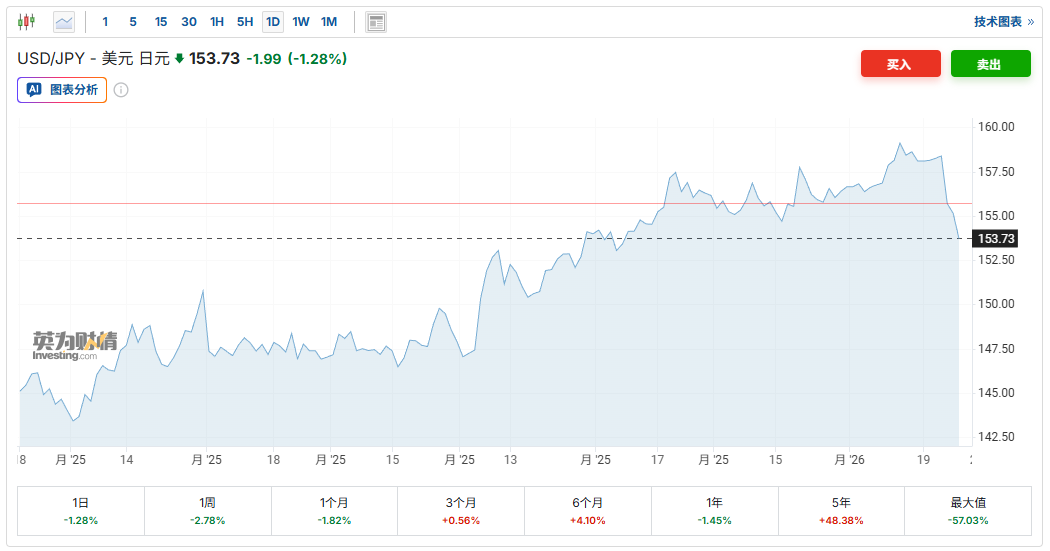
Core Viewpoint - The recent fluctuations in the Japanese yen and potential interventions by Japanese and U.S. authorities indicate a complex interplay of monetary policy and market dynamics, with a focus on stabilizing the yen and preventing excessive volatility ahead of Japan's upcoming elections [1][3][4]. Group 1: Japanese Yen Intervention - Japan's recent data does not provide clear evidence of intervention in the foreign exchange market, making it difficult to ascertain if the authorities bought yen last week [1]. - The Bank of Japan anticipates a reduction of 630 billion yen in the current account due to fiscal factors, which is significantly larger than market predictions [1]. - The yen experienced its largest single-day increase in nearly six months last Friday, with the USD/JPY exchange rate dropping by 1.28% to 153.73, the lowest level since November of the previous year [1]. Group 2: U.S. Involvement and Market Speculation - The New York Federal Reserve's inquiries about the yen's exchange rate have led to speculation that the U.S. may assist Japan in intervening in the currency market [3]. - Market expectations have shifted regarding U.S. intervention, with analysts suggesting that the U.S. may aim to weaken the dollar to enhance trade competitiveness [3]. - Economists from Evercore ISI argue that U.S. intervention is reasonable to prevent excessive yen depreciation and stabilize the Japanese bond market [3]. Group 3: Future Outlook and Political Considerations - The Japanese government has previously intervened around the 160 yen mark, spending nearly $100 billion to support the yen [4]. - The current goal for the Japanese government is to maintain exchange rate stability, particularly in the context of the upcoming elections, with a target range for USD/JPY between 145 and 155 [4]. - The potential for coordinated intervention between the U.S. and Japan may increase if the USD/JPY approaches recent highs, especially before the February 8 elections [4]. Group 4: Economic Projections - The Bank of Japan is expected to raise interest rates twice by 2026, while the Federal Reserve may lower rates twice, which could support the yen [5]. - Despite these projections, the trend of the USD/JPY may resume upward due to strong U.S. economic performance and structural capital outflows from Japan [5]. - Investors are advised to be cautious, as simple short positions on the yen may no longer be safe due to potential policy interventions from both Washington and Tokyo [5].
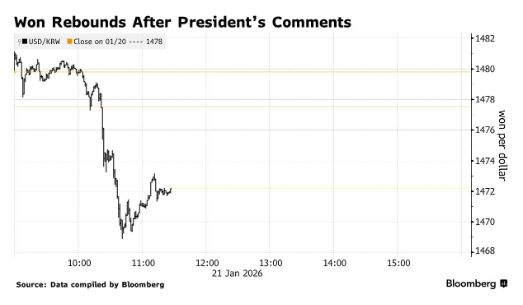
总统亲自喊话稳汇率!李在明:韩元有望两月内企稳回升至1400水平
智通财经网· 2026-01-21 06:51
Group 1 - The South Korean President Lee Jae-myung stated that the long-pressured Korean won is expected to stabilize and recover in the next two months, with the exchange rate against the US dollar likely stabilizing around 1400 won [1] - The recent depreciation of the won is not unique to South Korea, as the Japanese yen is experiencing even more significant devaluation pressure [1] - Despite multiple government interventions and measures, the won has depreciated over 8% since the second half of 2025, approaching its lowest point since the global financial crisis [1] Group 2 - South Korea's commitment to invest $350 billion in the US under a trade agreement has raised concerns about its capital expenditure financing capabilities, leading to a postponement of this year's $20 billion investment commitment [3] - Retail investors in South Korea have shown a strong preference for US stocks, with their holdings reaching a record high of nearly $172 billion this month, contributing to the pressure on the won [3] - Lee Jae-myung noted that if the won depreciated at the same rate as the yen, the current exchange rate could reach around 1600 won per dollar, indicating that the won's performance is relatively strong [3] Group 3 - The ongoing geopolitical tensions, including actions related to Greenland by the US, have heightened global risk aversion, which could impact the won's performance [4] - If the trend of a weakening dollar continues due to the Greenland situation, there may be further room for the won to rebound [4] Group 4 - Lee Jae-myung also provided positive signals for the stock market, suggesting that the benchmark index could reach the promised target of 5000 points during his campaign [5] - He emphasized that the valuation of the South Korean stock market is significantly undervalued compared to Taiwan and other emerging markets [5]
日本最大工会组织敦促日本政府稳定汇率
Xin Hua Cai Jing· 2026-01-21 06:34
Core Viewpoint - The president of Japan's largest labor union, Rengo, has urged the government to adjust economic policies to stabilize the yen, as its depreciation is exacerbating inflation by increasing import costs [1] Group 1: Economic Policy and Currency - Rengo's president, Yoshino Tomoko, expressed concerns that the current depreciation of the yen is pushing up import costs, thereby intensifying inflation [1] - There are market worries regarding Prime Minister Kishida's dovish fiscal policies, which have contributed to the continuous decline of the yen against major currencies [1] Group 2: Inflation and Price Stability - The inflation rate in Japan remains above the government's and the Bank of Japan's target of 2%, prompting calls for macroeconomic management measures to stabilize prices and the exchange rate [1] Group 3: Labor Negotiations - Rengo, which has 7 million members, has set a target of 5% or higher for the spring wage negotiations in 2026, with discussions typically concluding in mid-March [1]