
支部联建

Search documents
甘肃甘南:支部联建为高原乡村开出“致富良方”
Xin Lang Cai Jing· 2026-01-23 04:27
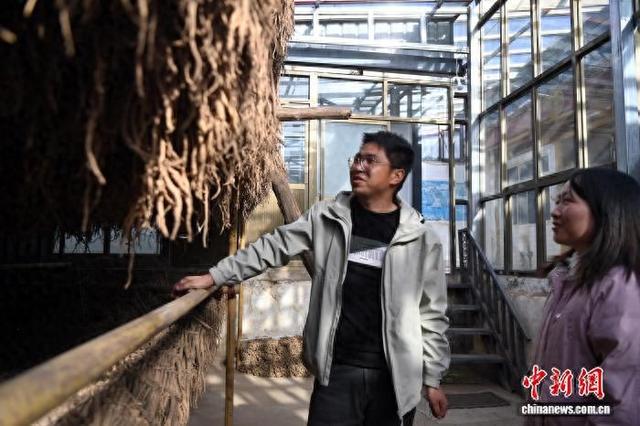
Core Viewpoint - The article highlights the successful implementation of a grassroots initiative in Gansu Province, where local farmers, particularly in Caoshan Village, have benefited from expert guidance and support, leading to increased agricultural productivity and income through improved practices and sales strategies [1][3][5]. Group 1: Agricultural Productivity - Wang Xirong, a local farmer, reported an increase of approximately 4 tons in the yield of party ginseng, translating to an additional income of around 70,000 to 80,000 yuan due to expert advice on crop rotation [1][3]. - The introduction of scientific crop rotation practices has allowed farmers to enhance soil fertility and reduce pest issues, resulting in higher yields from their medicinal herb fields [3][5]. Group 2: Community Support and Sales - The Gansu Provincial Human Resources and Social Security Bureau has mobilized 47,000 party members to assist in rural development, focusing on addressing local needs through partnerships with village organizations [3][6]. - A total of 800 kilograms of honey were purchased from Caoshan Village as part of a consumption assistance initiative, directly benefiting local farmers and contributing to poverty alleviation efforts [5][6]. - The "unit + village collective + farmer" sales model has been effective in increasing farmers' incomes and strengthening the village's collective economy, with one farmer earning approximately 18,600 yuan from honey sales [5][6]. Group 3: Overall Impact and Statistics - Through the partnership initiative, over 30,400 home visits have been conducted by party members, coordinating project funding of 1.37 billion yuan and addressing more than 5,700 practical issues for the community [6]. - The average collective economic income for villages in the region is projected to reach 339,300 yuan by 2024, indicating significant economic growth [6].

【安康】各展其长 协同并进
Shan Xi Ri Bao· 2026-01-06 23:25
Core Viewpoint - The article highlights the successful implementation of the "Three Links" mechanism in Ankang City, which promotes collaboration among villages and enterprises to enhance agricultural production and market access, leading to improved economic outcomes for local communities [1][2][5]. Group 1: Collaborative Development - Ankang City has initiated a "Party Branch Joint Construction" approach, allowing villages to share resources and develop industries collectively, thus overcoming individual limitations [2][3]. - The partnership between military dam village and a local agricultural technology company has led to the establishment of a comprehensive aquaculture industry chain, significantly increasing income for local residents [3]. - Five villages in the Hengkou demonstration area have formed a joint party branch, facilitating resource sharing and unified planning for a standardized rice industry park, which has attracted tourism [3]. Group 2: Industrial Alliances - Ankang City has formed 336 various industrial alliances or joint bodies, covering key sectors such as selenium-rich food, cultural tourism, and biomedicine, with 894 standardized raw material bases established [5]. - The establishment of a joint party branch in the Jinpo area has led to a cooperative model that integrates planting, processing, and sales, enhancing the collective economy [5]. - Villages in Shiquan County have unified silkworm breeding standards and introduced automated equipment through an industrial alliance, promoting cultural tourism related to sericulture [5]. Group 3: Resource Sharing - The "Three Links" mechanism focuses on optimizing the flow and utilization of development resources, including land and capital, to increase farmers' incomes [6]. - Villages have consolidated idle collective assets for unified development, such as integrating water surface rights for ecological fisheries, resulting in shared profits among villagers [6]. - The sharing of intangible resources like agricultural training and market access has been facilitated through joint platforms, enhancing the capabilities of village organizations [6].