
收购与并购

Search documents
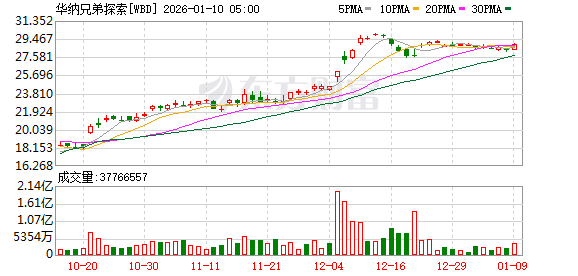
嫌钱多?华纳兄弟探索再拒派拉蒙天舞千亿美元求购
Zhong Guo Jing Ying Bao· 2026-01-10 09:37
Core Viewpoint - The acquisition battle for Warner Bros. Discovery between Paramount Sky Dance and Netflix continues, with Netflix appearing to have a slight edge, but internal divisions within Warner Bros. Discovery are evident [2]. Group 1: Acquisition Offers - Paramount Sky Dance has reiterated its all-cash offer of $30 per share, totaling $108.4 billion, for Warner Bros. Discovery [2]. - Warner Bros. Discovery previously rejected Paramount's revised offer, urging shareholders to support Netflix's acquisition proposal [2]. - Netflix's offer is approximately $82.7 billion, consisting of $27.75 per share in cash and some Netflix stock, contingent on Warner Bros. Discovery divesting certain cable assets [3][4]. Group 2: Financial Risks - Paramount Sky Dance's market value is around $14 billion, yet it seeks to finance a deal requiring $94.65 billion in debt and equity, nearly seven times its market value, presenting significant risks to Warner Bros. Discovery and its shareholders [3]. - Warner Bros. Discovery's debt stands at approximately $63.21 billion, with a debt-to-asset ratio of 62.89% as of the third quarter of fiscal year 2025 [4]. - If Paramount Sky Dance's $108.4 billion offer is accepted, it would leverage about ten times its market value, potentially leading to over $100 billion in debt [5]. Group 3: Shareholder Perspectives - Many shareholders find Paramount's high cash offer attractive, preferring immediate returns despite the associated financial risks [6]. - There is a notable divide between Warner Bros. Discovery's management, which favors Netflix's proposal, and shareholders who are drawn to the higher cash offer from Paramount [7]. - The management's preference for Netflix's offer is based on the desire to create a more independent company by divesting certain assets, while shareholders prioritize immediate financial gain [7]. Group 4: Industry Reactions - Paramount Sky Dance's CEO has criticized Netflix's model, claiming it threatens traditional cinema distribution, while advocating for the preservation of the traditional film studio model [8]. - Industry organizations, including the Directors Guild of America (DGA) and Writers Guild of America (WGA), have expressed opposition to Netflix's acquisition, citing concerns over job losses and reduced content diversity [8]. Group 5: Factors Influencing the Acquisition - The acquisition's complexity is influenced by the price, with Paramount's higher cash offer accompanied by greater risks [8]. - The reliability of Paramount's financing and its ability to manage subsequent debt repayment are uncertain [8]. - Regulatory approval risks are significant for both acquisition proposals, particularly for Paramount due to foreign investment considerations [8].

罕见!一则利空,突袭巴菲特
Zheng Quan Shi Bao· 2025-10-28 10:46
Core Viewpoint - Berkshire Hathaway's stock has underperformed compared to major U.S. indices, with a year-to-date increase of less than 8% against the Dow, Nasdaq, and S&P 500's gains of 11.75%, 22.41%, and 16.89% respectively [1][2] Group 1: Stock Performance and Ratings - Berkshire's A-class shares fell by 0.79% to $732,650, while B-class shares dropped by 0.50% [1][2] - KBW downgraded Berkshire's rating to "underperform" and lowered the A-class target price from $740,000 to $700,000, citing leadership transition risks and various business headwinds [1][2][3] - Since the announcement of management changes in May, Berkshire's A-class shares have lagged the S&P 500 by over 28 percentage points [3] Group 2: Business Challenges - The decline in auto insurance profit margins, tariff pressures, decreasing interest rates, and reduced clean energy tax credits are expected to negatively impact Berkshire's stock price [2][3] - Berkshire's BNSF Railway is vulnerable to rising tariffs and declining trade volumes from Asia, affecting its growth prospects [3] - The decrease in interest rates will reduce the returns on Berkshire's substantial cash reserves of $344.1 billion [3] Group 3: Leadership Transition - Warren Buffett, aged 95, plans to step down as CEO in January, with Greg Abel set to take over, although Buffett will remain as chairman [2][4] - The transition in leadership is seen as a potential drag on investor confidence due to Buffett's unique reputation and the perceived inadequacies in current disclosure mechanisms [3][4] Group 4: Recent Acquisitions - Berkshire's recent acquisition of Occidental Petroleum's chemical subsidiary for $9.7 billion is viewed as a significant transaction, possibly marking Buffett's last major deal [4][5] - The acquisition utilized less than 3% of Berkshire's cash reserves, indicating limited impact on overall profitability [5] - Berkshire holds a 28% stake in Occidental Petroleum and has additional preferred shares, generating an 8% annual dividend [6]