
放射配体疗法(RLT)

Search documents
跨国药企集体加仓中国
21世纪经济报道· 2026-03-23 10:13
Core Viewpoint - Multinational pharmaceutical companies are significantly increasing their investments in China, shifting their strategy from merely selling drugs to innovating and producing in China, reflecting confidence in the Chinese market and its role in global supply chains [1][9][16]. Investment Trends - AstraZeneca plans to invest over 100 billion RMB (approximately 15 billion USD) in China by 2030, focusing on drug production and R&D [1]. - Novartis announced an investment of over 3.3 billion RMB in China, aiming to expand its R&D and production capabilities [6]. - Eli Lilly has committed to a total investment of 3 billion USD over the next decade [1]. Strategic Focus - The investment focus of multinational companies is on high-barrier, high-growth areas such as cell and gene therapy (CGT), radioligand therapy (RLT), GLP-1 weight loss/metabolism, and RSV vaccines [2]. - Companies are establishing local production capabilities to enhance their ability to innovate and deliver new therapies [5]. Local Collaboration - AstraZeneca is collaborating with Tsinghua University to establish a joint research center for AI drug development, indicating a deeper integration into the local innovation ecosystem [13]. - Novartis is expanding its clinical research scale in China and exploring partnerships with local innovative companies, with potential investments exceeding 80 billion RMB [7]. Regulatory Environment - The Chinese government is enhancing its regulatory framework, which is crucial for the high-quality development of the biopharmaceutical industry [9][10]. - Recent reforms in drug approval processes and dynamic adjustments in the medical insurance catalog are creating a more predictable policy environment for multinational companies [9]. Health Strategy - GSK's report emphasizes the need for a modernized prevention system and a shift in health investment from cost control to strategic investment in public health [15][16]. - The focus is on proactive health management and the integration of innovative treatments into the healthcare system to improve overall health outcomes [15]. Conclusion - The evolving role of multinational pharmaceutical companies in China signifies a strategic shift towards innovation and collaboration, positioning China as a key player in the global biopharmaceutical landscape [16].



进博会观察|西门子医疗:以本土研发制造提升中国高端医疗实力
Sou Hu Cai Jing· 2025-11-09 23:31
Core Viewpoint - The article highlights Siemens Healthineers' commitment to localizing its operations in China while introducing innovative medical technologies, aiming to transition from a product provider to a value partner in the healthcare sector [2][5][8]. Group 1: Localization and Innovation - Siemens Healthineers showcased multiple new products, including photon-counting CT devices, at the 8th China International Import Expo, emphasizing its strategy to bring global innovations to the Chinese market [2][3]. - The company has achieved over 80% localization in production, with more than 130 products manufactured locally, and plans to further enhance its local manufacturing capabilities [5][6]. - The introduction of the world's first photon-counting CT, NAEOTOM Alpha, represents a significant advancement, with plans for two new models to be produced in China by 2026 [5]. Group 2: Advanced Medical Solutions - The ARTIS icono ceiling Xpand system features a unique 0.5mm precision laser puncture navigation, significantly improving the accuracy of interventions for lung and liver cancers [3]. - The Biograph One PET/MR system allows simultaneous imaging of structural, functional, and molecular data, reducing scan times to 17 minutes, thus enhancing efficiency and accessibility [3]. - The SmART adaptive radiotherapy solution, designed for Chinese clinical needs, enables personalized treatment adjustments in real-time, improving patient outcomes [4]. Group 3: Strategic Collaborations and Future Plans - Siemens Healthineers has formed strategic partnerships, such as with Novartis, to explore integrated systems for molecular imaging and radioligand therapy, reinforcing its role as a value partner [7]. - The company is expanding its R&D and manufacturing base in Shenzhen, with an investment exceeding 1 billion RMB, aiming to triple the facility's capacity by 2027 [6]. - Siemens Healthineers plans to deepen its integration with clinical practices and enhance its sustainability efforts, focusing on creating a more open innovation ecosystem in China's healthcare sector [8].

进博首日旗下核药获批上市 诺华迎来开门红
Guo Ji Jin Rong Bao· 2025-11-08 05:42
Core Insights - Novartis' first radioligand therapy (RLT) drug, Lutetium [177Lu] vipivotide tetraxetan injection (brand name: Pluvicto), has received dual indication approval from China's National Medical Products Administration, marking it as the first targeted PSMA RLT drug approved in the country for advanced prostate cancer patients [2][4][10] - The drug was previously approved by the FDA in 2022 for use in PSMA-positive metastatic castration-resistant prostate cancer (mCRPC) as a third-line treatment, with projected sales of $1.389 billion (approximately 9.9 billion RMB) for the first three quarters of 2025 [2][8] - The approval is based on global Phase III VISION and PSMAfore studies, along with corresponding bridging studies conducted in China [2] Company Overview - Novartis' RLT drugs have surpassed $2 billion in revenue for the first time last year, indicating a strong market presence [8] - The company emphasizes its commitment to bringing high clinical value innovative drugs to Chinese patients, marking a significant milestone in the development of RLT therapies in China [8] Industry Context - Prostate cancer is one of the most common malignancies among men globally, with over 1.4 million new cases reported annually, and China alone saw over 134,000 new cases in 2022, making it the fastest-growing cancer type [8][10] - The prognosis for advanced prostate cancer patients is poor, with 54% diagnosed at a metastatic stage and a 5-year survival rate of only 36.6% for mCRPC patients [8][10] - The development of innovative treatment options is urgently needed to improve survival and quality of life for mCRPC patients, as current treatments often have limited effectiveness and significant side effects [10]
进博盛宴:跨国药械创新出击,本土合作全面开花
2 1 Shi Ji Jing Ji Bao Dao· 2025-11-07 01:28
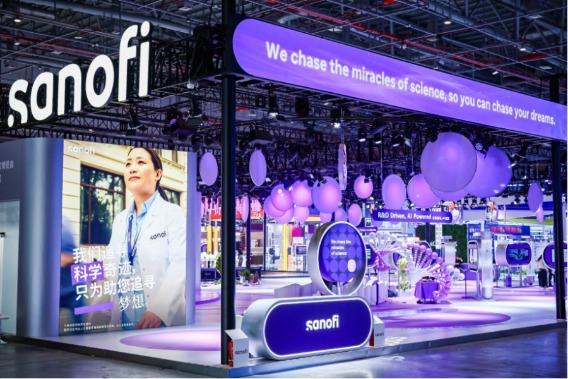
Core Insights - The healthcare industry is demonstrating remarkable resilience in response to changing times, with a projected global market growth of 9% in 2024 driven by innovations in specialized treatments, explosive growth in anti-obesity drugs, and widespread application of AI in healthcare [1] - The China International Import Expo (CIIE) serves as a vital platform for global pharmaceutical companies to integrate deeply with the Chinese market and advance the Healthy China strategy [1][2] Industry Trends - The Chinese government has introduced policies to develop the healthcare industry and encourage innovative drug research, positioning China as a potential global center for biopharmaceutical innovation [2] - Major chronic diseases, such as cardiovascular and chronic kidney diseases, pose significant public health challenges in China, with over 400 million patients affected [2] Innovations and Product Launches - At the CIIE, various pharmaceutical companies showcased innovations across multiple fields, including cardiovascular, metabolic, respiratory, and oncology, highlighting their commitment to addressing major health challenges [1] - Novartis introduced the "Heart and Kidney Guardian Evidence-Based Science Popularization" project, emphasizing the dual role of pharmaceutical companies in drug development and public health education [3] - Sanofi launched two innovative cardiovascular drugs, Aficamten and Plerixafor, at the CIIE, addressing unmet patient needs in the treatment of cardiovascular diseases [3] - Roche presented advancements in blood cancer treatments, including new indications for existing therapies and innovative products for hemophilia [5] Strategic Collaborations - Siemens Healthineers and Novartis signed a strategic cooperation agreement to advance the integration of radioligand therapy and molecular imaging systems for precision treatment of diseases like prostate cancer [19] - Novo Nordisk and the Shanghai Clinical Innovation and Translation Research Institute (ACITS) established a strategic partnership to enhance clinical research and innovation in China [16][17] Public Health Initiatives - The CIIE featured discussions on the application of digital technology and AI in public health, aligning with China's "Healthy China 2030" strategy [21][23] - Pfizer emphasized the role of big data and AI in transforming public health systems and achieving health goals in China [23] Emerging Companies and Products - Viseon Pharmaceuticals showcased two innovative drugs at the CIIE, highlighting its commitment to global innovation and rapid market entry in China [24]
诺华Pluvicto新适应症在华申报上市
Tai Ping Yang· 2025-04-29 02:55
Investment Rating - The industry rating is neutral, indicating that the expected overall return in the next six months will be between -5% and 5% compared to the CSI 300 index [9]. Core Insights - The pharmaceutical sector experienced a decline of 0.74% on April 28, 2025, underperforming the CSI 300 index by 0.60 percentage points, ranking 15th among 31 sub-industries [4]. - Notable performers within the pharmaceutical sub-industries included offline pharmacies (+2.83%), medical research outsourcing (+0.53%), and other biological products (+0.17%), while medical consumables (-1.98%), vaccines (-1.73%), and in vitro diagnostics (-1.65%) lagged behind [4]. - Novartis' application for a new indication for Pluvicto has been accepted by the Chinese National Medical Products Administration, targeting earlier-stage PSMA-positive mCRPC patients [5]. Summary by Sections Market Performance - On April 28, 2025, the pharmaceutical sector's performance was -0.74%, underperforming the CSI 300 index by 0.60 percentage points, with offline pharmacies and medical research outsourcing showing positive growth [4]. Sub-industry Ratings - Chemical pharmaceuticals: No rating - Traditional Chinese medicine: No rating - Biopharmaceuticals II: Neutral - Other pharmaceutical industries: Neutral [3]. Company News - WuXi AppTec reported Q1 2025 revenue of 9.655 billion yuan, a year-on-year increase of 20.96%, with net profit rising by 80.06% to 3.672 billion yuan [6]. - Hongbo Pharmaceutical reported Q1 2025 revenue of 169 million yuan, up 29.61%, with net profit increasing by 226.47% to 12 million yuan [6]. - Xingqi Eye Medicine reported Q1 2025 revenue of 536 million yuan, a 53.24% increase, with net profit soaring by 319.86% to 146 million yuan [6]. - Yingke Medical reported Q1 2025 revenue of 2.494 billion yuan, a 13.20% increase, with net profit rising by 48.08% to 353 million yuan [6].