政府债务管理机制

Search documents
准确把握形势任务 财政政策更加有力有效
Zhong Guo Zheng Quan Bao· 2025-11-10 22:13
Core Viewpoint - The article emphasizes the importance of proactive fiscal policy in promoting economic balance and structural optimization, as outlined in the "14th Five-Year Plan" proposal, which aims to enhance fiscal sustainability [1][6]. Group 1: Continuation of Proactive Fiscal Policy - China has consistently implemented proactive fiscal policies to stabilize employment and prices, support domestic demand, and target key areas for economic and social development [2][3]. - The fiscal policy approach is expected to continue, focusing on expanding expenditure, optimizing spending schedules, and innovating policy tools to stimulate total demand and stabilize economic growth [3][4]. Group 2: Enhancing Efficiency of Fund Utilization - The article highlights the need to optimize the structure of fiscal spending to improve the effectiveness of fiscal policies and fund utilization [4][5]. - It suggests focusing fiscal resources on public sectors and areas with high social benefits, such as healthcare, education, and social welfare, while also expanding effective investments in emerging fields like digital economy [4][5]. Group 3: Strengthening Sustainability - The "14th Five-Year Plan" period is crucial for achieving socialist modernization, requiring effective implementation of proactive fiscal policies amidst complex development environments [6][7]. - Experts advocate for deepening fiscal and tax system reforms to enhance fiscal sustainability, including the implementation of zero-based budgeting and optimizing the relationship between central and local finances [7][8].
“十四五”地方债规模翻倍稳经济,“十五五”应关注哪些重点
Di Yi Cai Jing· 2025-07-22 10:19
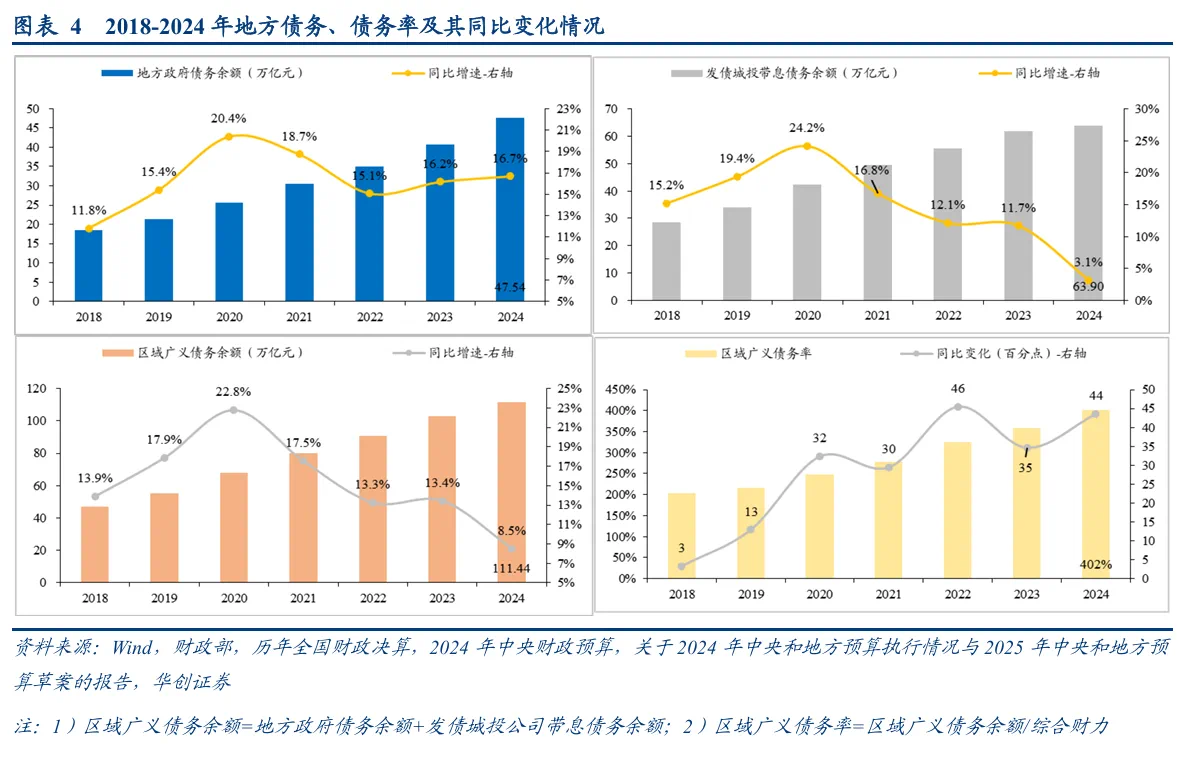
Core Viewpoint - The establishment of a high-quality government debt management mechanism and a comprehensive local debt monitoring and regulatory system is crucial for balancing development and risk prevention during the "14th Five-Year Plan" period [1][2]. Group 1: Local Government Debt Growth - Local government debt has rapidly increased from approximately 25.7 trillion yuan at the end of 2020 to an estimated 51.3 trillion yuan by May 2025, representing a doubling of the debt [1]. - The total local debt is currently within the limit of 57.9 trillion yuan, indicating that the overall risk is manageable [1]. - The significant increase in local debt during the "14th Five-Year Plan" is attributed to the need for economic stability in response to the pandemic and other macroeconomic changes [4][8]. Group 2: Mechanisms for Debt Management - The "14th Five-Year Plan" has seen a shift towards a more transparent management of all debts, moving from dual-track management of hidden and legal debts to a unified approach [1][4]. - The issuance of special bonds has surged, with the annual issuance during the "14th Five-Year Plan" period averaging around 4 trillion yuan, aimed at supporting infrastructure and housing projects [9][10]. - The central government has implemented a comprehensive debt reduction policy, with an estimated 12 trillion yuan allocated to mitigate existing hidden debts [9][15]. Group 3: Regulatory Framework and Challenges - The regulatory framework for local government financing has improved, with measures such as dynamic management of high-risk areas and enhanced transparency in debt monitoring [11][15]. - Despite progress, challenges remain, including the potential for new hidden debts and inflated revenue projections for special bond projects [16][17]. - The need for a balance between debt sustainability and fiscal space is emphasized, particularly as interest payments on debts increase [16][21]. Group 4: Future Considerations for the "15th Five-Year Plan" - The focus for the "15th Five-Year Plan" will be on enhancing the quality of debt management and ensuring that debt financing aligns with high-quality development goals [2][21]. - There is a call for a more refined evaluation system for the entire lifecycle of projects funded by debt to ensure accountability and effectiveness [16]. - The transformation of local financing platforms into market-oriented entities is necessary to reduce reliance on government credit and enhance operational efficiency [20][21].