政策可信度重构

Search documents
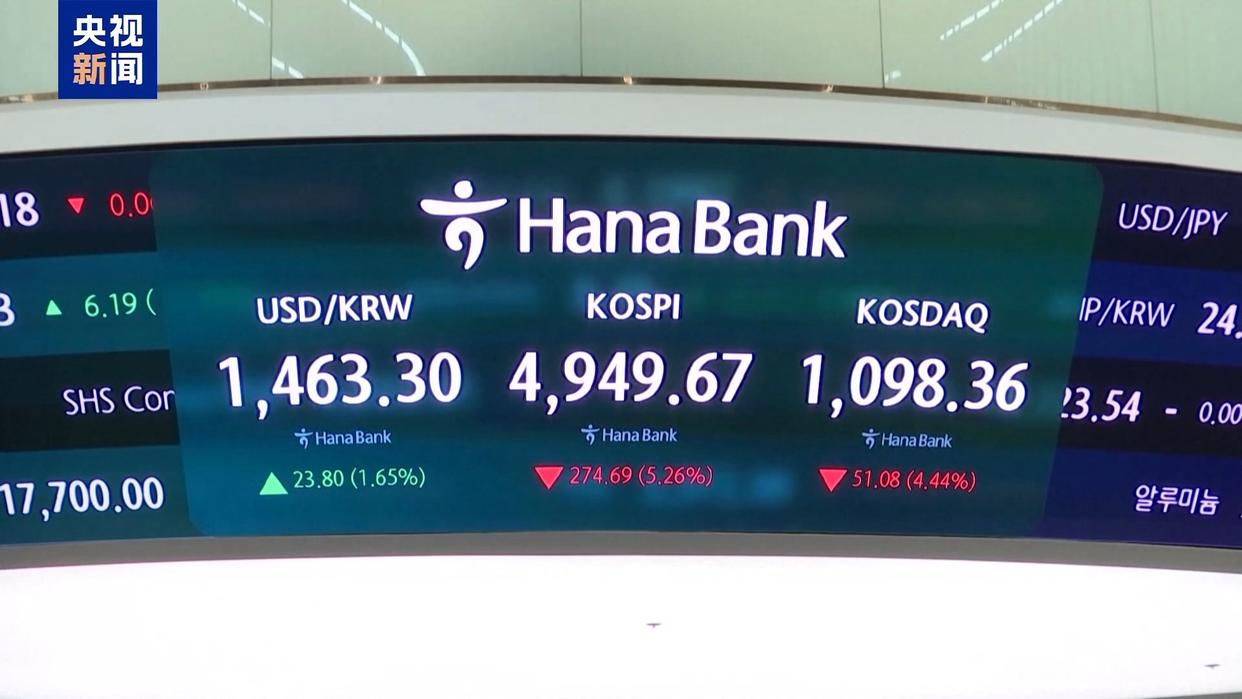
韩股大跌后触发熔断机制 专家:与美联储政策转向有关
Yang Shi Xin Wen· 2026-02-02 21:24
Group 1 - The Korean stock market experienced a significant drop, with the KOSPI index falling over 5%, triggering a trading halt for 5 minutes due to panic selling [1] - The nomination of Kevin Warsh as the next Federal Reserve Chairman by President Trump has led to a shift in market expectations, interpreted as a move towards a hawkish policy stance [1][12] - The strong dollar resulting from this nomination has decreased the attractiveness of emerging market assets, leading to capital outflows, particularly affecting the Korean market which heavily relies on foreign investment [1][12] Group 2 - The Korean stock market has structural vulnerabilities, being highly concentrated in a few industries like semiconductors, making it more susceptible to market fluctuations [4] - There is a risk of valuation bubbles in the market, causing heightened sensitivity to negative news, compounded by weak economic fundamentals and declining export growth [6] - Algorithmic trading has exacerbated market volatility, creating a vicious cycle of selling during downturns, which contributed to the recent market crash [6] Group 3 - The turbulence in the U.S. capital markets has led to a global reassessment of asset prices, with significant declines in precious metals and a divergence in stock market performance [8][9] - The shift in liquidity expectations and the reconstruction of policy credibility have increased uncertainty regarding future Federal Reserve policies, prompting a global capital reallocation [12] - The recent events in the Korean stock market reflect broader structural adjustments in the global financial system in response to the changing stance of the Federal Reserve [13]