
教育融合

Search documents
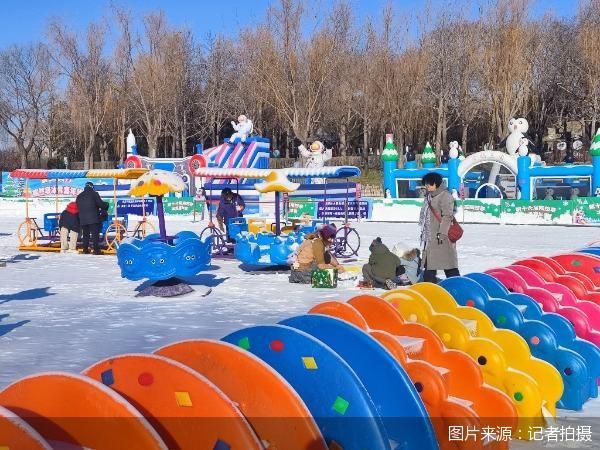
未来新建200个公园、灵活引入便民设施,北京公园空间资源将“活起来”
Bei Jing Shang Bao· 2026-01-13 12:36
Core Viewpoint - Beijing has introduced measures to enhance park quality and stimulate urban development, aiming to transform parks into comprehensive green spaces that integrate leisure, culture, consumption, and ecology over the next decade [1][4]. Group 1: Park Development and Integration - The measures include five categories and fifteen specific actions to encourage the introduction of convenient facilities like light meals and cultural markets in parks [1][4]. - Parks are being transformed from simple leisure spaces into comprehensive urban green spaces that connect production, life, and ecology [3][7]. - The initiative promotes deep integration of parks with culture, tourism, sports, and education, breaking down spatial and functional barriers [3][4]. Group 2: Management and Community Involvement - A "citizen park manager" model will be piloted, allowing enthusiastic citizens to participate in park management and supervision [5][6]. - A regular "health check" mechanism for parks will be established to assess and optimize park conditions, with a focus on community involvement [6][7]. - The initiative aims to create a two-way communication bridge between park management teams and citizens, enhancing the responsiveness of park services to community needs [6][7]. Group 3: Future Plans and Visitor Engagement - Over the next ten years, Beijing plans to build 200 new parks, enhancing the accessibility of green spaces for residents [6][7]. - Currently, Beijing has 1,136 parks, receiving over 500 million visitors annually, with a green space service radius coverage of 93% [6][7]. - The measures are expected to significantly improve the quality of the park system in Beijing, making green spaces a daily source of happiness for residents [6][7].

华南师范大学累计为澳门培养超2万名栋梁之材
Zhong Guo Xin Wen Wang· 2025-12-16 01:38
Core Insights - The article highlights the significant role of South China Normal University (SCNU) in teacher education in Macau, having trained over 20,000 educators since its establishment in 1985, with 70% of Macau's basic education teachers being alumni of SCNU [1] Group 1: Educational Development in the Greater Bay Area - A seminar was held to discuss the integration of teacher education in the Guangdong-Hong Kong-Macau Greater Bay Area, attended by nearly 300 experts and educators [1] - The seminar aimed to explore new pathways for deepening the integration of teacher education across the three regions [1] Group 2: Perspectives on Teacher Education - The Vice President of Hong Kong Hang Seng University emphasized the need for Hong Kong to become an international education hub in Asia, advocating for collaborative research and faculty exchanges among Bay Area institutions [2] - The Dean of the Education College at the University of Hong Kong addressed the contemporary challenges in teacher education, suggesting a return to traditional Chinese educational values to combat the influence of Western culture [2] - The Dean of the Education and Human Development at Hong Kong Education University highlighted the importance of institutional frameworks in academic leadership to ensure sustainable development [2] - The Dean of the Education College at the University of Macau pointed out the need for a continuous teacher education model that integrates pre-service and in-service training [2] - The incoming Dean of the Education College at Chinese University of Hong Kong presented research indicating that enhancing teacher leadership directly improves children's learning abilities and attitudes [2]