数字人才引力指数

Search documents
长三角中心区城市数字人才引力指数报告发布
Zhong Guo Jing Ji Wang· 2025-09-22 09:24
Core Insights - The report released by Shanghai University of Finance and Economics and Zhaopin highlights the digital talent attraction index in the Yangtze River Delta region, focusing on the current status of digital talent development to support regional digital economy growth [1][2] Group 1: Digital Talent Attraction Index - The index is constructed from four dimensions: career development opportunities, living service environment, industrial foundation, and innovation ecosystem, reflecting the gathering and development trends of digital talent [1] - Shanghai leads significantly in digital talent attraction, categorized as an "excellent zone," followed by Hangzhou, Nanjing, Suzhou, and Hefei, which are identified as "rich areas" for digital talent in the Yangtze River Delta [1] Group 2: Regional Polarization and Competition - There is a clear regional polarization in digital talent attraction, with Shanghai, Hangzhou, Suzhou, Nanjing, Hefei, and Wuxi occupying the top six positions in emerging digital roles, mid-to-high-end digital positions, and net talent inflow, collectively accounting for 86.50%, 88.76%, and 87.1% of the total across 27 cities [1] - The competition for attracting digital talent among cities is intense, with 21 other cities scoring below 40 points, indicating a need for enhanced regional industrial collaboration and distinctive city characteristics to foster a win-win situation [2] Group 3: Recommendations for Improvement - The report suggests that enhancing a city's digital talent attraction is a comprehensive project that requires addressing material and developmental needs of individuals, including providing good housing, transportation, education, healthcare, and ecological environments [2] - It emphasizes the importance of solidifying industrial foundations, nurturing innovation and entrepreneurship, and offering competitive salaries and career opportunities to attract digital talent effectively [2]

城市24小时 | 这座超一线城市 加速“融湾”
Mei Ri Jing Ji Xin Wen· 2025-09-17 16:11
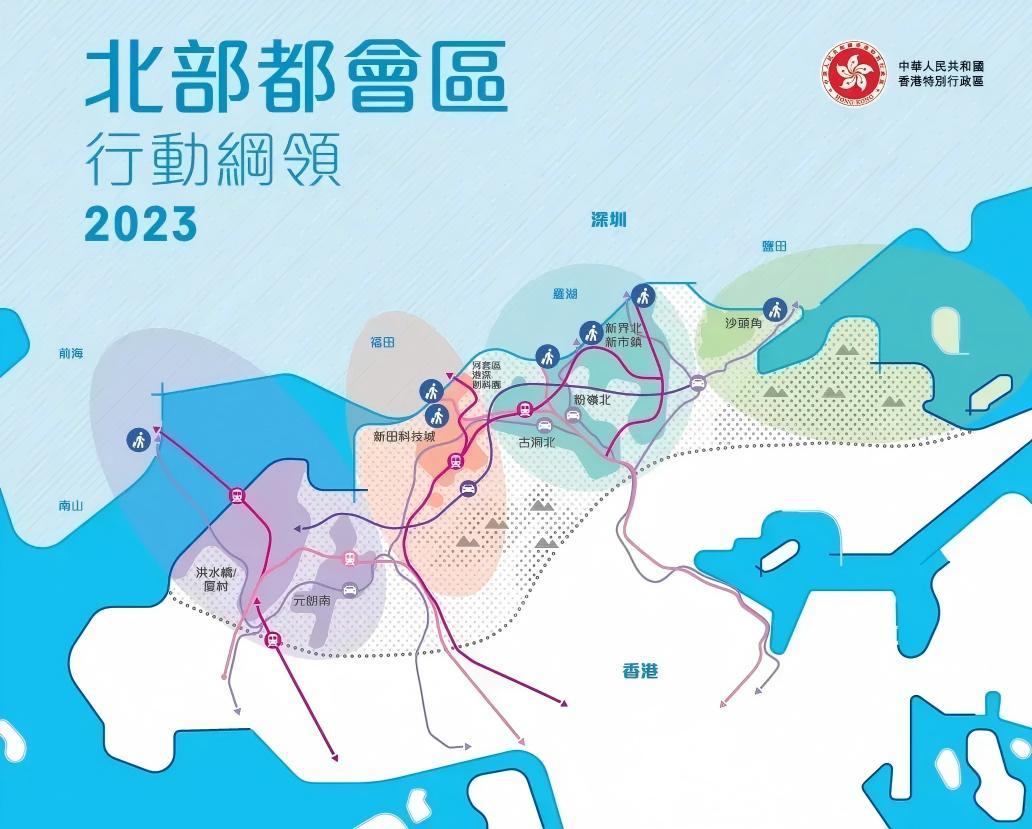
Core Points - The Hong Kong government is accelerating the development of the Northern Metropolis, establishing a dedicated committee led by Chief Executive John Lee to streamline administrative processes and enhance resource allocation [1][2] - The Northern Metropolis is expected to become a key area for urban construction and population growth over the next 20 years, with an estimated future population of around 2.5 million, accounting for one-third of Hong Kong's total population [2][5] - The region will enhance collaboration with the Greater Bay Area, particularly with Shenzhen and Guangzhou, improving technological and industrial integration [2][3] Group 1: Development Plans - The Northern Metropolis will be managed by a committee with three working groups focusing on development models, university city planning, and comprehensive planning and execution [1] - The area covers approximately one-third of Hong Kong's total land area, including developed towns and new development zones [1] Group 2: Economic Impact - The Northern Metropolis is viewed as a strategic development area with significant economic value and potential, aiming to address Hong Kong's spatial and resource constraints [2] - The establishment of the Hong Kong-Shenzhen Innovation and Technology Park is a key project, with the first phase already completed and various industries, including health tech and AI, set to establish a presence [2] Group 3: Population and Infrastructure - The government anticipates that the Northern Metropolis will house about 2.5 million residents by the end of 2024, based on current population statistics [5] - Infrastructure improvements will include simplified administrative measures and a phased development model to reduce costs and construction time [5]