
数字经济投资

Search documents
《中国双向投资报告2025》发布:亚洲发展中经济体仍是全球最大FDI流入量接收地
Mei Ri Jing Ji Xin Wen· 2026-02-05 12:06
Group 1 - The report indicates that global Foreign Direct Investment (FDI) has been declining since 2024, with a fragmented distribution of investment regions. Developed economies are the main source of outward direct investment, while developing economies in Asia are the largest recipients of global FDI, accounting for 40% of total inflows [1][2] - In 2024, FDI inflows to developing economies in Asia decreased by 3% to $605 billion, yet the region remains the largest recipient of global FDI [1] - Digital economy investments are emerging as a significant driver of growth and transformation, with announced greenfield project values in the digital sector reaching $76 billion in 2024, a 107% increase year-on-year [1] Group 2 - The report highlights three major trends: the coexistence of economic hegemony and countries' investment incentive policies, the decline in international FDI alongside the rise in digital economy investments, and the increasing share of service sector investments alongside rapid growth in Asian manufacturing investments [2] - China is becoming increasingly attractive to foreign investment due to its efforts to enhance openness, lower barriers for foreign capital, and promote regional trade agreements like RCEP and the upgraded China-ASEAN Free Trade Area [2] - In 2024, China ranked as the third-largest recipient of foreign investment globally, with an FDI inflow of $116.24 billion, despite a decrease in the scale of foreign capital utilization [3]
《中国双向投资报告2025》发布:亚洲发展中经济体是全球最大FDI流入量的接收地
Mei Ri Jing Ji Xin Wen· 2026-02-04 03:19
Group 1 - The global Foreign Direct Investment (FDI) has been declining since 2024, with developed economies being the main source of outward investment, while developing Asian economies remain the largest recipients of global FDI [1] - In 2024, FDI inflows to developing Asian economies decreased by 3% to $605 billion, yet this region still accounted for 40% of global FDI inflows [1] - Digital economy investments are emerging as a significant growth driver, with announced greenfield project values in the digital sector reaching $76 billion in 2024, a 107% increase year-on-year, focusing on data centers, fintech platforms, e-commerce logistics, and professional software services [1] Group 2 - Asia is becoming a value hub for international division of labor, with developing countries in the region focusing more on attracting foreign investment and optimizing the business environment [2] - China, as the largest economy in Asia, is enhancing its attractiveness for foreign investment by increasing openness and lowering entry barriers, while promoting regional trade agreements like RCEP [2] - In 2024, China attracted $116.24 billion in foreign investment, maintaining its position as the third-largest recipient globally, despite a decrease in the scale of foreign investment utilization [2] Group 3 - In terms of industry, the actual foreign investment in manufacturing was 185.51 billion RMB, while the service sector attracted 545.12 billion RMB [3] - High-tech industries received 241.77 billion RMB in foreign investment, with significant growth in e-commerce services (75%), medical instruments and equipment manufacturing (42.1%), and aerospace manufacturing (22.9%) [3]

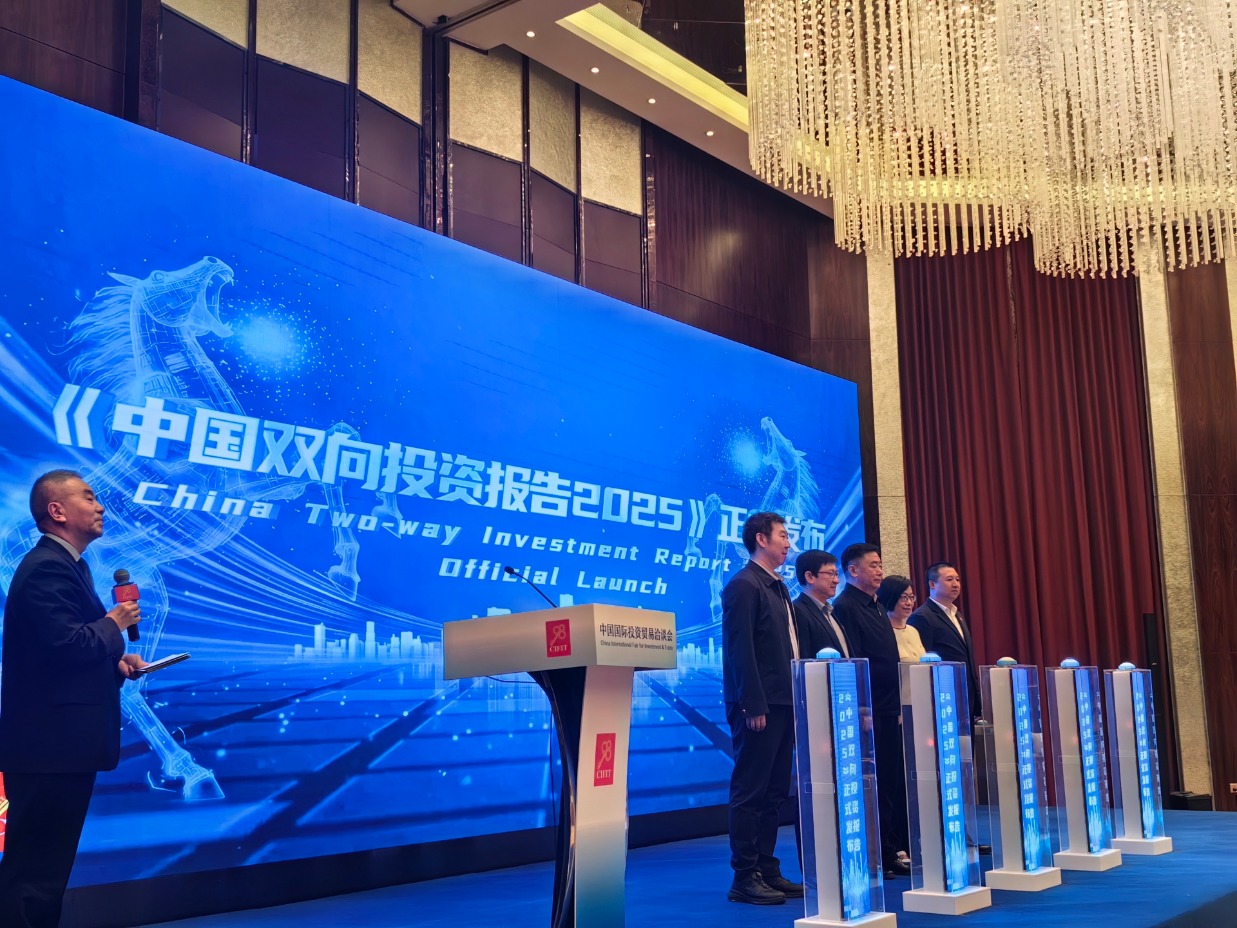
《中国双向投资报告2025》发布活动暨国际投资专家委员会春季研讨会在京举行
Jing Ji Guan Cha Wang· 2026-02-04 02:35
Core Insights - The "China Two-Way Investment Report 2025" was officially released during an event in Beijing, further enhancing the research content and findings from its initial release in September 2025 [1] Group 1: Economic Trends - There are three major trends identified: the coexistence of economic hegemony and countries' investment incentive policies, the decline in international FDI alongside a rise in digital economy investments, and the increasing share of service sector investments alongside rapid growth in Asian manufacturing investments [1] Group 2: Investment Cooperation - To expand the space for two-way investment cooperation, actions should focus on stabilizing, optimizing, and improving quality, enhancing the external environment, broadening the investment cooperation network, and seizing opportunities in future industrial sectors [1]