数字赋能城市治理

Search documents
全面增强超大城市风险治理能力
Ren Min Ri Bao· 2025-12-25 22:27
Group 1 - The core viewpoint emphasizes the need to enhance urban planning, construction, and governance levels in super-large cities, focusing on building resilient, livable, and smart cities to address complex disaster risks [1] - The Central Urban Work Conference in July 2025 outlined seven key tasks, including the construction of safe and resilient cities, highlighting the importance of public safety governance and risk prevention [1] - The concept of "people first" and "life first" is crucial in strengthening the urban safety prevention system and enhancing disaster response capabilities in super-large cities [1] Group 2 - Strengthening digital empowerment is essential for forming a dynamic risk prevention system that adapts to the complexities of super-large cities, utilizing real-time data monitoring and intelligent algorithms for timely risk intervention [2] - Examples from Shanghai and Shenzhen illustrate the successful integration of various data sources to enhance emergency response mechanisms and prevent urban safety risks [2] - The use of big data, cloud computing, blockchain, and artificial intelligence is vital for improving urban governance and risk management capabilities [2] Group 3 - The Central Urban Work Conference proposed advancing the construction of urban infrastructure safety projects, which are critical for ensuring the safe operation of cities [3] - Urban lifelines, including gas, heating, water supply, drainage, bridges, and tunnels, are interconnected and essential for supporting urban socio-economic activities [3] - The "14th Five-Year Plan" aims to update and renovate 840,000 kilometers of underground pipelines, emphasizing the need for comprehensive risk prevention and emergency coordination mechanisms [3] Group 4 - Establishing a full-cycle elastic response mechanism is crucial for constructing a risk governance system in super-large cities, focusing on resilience through the phases of resistance, recovery, and upgrading [4] - The resistance phase ensures core urban functions continue during shocks, while the recovery phase emphasizes efficient post-disaster reconstruction [4] - The upgrading phase aims to enhance urban development quality and competitiveness through systemic reforms, transitioning from passive to proactive risk management [4]
上合组织城市勾勒未来发展“三维坐标”
Xin Hua Wang· 2025-07-10 01:30
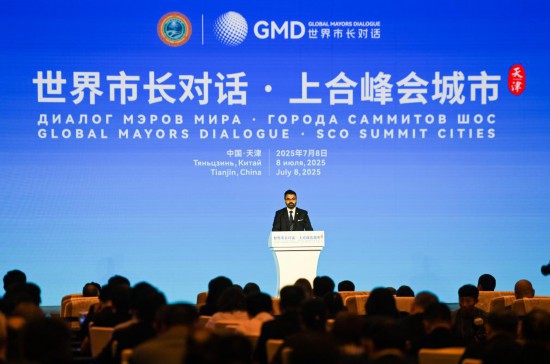
Core Viewpoint - The event "World Mayors Dialogue: SCO City" held in Tianjin focused on the theme of "Open, Inclusive, and Integrated Development," highlighting the importance of digital empowerment, trust-based cooperation, and security as foundational elements for the future development of SCO cities [2][7]. Group 1: Urban Governance - Urban governance was a key theme, with a focus on smart city development as a global trend. China's experience in leveraging digital technology for urban governance received significant attention from international representatives [2]. - Tajikistan's Dushanbe city is adopting experiences from over 20 smart city projects in China, showcasing the influence of Chinese urban governance practices [2]. Group 2: Transportation and Infrastructure - The low-altitude economy emerged as a significant topic, with Moscow's public transport system facing challenges due to high daily ridership. The exploration of "air taxis" and drone traffic management in China was noted as a potential solution for Moscow's transportation infrastructure [4]. - A delegation from Moscow visited Shenzhen and Guangzhou to engage in discussions and site visits related to urban planning and transportation design, indicating a keen interest in improving their own systems [4]. Group 3: Trust and Cultural Exchange - Trust was identified as an essential invisible infrastructure in the digital age, with a positive correlation between trust levels and economic growth indicators. This sentiment resonated with attendees, emphasizing the importance of cultural understanding in fostering trust among SCO nations [4][7]. - The establishment of the SCO University and youth exchange programs has been instrumental in enhancing cultural ties and mutual understanding among member states, contributing to deeper cooperation [5]. Group 4: Security and Sustainable Development - Security was highlighted as a critical area of focus, encompassing traditional issues like international crime and new challenges posed by artificial intelligence and public health. The need for a robust platform for SCO city leaders to discuss security matters was emphasized [7]. - The event underscored the transformation of security from a cost to a core capital for sustainable development, reflecting the evolving priorities of SCO nations in ensuring quality security for their urban environments [7].