数据投毒攻击

Search documents
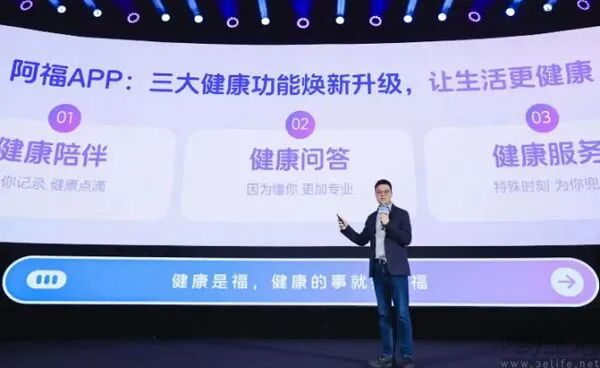
打出“无广告牌”,蚂蚁阿福要在AI医疗赛道突出重围
3 6 Ke· 2026-01-04 01:59
Group 1 - Ant Group's AI health application "Ant Aifu" has made a strong statement asserting that its answers are free from commercial advertisements and rankings, emphasizing its neutrality [1] - The application has been upgraded from "AQ" to "Ant Aifu," introducing three core functions: health companionship, health Q&A, and health services, aiming to transform from a tool to an "AI health friend" [3][5] - The marketing strategy includes high-profile endorsements and extensive advertising, but the focus remains on building user trust in a sensitive healthcare domain [3][5] Group 2 - The application claims impressive metrics such as over 15 million daily active users and a training dataset exceeding one trillion medical model training data, but merely presenting data may not effectively capture user trust [5] - Users prioritize safety and trust in healthcare, which is why Ant Group emphasizes its commitment to maintaining professional objectivity and not promoting any drugs or medical institutions [5][9] - The historical context of the "Wei Zexi incident" highlights the importance of transparency and trust in healthcare services, as past failures in online medical advertising have led to significant public concern [9][10] Group 3 - The potential for AI-generated content to be influenced by external marketing practices raises concerns about the neutrality of AI models, as they are based on existing data and can be manipulated [12][13] - The integrity of AI models is at risk from data poisoning, which can compromise the accuracy of outputs, emphasizing the need for Ant Aifu to maintain a clean training dataset [12][13] - Ant Aifu's commitment to neutrality and the purity of its data training set is framed as a long-term promise to users, beyond just a one-time declaration [13]

OpenAI停止合作,Meta收购Scale AI搅乱AI圈
3 6 Ke· 2025-06-27 00:21
Core Viewpoint - Meta's acquisition of a 49% stake in Scale AI for $14.8 billion aims to strengthen its position in the AI sector amidst competition, following a previous successful acquisition of WhatsApp for $19 billion 11 years ago [1] Group 1: Acquisition and Market Reaction - Meta's investment in Scale AI comes as a strategic move to catch up in the AI race, especially after signs of lagging in its AI business [1] - Following the deal, OpenAI confirmed it would gradually cease collaboration with Scale AI, indicating a significant shift in partnerships within the AI data supply chain [3] - Google, another major client of Scale AI, plans to terminate its $200 million contract for AI training data, opting to work with Scale AI's competitors instead [3][5] Group 2: Implications for Data Supply and Trust - Scale AI's integration into Meta raises concerns among competitors like OpenAI and Google about data confidentiality and the potential for data poisoning attacks, which could compromise AI model performance [10][14] - The transition of Scale AI from a neutral data provider to a Meta subsidiary could erode trust with its former clients, leading to fears of data leaks and competitive disadvantages [10][16] - The AI industry heavily relies on high-quality data for model training, and the acquisition of Scale AI provides Meta with a stable data source, crucial for the evolution of its Llama model [8][10] Group 3: Data Poisoning Risks - Data poisoning attacks pose a significant threat to AI models, where even a small percentage of contaminated data can severely impact model accuracy [13] - The difficulty in detecting such attacks makes them particularly concerning, especially if a data supplier like Scale AI were to provide tainted data [14][16] - The urgency of maintaining efficient AI model training processes means that companies like OpenAI and Google cannot afford delays caused by potential data integrity issues stemming from Scale AI's new ownership [16]