蚂蚁阿福

Search documents
医疗AI专题报告(一):海外篇:长风破浪正当时,直挂云帆济医海
ZHESHANG SECURITIES· 2026-03-17 10:24
Investment Rating - The report does not explicitly state an investment rating for the industry Core Insights - The era of AI in healthcare is approaching, and learning from overseas development models is necessary [5] - AI products in healthcare face obstacles in data exchange, regulatory clarity, and payment systems, with the U.S. leading in data sharing and regulatory frameworks [6] - Investment opportunities in AI healthcare are centered around data resources, platforms, and clear C-end application scenarios [6] Summary by Sections Introduction - The rapid development of large model technologies, represented by Transformers, significantly impacts the healthcare industry, showing disruptive potential across various stakeholders [15] Overseas AI Healthcare Ecosystem Progress - The U.S. has established a smooth data exchange system and a regulatory framework for AI products, with a cautious approach to including AI products in insurance payment systems [6][27] - The report highlights the need for studying overseas data sharing mechanisms and regulatory policies to inform domestic AI healthcare companies [27] Investment Insights and Recommendations - Key investment lines include data asset foundations, data resource platforms, and C-end application companies with clear scenarios [6] - Notable companies to watch include: - Data asset foundations: Chuangshihui Kang, Weining Health, Wanda Information, Jiahe Meikang - Data resource platforms: Meinian Health, Jinyu Medical, Dian Diagnosis - C-end application companies: Yimaitong, Alibaba Health, JD Health [6] Regulatory and Payment Frameworks - The report discusses the evolving regulatory landscape for AI products, emphasizing the need for adaptive regulations that ensure patient safety while encouraging innovation [46] - In the U.S., over 1,400 AI products have received FDA approval, but only a few have been included in insurance reimbursement frameworks [48] - The report notes that domestic payment policies for AI products are still in exploration, with a focus on imaging products [55]


“十五五”规划纲要计算机行业解读:智能经济启航,AI Agent主导未来五年AI叙事
Zhong Guo Yin He Zheng Quan· 2026-03-15 03:24
Investment Rating - The report maintains a "Buy" rating for the computer industry [4] Core Insights - The "14th Five-Year Plan" emphasizes the core strategic position of artificial intelligence (AI) in national development, with the term "artificial intelligence" appearing 30 times, compared to only 6 times in the previous plan [6][8] - The next five years will see AI Agents as the driving force for economic transformation, with a focus on high-value AI Agent growth leading to significant value creation [6][10] - The demand for intelligent computing power is expected to rise significantly, with projections indicating that by 2028, intelligent computing power will account for over 95% of total computing power in China [6][12] - The report highlights the emergence of "Token inflation" due to the rapid growth in AI model usage, with a projected annual Token consumption increase from 0.0005 PetaTokens in 2025 to 152,667 PetaTokens by 2030, reflecting a CAGR of 3418% [6][24] - Investment opportunities are identified in AI-native application companies, edge AI technologies, domestic computing power chain replacements, and collaborative infrastructure for computing and electricity [6][38] Summary by Sections Section 1: The "14th Five-Year Plan" as a Key Period for Intelligent Economy - The plan introduces the concept of "intelligent native," suggesting AI may become a new production factor [11] - The intelligent economy will drive the reconstruction of AI factor value [13] Section 2: Outlook for the "14th Five-Year Plan" - The intelligent economy is set to initiate a rapid explosion in Token usage, with AI Agents transitioning from cost centers to profit centers [17][38] - The report anticipates a significant increase in the number of active AI Agents, from approximately 28.6 million in 2025 to 2.216 billion by 2030, with a compound annual growth rate (CAGR) of 139% [24] Section 3: Comprehensive Upgrade of AI Factors During the "14th Five-Year Plan" - The report emphasizes the importance of high-quality data sets as a core barrier for building irreplaceable AI Agents [16] - The demand for high-quality, proprietary data sets is expected to surge, with a focus on transforming data resources into valuable assets [16] Section 4: Investment Recommendations - The report suggests focusing on AI-native application companies capable of generating scalable revenue, as well as companies that integrate AI Agents with vertical industry know-how [6][38] - Specific companies to watch include Horizon Robotics, JingTai Holdings, Meitu, and others [6]


国内算力斜率仍在抬升
SINOLINK SECURITIES· 2026-03-14 15:27
Investment Rating - The report does not explicitly state an investment rating for the industry Core Insights - The report highlights a significant increase in demand for computing power driven by advancements in AI and cloud services, with Oracle and Tencent leading the charge in revenue growth and pricing strategies [6][11][17] - The year 2026 is projected to be pivotal for the computing power industry, transitioning from "cloud training" to a dual-driven model of "training + inference," leading to a rapid release of computing power demand [6][19] - The supply side is expected to shift from a state of scarcity to structural balance, with domestic computing power resources effectively meeting the surging demand [6][43] Summary by Sections Oracle's Performance and Tencent's Pricing Strategy - Oracle's FY26Q3 results exceeded expectations, with total revenue reaching $171.90 billion, a year-on-year increase of 21.66%, and cloud business revenue growing by 44% to $89.14 billion [11][12] - Tencent Cloud announced significant price increases for its AI models, with some models seeing price hikes of over 400%, indicating a trend of rising costs in cloud computing services [17][18] Rapid Release of Computing Power Demand - Major internet companies are advancing their AI models, with a focus on high-quality and multi-modal capabilities, which is expected to drive up the demand for computing power [19][20] - The inference side of computing power demand is anticipated to grow steeply, fueled by the rapid adoption of AI applications across various sectors [33][34] Supply Side Improvements and Domestic Production - The approval of NVIDIA's H200 AI chips for the Chinese market is expected to alleviate computing power shortages for major internet companies [43][44] - Domestic computing power chips have reached a point where they are not only usable but also competitive, with significant improvements in performance and ecosystem development [44][45] Full Chain Inflation in Domestic Computing Power - The report predicts a "full chain inflation" cycle in the computing power industry in 2026, with growth expected across various segments including AIDC, cloud services, and supporting infrastructure [50][52] - Major tech companies are projected to increase their capital expenditures significantly, with estimates reaching $650 billion in 2026, further driving the demand for computing power [52][53]





蚂蚁集团加入春招人才争夺战,超70%为AI相关的岗位
新华网财经· 2026-03-10 06:02
Core Viewpoint - Ant Group has officially launched its 2026 Spring Campus Recruitment, focusing heavily on AI-related positions, which constitute 85% of the total openings, with over 70% directly related to artificial intelligence technologies [1][4]. Group 1: Recruitment Details - The recruitment emphasizes various AI fields, including large model algorithms, multimodal generation, data intelligence, embodied intelligence, and AI safety [1]. - Specific AI talent needs include roles in AI payment systems, algorithm evaluation, natural language processing, AI engineering, and RL infrastructure across different departments like Alipay, Ant Fortune, and Ant Group's other initiatives [4]. - The recruitment targets graduates from the 2026 and 2027 classes, with specific requirements for degree certifications based on the region [8]. Group 2: Industry Trends - Other major companies like Tencent and ByteDance have also initiated their spring recruitment, with a significant increase in AI-related positions, indicating a growing demand for AI talent across the tech industry [10]. - A report from a job platform indicates that AI roles have seen explosive growth in both quantity and salary, with AI job postings increasing approximately 12 times year-on-year, and the average monthly salary for AI positions reaching 60,738 yuan, which is about 26% higher than the overall average in the new economy sector [11].


重磅揭晓!“2025 中国 AI + 应用 Top50” 优秀案例来了
财联社· 2026-03-08 07:28
Core Insights - The article announces the selection of the "Top 50 AI+ Applications in China for 2025," showcasing exemplary AI applications across various industries, highlighting the transition from technology exploration to large-scale implementation in the economy [1][20]. Group 1: AI Applications and Companies - The selected AI applications emerged from over 300 submissions, demonstrating significant advancements in sectors such as industrial manufacturing, financial services, education, and healthcare [20]. - Notable companies included in the Top 50 are Huawei, Ant Group, JD Group, and Ningde Times, each presenting innovative AI solutions like Huawei's CloudMatrix AI infrastructure and Ant Group's AI assistant [4][39][40]. - The applications are recognized for their high scene adaptability and effectiveness, with some improving industrial quality inspection efficiency and others enhancing financial risk response times [20]. Group 2: Future Initiatives - Following the selection, a new initiative called "AI Empowering Thousands of Industries Case Collection" will be launched to further explore and document AI applications, aiming to provide in-depth insights into real-world implementations and outcomes [21]. - The initiative seeks to engage a broader audience, encouraging participation from enterprises and teams involved in AI applications to enrich the practical landscape of AI [21]. Group 3: Recognition and Impact - The article emphasizes that the non-selected projects also hold significant value, showcasing unique innovations and potential for future growth within the AI ecosystem [20]. - The recognition of these AI applications reflects the industry's acknowledgment of AI's transformative potential in enhancing productivity and optimizing user experiences across various sectors [20].






顶级专家谈医疗AI价值:如果AI创造了100块钱价值,请把98块还给病人
雷峰网· 2026-03-06 03:46
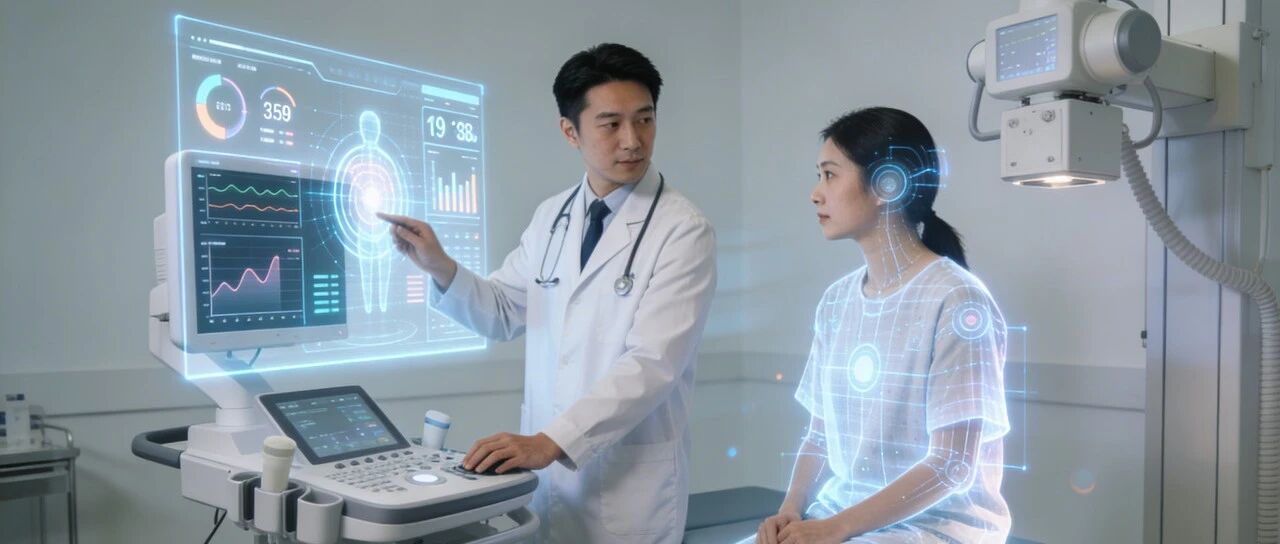
Core Viewpoint - The article discusses the evolution of medical AI models, emphasizing their transition from experimental demos to essential tools in healthcare, highlighting the importance of trust, efficiency, and ethical considerations in their deployment [1][2][3]. Group 1: Medical AI's Role and Value - The emergence of medical AI models, such as Ant Group's "Afu," represents a shift towards a new "digital health paradigm," addressing the inefficiencies of traditional health information searches [2][3]. - The ultimate standard for evaluating AI in serious medical contexts is its ability to be included in clinical guidelines, which are considered the "constitution" of the medical field [6][7]. - AI's value lies not in replacing doctors but in enhancing healthcare productivity by providing low-cost, high-quality medical services [7]. Group 2: Technical Challenges and Innovations - The true competitive advantage in medical AI lies in data governance and the ability to handle "dirty data," rather than just algorithmic architecture [9][10]. - The development of specialized medical models can outperform general models in vertical fields, as demonstrated by the "Bencao" model in traditional Chinese medicine, which integrates expert feedback and specialized knowledge [10][29][31]. - AI models must be capable of handling complex, unstructured data, such as medical imaging, to provide personalized treatment recommendations [27][28]. Group 3: Ethical Considerations and Risks - The concept of "AI Psychosis" highlights the risks of AI models reinforcing users' misconceptions, particularly in sensitive medical contexts [11][12]. - A reliable medical AI should be able to refuse to answer or suggest hospital visits when faced with insufficient evidence, prioritizing patient safety over providing answers [13][41]. - The balance between empathy and clinical rigor is crucial; AI must adapt its communication style based on the medical context, ensuring it does not mislead patients [44][47]. Group 4: User Engagement and Best Practices - Users are encouraged to provide detailed context when interacting with medical AI to improve the quality of responses, utilizing features like voice input for richer information [38][39]. - Managing medical records and utilizing multi-modal inputs can enhance the interaction with AI, allowing for more personalized and accurate advice [38][39]. - Cross-validation of AI-generated advice with multiple models can help users obtain a more comprehensive understanding of their health issues [39]. Group 5: Future Directions and Regulatory Challenges - The integration of AI in healthcare is seen as a potential solution to address the shortage of medical resources, particularly in underserved areas [48][49]. - The regulatory landscape for medical AI varies globally, with stricter regulations in regions like the US and Europe, posing challenges for widespread adoption [49]. - The focus should remain on patient-centered care, ensuring that AI technologies enhance patient outcomes while navigating the complexities of regulation and ethical considerations [49].
金元证券每日晨报-20260306
Jinyuan Securities· 2026-03-06 01:33
Core Insights - The report highlights a significant competition for C-end users in the AI sector during the Spring Festival, indicating a notable shift in content consumption patterns [2][16] - The report emphasizes the performance of the film industry during the Spring Festival, noting a decline in box office revenue despite an increase in daily screenings [18] Market Overview - The A-share market showed positive movements with the Shanghai Composite Index rising by 0.64% to 4108.57 points, and the Shenzhen Component Index increasing by 1.23% to 14088.84 points, with total trading volumes of 10680.44 billion and 13219.94 billion respectively [9] - The Hong Kong Hang Seng Index rose by 0.28% to 25321.34 points, while the Nikkei 225 Index in Japan increased by 1.9% to 55278.06 points [9] Domestic News - The 14th National People's Congress opened, with Premier Li Qiang outlining economic growth targets of 4.5%-5% for the year, alongside a target for urban unemployment at around 5.5% and a goal of creating over 12 million new urban jobs [12] - The "14th Five-Year Plan" draft proposes 109 major projects across six areas, focusing on enhancing industrial capabilities, modern infrastructure, urban-rural integration, improving living standards, promoting green transformation, and ensuring security in key sectors [12][13] Company Developments - *ST Songfa's subsidiary signed a contract for the construction of four super-large oil tankers worth approximately 4-6 billion USD, which represents over 50% of the company's audited revenue for the last fiscal year [16] - Ruide Intelligent plans to invest 50 million in Gudu Intelligent to expand into AR glasses optical technology [16] - Donghua Software intends to invest 300 million to establish Guangxi Donghe Intelligent Company [16] Industry Trends - The report notes a significant decline in box office revenue during the Spring Festival, with total earnings of 57.53 billion, a 39.53% decrease year-on-year, despite an increase in daily screenings [18] - The report indicates a growing trend in micro-short dramas, with significant viewership and downloads surpassing traditional AI applications during the Spring Festival [18]
QuestMobile 2025年AI应用层发展核心报告:原生App巨头筑墙,新锐破局,AI核心入口雏形初现,入口争夺战持续
QuestMobile· 2026-03-03 02:09
Core Insights - The article emphasizes that 2025 will be a pivotal year for AI applications, marking a significant transition from quantity to quality in the domestic AI application market, with mobile AI applications, smartphone manufacturers' AI assistants, and PC AI applications reaching monthly active user counts of 722 million, 559 million, and 205 million respectively, indicating a rapid adoption rate [4][35]. Group 1: AI Application Market Overview - The domestic AI application market is projected to achieve a qualitative leap by the end of 2025, with mobile AI applications and smartphone manufacturers' AI assistants capturing 56.6% and 57.7% of the overall user base respectively [4][35]. - The growth of AI applications is characterized by significant quarterly milestones, including open-source initiatives, performance comparisons, and the establishment of commercial value [4][19]. - The distribution of AI applications across various sectors shows that creative design, comprehensive assistants, efficiency office tools, and copywriting applications account for 11.7%, 10.7%, 9.2%, 8.7%, and 8.1% respectively, reflecting clear market demand and monetization pathways [4][25]. Group 2: Competitive Landscape - Major internet companies like Alibaba, Tencent, ByteDance, and Baidu are engaged in fierce competition across various platforms, with a notable "red envelope battle" during the Spring Festival highlighting the intense rivalry [5][54]. - The average monthly usage of native apps has reached 69.2 times per user, surpassing application plugins, indicating a shift in user habits towards native applications [5][35]. - The top five applications in December 2025, including Doubao and DeepSeek, have seen significant user growth, with Doubao achieving a compound growth rate of 9.7% [5][53]. Group 3: User Engagement and Experience - The article notes that the average monthly usage time for native apps has increased to 143.2 minutes, significantly higher than that of tool and photo editing apps [5][44]. - The user engagement metrics indicate a growing trend towards native applications, with the number of users engaging with two or more apps increasing by 27.5% compared to January 2024 [5][46]. - The rise of native apps is reshaping user digital experiences, suggesting a transition into a "reconstruction period" where users are actively seeking more efficient solutions [5][48]. Group 4: Future Trends and Opportunities - The article predicts that the competition for AI application entry points will intensify, with mobile scenarios becoming the core entry for AI experiences [5][35]. - The collaboration between smartphone manufacturers and internet companies is expected to deepen, driven by AI as a new connective tissue for ecosystem building [5][82]. - The potential emergence of three types of AI super entry points is anticipated, which will reshape the internet value chain as the flow of traffic evolves [5][89].

计算机行业研究:国内算力斜率陡峭到什么程度?
SINOLINK SECURITIES· 2026-02-28 13:43
Investment Rating - The report does not explicitly state an investment rating for the industry Core Insights - The report highlights a significant increase in demand for computing power driven by advancements in AI models, particularly in video generation and multi-modal applications, indicating a structural shift in the industry towards higher quality and more complex models [6][11][17] - The introduction of GLM-5 and its "Interleaved Thinking" mechanism represents a new paradigm where computing power is exchanged for intelligence, leading to increased computational demands for inference tasks [13][27] - The supply side is expected to transition from a state of scarcity to structural balance by 2026, with improvements in domestic chip performance and the approval of NVIDIA's H200 chips for the Chinese market [42][43] Summary by Sections Section 1: Supply and Demand Dynamics - Seedance 2.0 has shown a strong user demand with long wait times for video generation, indicating a critical need for computing resources [11][12] - The demand for computing power is expected to escalate as major internet companies continue to develop large-scale AI models, with a notable focus on multi-modal capabilities [17][18] Section 2: Rapid Release of Computing Demand - The competition among leading internet firms is intensifying, with significant investments in AI infrastructure and model development, leading to a sharp increase in inference computing demand [32][34] - The report predicts that by 2026, the AI application landscape will expand significantly, driving real-time inference computing consumption [6][33] Section 3: Supply Side Improvements - The approval of NVIDIA's H200 chips is expected to alleviate computing power shortages for major internet companies, enhancing model iteration speeds [42] - Domestic chip manufacturers are making strides in performance and ecosystem development, with several companies achieving significant advancements in their products [43][44] Section 4: Full-Chain Inflation in Domestic Computing Power - The report anticipates a "full-chain inflation" cycle in the computing power industry by 2026, with growth expected across various segments including AI data centers and cloud services [49] - Major tech companies are projected to increase their capital expenditures significantly, further driving demand for computing resources [51] Section 5: Related Companies - The report identifies several companies as relevant to the industry, including Dongyangguang, Cambrian, Haiguang Information, Wangsu Technology, and others [4][55]
千问豆包春晚“巷战”,谁是最大“流量赢家”?
Xin Lang Cai Jing· 2026-02-28 01:36
Core Insights - The integration of AI into the Chinese New Year celebrations has become a significant trend, with major companies like ByteDance, Alibaba, and Tencent launching various AI-driven initiatives to engage users and enhance their experiences during the holiday season [1][3] Group 1: AI Initiatives and User Engagement - ByteDance's "Doubao New Year" activity allowed users to generate New Year greetings for a chance to win prizes, while Alibaba's Qianwen launched "Super Treat Cards" for shopping and social activities [1] - Tencent's Yuanbao introduced a "New Year Moments" feature, distributing 1 billion red envelopes to recreate the excitement of past WeChat red envelope campaigns [1] - On New Year's Eve, Doubao's AI interactions reached 1.9 billion, generating over 50 million new avatars and 100 million greetings [1] Group 2: AI in Entertainment and Cultural Integration - The Spring Festival Gala showcased AI prominently, with various platforms using AI to enhance performances and engage audiences [3][4] - The CCTVs Spring Festival Gala incorporated AI technology, such as see dance 2.0, to innovate traditional performances, while other platforms like Bilibili and NetEase also hosted AI-themed events [3][6] - AI's role in cultural presentations was highlighted by the "Hehua Shen" program, which creatively integrated AI with traditional themes, although it faced criticism for inaccuracies in cultural representation [5][4] Group 3: Audience Reception and Market Dynamics - Despite the excitement around AI, there are concerns about the quality and authenticity of AI-generated content, with some viewers expressing dissatisfaction with the perceived lack of human touch in performances [8][11] - The competition among platforms to leverage AI for user engagement is intensifying, with each platform adopting different strategies to attract and retain users [8][10] - Music platforms like Tencent Music and NetEase are exploring AI as a potential new narrative direction amidst challenges in user growth and content monetization [8][9] Group 4: Future Outlook and Challenges - The long-term success of AI in the entertainment industry will depend on its ability to enhance human creativity and maintain a balance between technology and authentic human experiences [9][10] - The industry's focus on integrating AI into production processes aims to improve efficiency while addressing audience demands for genuine, relatable content [10][11] - As AI continues to evolve, its impact on the cultural landscape will require careful consideration of both technological advancements and the preservation of human elements in creative expressions [9][11]