数据焦虑

Search documents
别让监测数据“绑架”你我的健康
Xin Lang Cai Jing· 2025-12-25 20:24
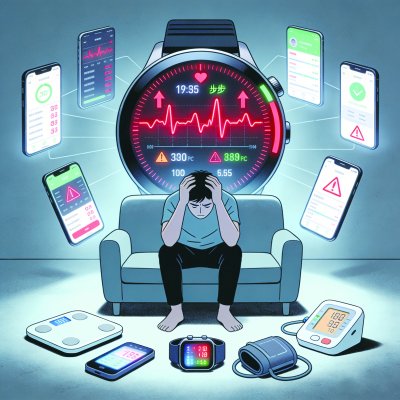
Core Viewpoint - The increasing reliance on digital health devices, such as smart wristbands and health apps, is leading to a paradox where individuals experience heightened anxiety despite the intention of improving health awareness and lifestyle [3][4][6]. Group 1: User Experience with Health Devices - Many users, like Xiao Li, find themselves feeling anxious due to the discrepancies between their perceived health and the data provided by their devices, leading to self-doubt and confusion [4][5]. - Users often set quantifiable health goals, but natural fluctuations in health metrics can lead to frustration and anxiety, as seen in the case of Wu Tong, who felt pressured by her weight data [5][6]. Group 2: Psychological Impact of Health Monitoring - The data from health devices can exacerbate pre-existing anxiety, as highlighted by medical professionals who note that users may misinterpret normal data fluctuations as health threats [6][7]. - Psychological factors, such as cognitive biases and personality traits, contribute to health anxiety, with individuals often interpreting health data in a catastrophic manner [7][8]. Group 3: Recommendations for Healthy Data Interaction - Experts suggest that individuals should adjust their perceptions of health data, focusing on overall trends rather than individual metrics to reduce anxiety [9][10]. - It is recommended to limit the frequency of data checks and to engage in mindfulness practices to shift focus from numbers to actual bodily sensations [10][11]. - Health management should not be viewed as a competition, and the primary goal of health data should be to enhance awareness and promote healthy habits without causing undue stress [11].