健康App

Search documents
别让监测数据“绑架”你我的健康
Xin Lang Cai Jing· 2025-12-25 20:24
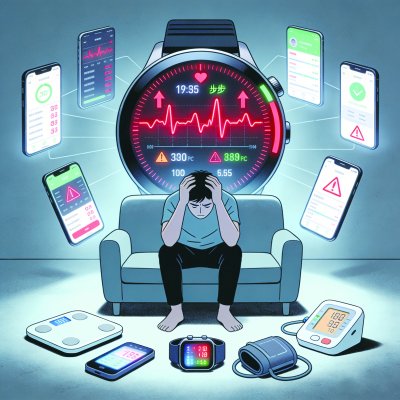
Core Viewpoint - The increasing reliance on digital health devices, such as smart wristbands and health apps, is leading to a paradox where individuals experience heightened anxiety despite the intention of improving health awareness and lifestyle [3][4][6]. Group 1: User Experience with Health Devices - Many users, like Xiao Li, find themselves feeling anxious due to the discrepancies between their perceived health and the data provided by their devices, leading to self-doubt and confusion [4][5]. - Users often set quantifiable health goals, but natural fluctuations in health metrics can lead to frustration and anxiety, as seen in the case of Wu Tong, who felt pressured by her weight data [5][6]. Group 2: Psychological Impact of Health Monitoring - The data from health devices can exacerbate pre-existing anxiety, as highlighted by medical professionals who note that users may misinterpret normal data fluctuations as health threats [6][7]. - Psychological factors, such as cognitive biases and personality traits, contribute to health anxiety, with individuals often interpreting health data in a catastrophic manner [7][8]. Group 3: Recommendations for Healthy Data Interaction - Experts suggest that individuals should adjust their perceptions of health data, focusing on overall trends rather than individual metrics to reduce anxiety [9][10]. - It is recommended to limit the frequency of data checks and to engage in mindfulness practices to shift focus from numbers to actual bodily sensations [10][11]. - Health management should not be viewed as a competition, and the primary goal of health data should be to enhance awareness and promote healthy habits without causing undue stress [11].

速递|OpenAI布局消费者健康赛道:AI巨头能否突破数据壁垒?
GLP1减重宝典· 2025-11-12 15:16
Core Viewpoint - OpenAI is making significant strides in the healthcare sector by developing consumer health applications, aiming to transform personal health management and challenge traditional healthcare software giants [2][3]. Group 1: OpenAI's Strategic Shift - OpenAI is transitioning from being a "tool provider" to an "ecosystem builder" in the healthcare industry, planning to launch dedicated software for consumers [3]. - The company is considering various options, including creating a personal health assistant or a platform for integrating user health data [3]. - OpenAI's recent hiring of experienced professionals from the digital health sector indicates a strong commitment to this strategic direction [3]. Group 2: Market Potential and Challenges - The shift in consumer behavior from using search engines to large language models for health information presents a significant opportunity for OpenAI [4]. - Investors are optimistic about OpenAI's potential to solve the long-standing issue of personal health record integration, which has been a challenge for major tech companies [4][5]. - Previous attempts by companies like Microsoft, Google, and Apple to enter the personal health record space have faced challenges, highlighting the difficulties in user engagement and data management [5]. Group 3: Regulatory and Technological Landscape - Recent federal policies aimed at eliminating "information blocking" are facilitating better access to patient data, which could benefit OpenAI's health initiatives [5]. - Data intermediary platforms are emerging to help aggregate and standardize health data, which could support OpenAI's development of health applications [5][6]. - OpenAI is cautious in handling health data, emphasizing compliance and not encouraging users to upload medical records [6]. Group 4: Collaborative Opportunities - OpenAI could adopt a model similar to Apple's HealthKit by partnering with third-party applications and wearable devices to aggregate health data [6]. - The company is also focusing on collaborations with clinical professionals and researchers to innovate in clinical and personal health products [6]. - Partnerships with pharmaceutical companies and health tech firms are underway to enhance drug development and clinical decision support [6]. Group 5: Future Outlook - OpenAI's ability to successfully implement its health strategy will test its technical capabilities and ecosystem collaboration [7]. - If successful, OpenAI could redefine how AI empowers health management, giving consumers more control over their health [7].