智能体重秤

Search documents
泊为智能科技入选 “广东3・15消费维权打假工程”,十八年深耕不辍,以诚信护航消费安全
Xin Lang Cai Jing· 2025-12-28 06:02
Group 1 - The "2026 Guangdong 3·15 Consumer Rights Protection Anti-Counterfeiting Project" aims to strengthen consumer rights protection, optimize the consumption environment, and boost consumer confidence [1][3] - Dongguan Boweisi Intelligent Technology Co., Ltd. ("Boweisi") has been recognized as a benchmark enterprise in the health and personal care technology sector, successfully entering this authoritative system due to its product quality and integrity [1][3] - The project attracted 5,586 companies for application, with a rigorous evaluation process covering social credit, brand value, quality management, and technological innovation [3] Group 2 - Boweisi has developed a smart industrial park covering 40,000 square meters, achieving a fully controllable process from mold development to logistics, forming a vertically integrated quality control system [5] - Since its establishment in 2007, Boweisi has focused on being a professional manufacturer of guest room equipment, building a product matrix that includes smart hair dryers, temperature-controlled electric kettles, smart scales, wall-mounted flashlights, and guest room accessories [5] - Boweisi has gained the trust of over 20,000 star-rated hotels globally, serving well-known international hotel groups such as Hilton, Marriott, and Shangri-La, as well as local brands like Atour and White Swan [5] Group 3 - Boweisi has introduced a "three-in-one" service commitment that exceeds industry standards, including a 7-day no-reason return, 30-day free trial, and 365-day quality issue replacement [7] - The company emphasizes quality transparency and aims to establish a user feedback traceability mechanism, embodying the concept of "sunshine operation and shared responsibility" [7] - The recognition as part of the project is seen as a natural result of Boweisi's long-term focus on quality and a new starting point for broader development [7] Group 4 - Boweisi will continue to uphold its commitment to quality and integrity, actively participating in industry ecosystem building to create a more trustworthy, safe, and sustainable consumption environment [8] - The company aims to contribute to the high-quality development of Chinese brands with its philosophy of "small appliances, big responsibility" [8]


别让监测数据“绑架”你我的健康
Xin Lang Cai Jing· 2025-12-25 20:24
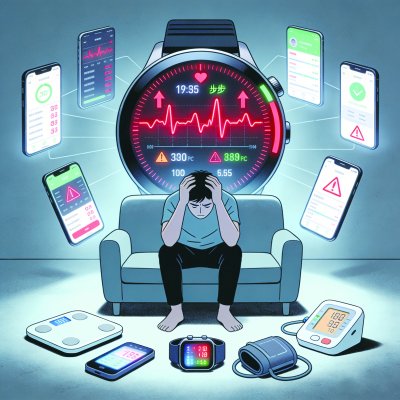
Core Viewpoint - The increasing reliance on digital health devices, such as smart wristbands and health apps, is leading to a paradox where individuals experience heightened anxiety despite the intention of improving health awareness and lifestyle [3][4][6]. Group 1: User Experience with Health Devices - Many users, like Xiao Li, find themselves feeling anxious due to the discrepancies between their perceived health and the data provided by their devices, leading to self-doubt and confusion [4][5]. - Users often set quantifiable health goals, but natural fluctuations in health metrics can lead to frustration and anxiety, as seen in the case of Wu Tong, who felt pressured by her weight data [5][6]. Group 2: Psychological Impact of Health Monitoring - The data from health devices can exacerbate pre-existing anxiety, as highlighted by medical professionals who note that users may misinterpret normal data fluctuations as health threats [6][7]. - Psychological factors, such as cognitive biases and personality traits, contribute to health anxiety, with individuals often interpreting health data in a catastrophic manner [7][8]. Group 3: Recommendations for Healthy Data Interaction - Experts suggest that individuals should adjust their perceptions of health data, focusing on overall trends rather than individual metrics to reduce anxiety [9][10]. - It is recommended to limit the frequency of data checks and to engage in mindfulness practices to shift focus from numbers to actual bodily sensations [10][11]. - Health management should not be viewed as a competition, and the primary goal of health data should be to enhance awareness and promote healthy habits without causing undue stress [11].
让年轻人不怕生孩子的灵丹妙药来了?
虎嗅APP· 2025-08-02 13:56
Core Viewpoint - The article discusses the transformative role of AI in the field of pregnancy and childbirth, highlighting its potential to alleviate concerns and improve health outcomes for expectant mothers while also addressing the challenges and ethical considerations that arise with its use [2][6][26]. Group 1: AI's Role in Pregnancy Support - AI tools provide expectant mothers with answers to various questions related to pregnancy, offering psychological comfort and practical advice [4][5]. - AI can assist in monitoring health metrics, such as calorie intake and fetal movements, which helps in managing pregnancy-related concerns [4][5]. - The integration of AI in healthcare can bridge the communication gap between doctors and pregnant women, who often feel anxious due to limited consultation time [5][11]. Group 2: AI's Impact on Fertility and Reproductive Health - AI technologies, such as STAR, enhance the ability to identify viable sperm cells, significantly improving the success rates of assisted reproductive techniques [14][16]. - AI applications in reproductive medicine include personalized treatment plans, embryo quality assessment, and genetic risk evaluation, which can lead to healthier pregnancies [17][19]. - The use of AI in monitoring fetal health, such as through advanced heart rate monitoring, has shown to be more accurate than traditional methods [22][24]. Group 3: Market Trends and Developments - The market for pregnancy-related AI applications is rapidly expanding, with over 30 new AI models and applications launched in 2023 alone [27][30]. - Major tech companies and healthcare providers are increasingly investing in AI solutions for maternal health, indicating a growing trend in the industry [27][30]. - The development of AI products requires careful consideration of user experience and clinical accuracy to ensure effective support for expectant mothers [31]. Group 4: Ethical and Regulatory Challenges - The application of AI in reproductive health raises ethical concerns, particularly regarding the potential for "designer babies" and the need for strict regulations [33][34]. - Privacy and data reliability are significant challenges that must be addressed as AI becomes more integrated into healthcare [33][34]. - There is a need for ongoing dialogue about the implications of AI in maternal health, especially regarding the psychological impact on users who may misinterpret AI-generated information [34][36].
让年轻人不怕生孩子的灵丹妙药来了
Hu Xiu· 2025-08-02 05:17
Core Viewpoint - The integration of AI in maternal health is transforming the experience of pregnancy and childbirth, providing essential support and information to expectant mothers, thereby addressing knowledge gaps and reducing anxiety associated with pregnancy [3][8][30]. Group 1: AI Tools and Applications - AI tools are increasingly being utilized to answer various questions from expectant mothers, such as dietary concerns and fetal movement monitoring, acting as both medical advisors and psychological support [3][4][5]. - Over 30 AI applications related to pregnancy and childbirth have been launched this year, with major companies like Tencent Cloud and Alibaba Medical entering the market [3][4]. - AI products are diversifying, including mobile app integrations, AI chatbots, and wearable devices for monitoring fetal health, which enhance user interaction through text, voice, and image [5][7]. Group 2: Impact on Fertility and Birth Rates - AI is seen as a potential solution to improve fertility rates among young women by providing knowledge and reducing fears associated with childbirth [8][9]. - A significant decline in birth rates in China has been noted, with predictions indicating a drop below 9 million births by 2025, highlighting the urgency for supportive measures like AI [8][9]. Group 3: Challenges and Ethical Considerations - The use of AI in reproductive health raises ethical concerns regarding patient privacy and data reliability, particularly given the sensitive nature of genetic and medical information involved [30][31]. - There is a need for careful regulation to balance the benefits of AI in selecting healthy embryos against the risks of "designer babies" and ethical dilemmas [31][32]. - The accuracy of AI in medical contexts is still under scrutiny, with current models achieving an average accuracy of 82% in medical knowledge questions, which may not suffice for complex pregnancy-related inquiries [33].
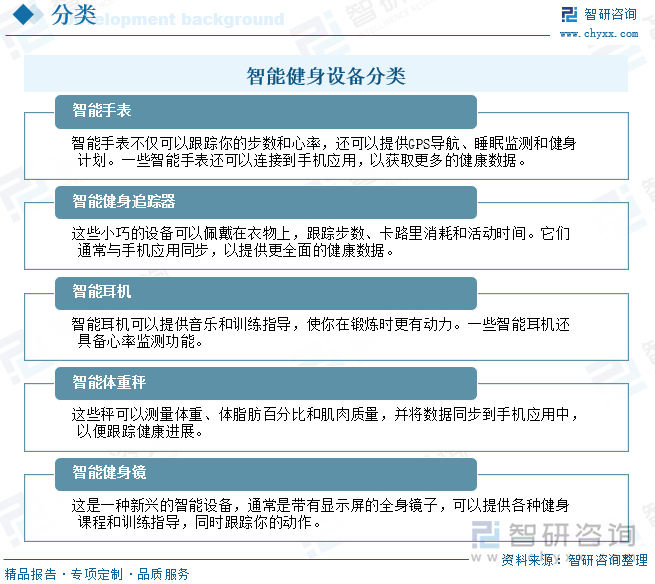
研判2025!中国智能健身行业政策汇总、产业链、发展现状、竞争格局及发展趋势分析:随着“体重管理年”的持续推进,智能健身市场将迎来新的机遇[图]
Chan Ye Xin Xi Wang· 2025-05-17 23:59
Core Viewpoint - The intelligent fitness industry in China is rapidly growing, driven by increasing health awareness and the demand for personalized and efficient fitness solutions. The market size is projected to reach 52.3 billion yuan in 2024, reflecting a year-on-year increase of 50.29% [1][13]. Industry Overview - Intelligent fitness, also known as smart fitness or AI fitness, combines the latest technology with traditional exercise to provide personalized fitness guidance through virtual coaches and smart devices [3][8]. - The user base for fitness activities in China has expanded significantly, with the number of fitness participants growing from 249 million in 2017 to an estimated 407 million by 2024, increasing the penetration rate from 17.8% to 28.8% [11][13]. Market Dynamics - The intelligent fitness market is characterized by a diverse range of hardware and software suppliers, including components like chips, sensors, and smart devices, as well as software solutions for data management and user interaction [8][20]. - The industry is supported by government policies aimed at promoting health and fitness, including initiatives to enhance smart sports equipment and facilities [5][20]. Competitive Landscape - The market is dominated by several key players, including Beijing Calorie Information Technology Co., Ltd., Le Dong Tian Xia (Beijing) Sports Technology Co., Ltd., and Qingdao Inpace Health Technology Co., Ltd., among others [15][17]. - Companies are leveraging technology innovation and brand development to capture market share, while new entrants are continuously emerging, altering the competitive dynamics [15][21]. Future Trends - The government is expected to continue increasing support for the intelligent fitness sector, with more policies to encourage healthy lifestyles and the integration of new technologies like 5G into fitness solutions [20][21]. - Cross-industry collaborations are anticipated to emerge, particularly with healthcare and rehabilitation sectors, creating new opportunities for growth and innovation within the intelligent fitness industry [21][22].