数智化经营

Search documents
民生银行副行长张俊潼:将零售业务作为长期性、基础性战略业务推进
Bei Jing Shang Bao· 2026-03-31 05:20
Core Insights - The core focus of the article is on Minsheng Bank's retail business strategy and performance, highlighting its commitment to high-quality development and customer acquisition in 2025 and beyond [1][2][3] Group 1: Retail Business Development - Minsheng Bank prioritizes retail business as a long-term strategic focus, aiming for both quantitative growth and structural improvement in 2025 [1] - The bank achieved a 19.16% year-on-year increase in new customer acquisition and a 30% increase in new customer AUM (Assets Under Management) in 2025, indicating a significant enhancement in customer quality [2] - The bank's collaboration with corporate partners has deepened, resulting in a 10.05% increase in value customers and a 13.18% increase in cumulative value by the end of 2025 [2] Group 2: Strategic Initiatives and Future Outlook - For 2026, Minsheng Bank plans to maintain its strategic focus on retail business, emphasizing "steady growth, optimized structure, strong foundation, and improved efficiency" [3] - The bank aims to enhance its digital operations, leveraging its recently completed infrastructure to improve data management and marketing processes, which will support high-quality development [3] - Minsheng Bank will optimize its business structure by focusing on customer, asset, and liability structures, particularly in adjusting consumer loan asset structures while adhering to regulatory requirements [3]

从用户割裂到单客深耕:劲浪携手微盟数智化升级,私域GMV涨43%
Xin Lang Cai Jing· 2026-02-06 02:51
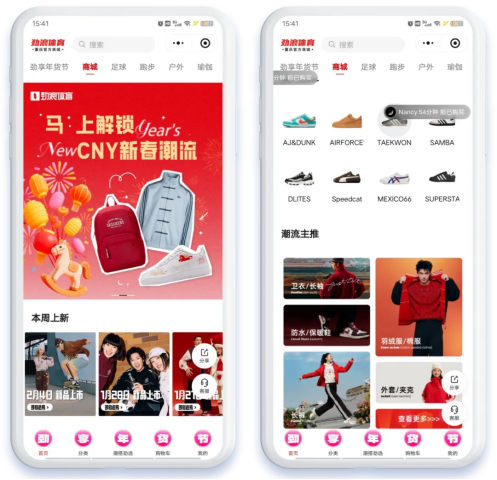
Core Insights - The article highlights the dual impact of the sports consumption boom and retail digitalization on China's sports retail industry, marking a transition from scale expansion to high-quality growth [1][11] - Savills research indicates a projected 111% year-on-year increase in China's sports goods retail sales in 2024, with a further growth rate of 25.4% in Q1 2025, significantly outpacing the overall retail market [1][11] - Key challenges in the industry include fragmented user data and a lack of online-offline synergy, which hinder brand value realization [1][11] Company Collaboration - The partnership between domestic sports retail brand Jinlang Sports and Weimeng aims to address industry challenges by reconstructing the operational chain through digital means, focusing on a user-centric operational system [1][11] - The collaboration involves implementing advanced retail solutions and providing dedicated operational accounts for 3,000 frontline sales staff, establishing a comprehensive digital operational system [3][13] User-Centric Transformation - Jinlang Sports is shifting its focus to retaining and continuously creating value for existing users, addressing the challenge of converting dormant user assets into actual business value [2][12] - The transformation emphasizes breaking down data silos and enhancing user engagement through a unified membership and user asset platform [5][15] Operational Efficiency and Growth - The collaboration has led to a significant organizational transformation, moving from a channel-centric to a user-centric approach, enhancing operational efficiency and deepening user value extraction [6][16] - Post-collaboration, the private domain's annual GMV reached nearly 90 million yuan, reflecting a 43% year-on-year increase, with improved user management efficiency for sales staff [7][17] Community Engagement and Innovation - Jinlang Sports has developed a multi-dimensional operational ecosystem that combines community content and offline member interactions, leading to increased member loyalty and engagement [7][17] - The partnership has also enabled Jinlang Sports to explore new growth avenues, transitioning from a product seller to a lifestyle service provider for users, thereby enhancing user lifecycle value [9][19] Industry Implications - The collaboration serves as a significant case study for the digital transformation of the sports retail industry, emphasizing the need for user-centric strategies and data-driven decision-making in a competitive market [10][20] - The success of this partnership illustrates the importance of AI-driven, fully integrated digital operations as a core engine for retail brands to navigate market challenges [9][19]

微盟×见实科技 | 2025年度全域数智化经营增长先锋榜单揭晓
Xin Lang Cai Jing· 2026-01-27 05:20
Core Insights - The retail sector is undergoing a systemic transformation driven by digital retail and artificial intelligence, with the boundaries between online and offline continuously dissolving, making digital intelligence essential for brands to overcome growth bottlenecks and build core competitiveness [1][6]. Group 1: Digital Intelligence in Business - The digital intelligence segment focuses on user insights, marketing reach, data-driven decision-making, and the construction of end-to-end digital capabilities, reshaping the underlying logic of brand management [2][7]. - Leading brands are breaking down barriers between technology and business, transforming digital tools into standardized, reusable operational capabilities, which enhances their operational efficiency and provides a replicable capability-building model for the industry [2][7]. - Solid digital core capabilities are crucial for responding to market changes and grasping consumer trends [2][7]. Group 2: Holistic Growth - The goal of digital intelligence in holistic growth is to convert technology into tangible commercial growth momentum, with a focus on user growth, performance breakthroughs, and ecosystem optimization [3][8]. - Some brands leverage precise strategic layouts to transform digital advantages into visible growth, enhancing their commercial value and defining the value benchmarks for holistic digital management [3][8]. - Experiences from these brands provide a pathway for other brands to transition from capability to value [3][8]. Group 3: Industry Consensus and Future Directions - The announcement of the awards not only recognizes the digital practices of the winning brands but also consolidates the industry's consensus on digital management [9]. - The integration of digital and physical realms has become a core direction for industrial upgrading, with the expectation that more brands will join the wave of holistic digital management to explore new growth paradigms and promote high-quality development in the retail sector [9].

诸葛智能:让数据成为驱动银行业经营生产力
Sou Hu Cai Jing· 2025-12-02 06:06
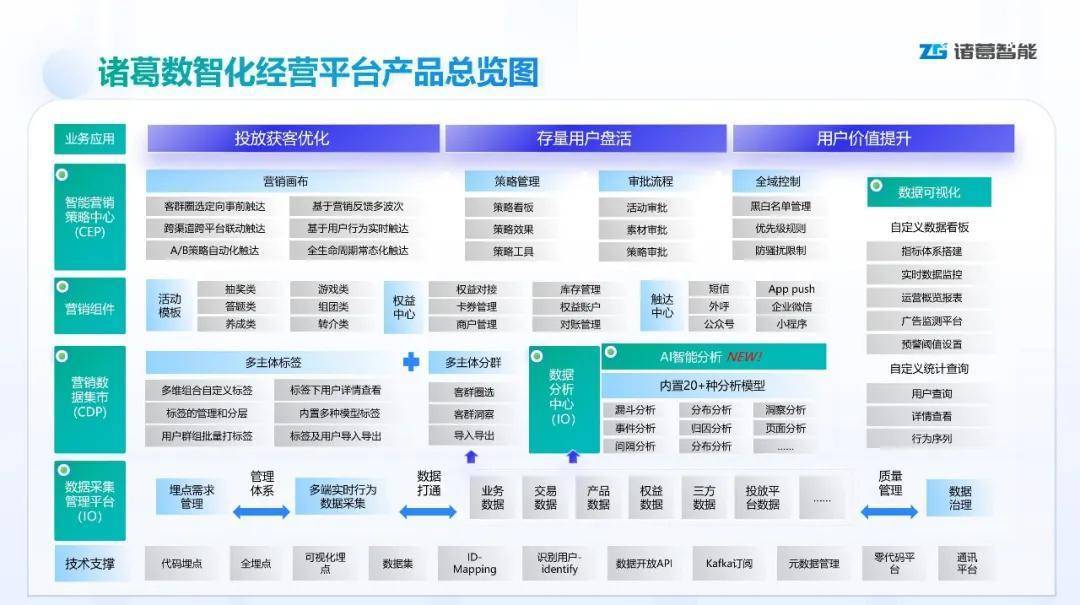
Core Insights - The retail competition logic in China's banking industry has dramatically shifted from "who has more branches and customers" to "who understands customers better and operates more effectively" [1] - Leading banks are leveraging strong data processing capabilities and intelligent operational systems to gain insights into customer intentions more quickly and accurately, putting unprecedented pressure on smaller banks in local markets [1] Group 1: Industry Changes - The competitive landscape has evolved, making it essential for banks to have real-time awareness of customer behavior and to conduct marketing based on these behaviors [4] - The advantage of regional banks claiming to understand local customers is diminishing in a data-driven competition [5] - The key moments of customer behavior are now critical for conversion success, with larger banks able to respond in real-time to potential customer actions [5][15] Group 2: Challenges for Smaller Banks - Smaller banks often lack the ability to perceive customer needs in real-time, leading to delayed responses compared to larger banks [4] - Traditional marketing methods employed by smaller banks, such as manual follow-ups and bulk messaging, are less effective than the data-driven approaches of larger banks [5] - The common issue for smaller banks is not the absence of data, but rather the inability to form a systematic approach to marketing and customer engagement [12] Group 3: Solutions Offered by Zhuge Intelligence - Zhuge Intelligence has launched the "Zhuge Intelligent Marketing Solution," which focuses on a three-pronged growth system of data collection, management, and utilization [3] - The solution aims to transform scattered data into actionable insights, enabling smaller banks to enhance their digital marketing effectiveness and achieve higher conversion rates [3][11] - By building a unified customer label system and real-time profiling, Zhuge Intelligence helps smaller banks gain a deeper understanding of customer financial states and intentions [11] Group 4: Operational Efficiency - Zhuge Intelligence emphasizes the need for a continuous and reusable marketing framework, moving away from one-off campaigns to a sustainable operational system [14] - The intelligent marketing platform enables real-time event processing and immediate operational capabilities, allowing banks to respond to customer actions within seconds [17] - The company provides support through templates, methodologies, and operational services to help smaller banks implement systematic marketing capabilities at a lower cost [17]
解读客如云AI商家经营好帮手:老板助手与营销助手的协同价值
Cai Fu Zai Xian· 2025-10-29 02:42
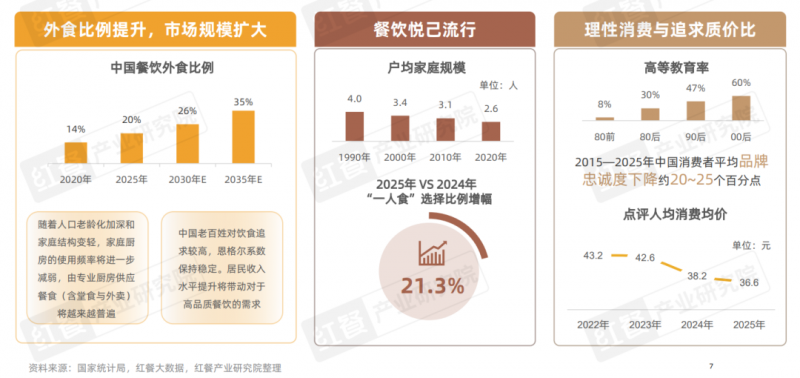
Core Insights - The Chinese restaurant industry is facing significant challenges, with a closure rate of 22.66% in the first half of 2025, and specific segments like crayfish and spicy hot pot experiencing even higher closure rates of 37.2% and 31.8% respectively [1] - Despite the opening of 1.599 million new stores, the net increase is only 700,000, indicating a narrowing gap compared to 2024 [1] - The industry has shifted from "incremental competition" to "stock competition," with less than 30% survival rate for stores lacking core competitiveness [1] - Consumer behavior is evolving towards "self-satisfying" consumption, with a focus on high-quality dishes and personalized service, while also being price-sensitive, leading to an 8.3% year-on-year decline in average spending per customer in the first half of 2025 [1] Industry Challenges - The restaurant sector is experiencing intensified competition and changing consumer demands, pushing brands to seek new operational strategies [3] - The operational challenges include balancing dining experience with efficiency in both dine-in and delivery services, compounded by fragmented data across various platforms [4][5] - Consumer preferences are increasingly focused on health, with a growing demand for low-fat, low-sugar options and transparency in ingredient sourcing [4] Solutions Offered by KERUI Cloud - KERUI Cloud is introducing five AI smart assistants to address the operational challenges faced by restaurant brands, particularly through the Boss Assistant and Marketing Assistant [3][5] - The Boss Assistant aims to enhance decision-making efficiency by breaking down data silos and providing actionable insights based on real-time data analysis [7][9] - The Marketing Assistant focuses on creating targeted marketing strategies, improving customer engagement, and optimizing promotional efforts based on consumer data [10][11] Operational Efficiency - The Boss Assistant utilizes voice interaction to streamline data retrieval, allowing restaurant owners to quickly access key performance metrics without manual data sorting [8] - It generates customized reports that visualize operational performance, helping both single and chain restaurants identify trends and anomalies in their business [8][9] - The system also automates routine tasks, reducing manual workload and enabling restaurant owners to focus on strategic decision-making [9] Marketing Effectiveness - The Marketing Assistant is designed to enhance marketing effectiveness by creating tailored marketing plans and tracking campaign performance in real-time [10][11] - It employs data-driven customer segmentation to ensure that marketing efforts are directed towards the right audience, thereby increasing engagement and conversion rates [10][11] - The assistant also facilitates a closed-loop system for customer interaction, enhancing both public and private engagement strategies [11] Conclusion - KERUI Cloud's AI smart assistants represent a significant advancement in the restaurant industry's shift from traditional experience-driven management to data-driven decision-making [13] - These tools not only aim to stabilize operations and improve profitability for restaurant owners but also enhance customer satisfaction by aligning offerings with consumer preferences [13] - The ongoing development of AI technology is expected to further transform the restaurant sector, making it more efficient and responsive to market demands [13]