
文化遗产可持续发展

Search documents
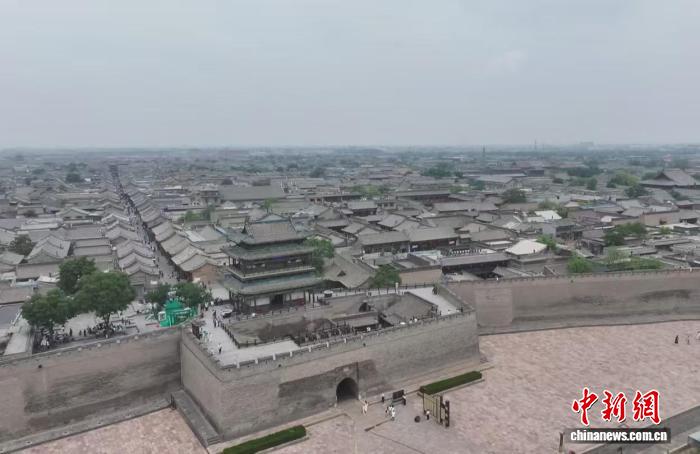
海内外专家齐聚平遥古城探讨文化遗产可持续发展
Zhong Guo Xin Wen Wang· 2026-01-27 08:04
Group 1 - The event focused on sustainable cultural heritage and historical cities, aiming to create a high-level international academic dialogue platform to explore feasible paths for high-quality development through protection and transmission of cultural heritage [1][2] - Pingyao Ancient City, with over 2800 years of history, is recognized for its authenticity, continuity of life, and vibrant culture, emphasizing the principle of protection first and innovative integrity [2] - Experts highlighted the importance of adaptive reuse of cultural heritage, which should not be merely commercialized but must respect historical context, advocating for a shift from passive to active protection models [2] Group 2 - The exchange conference addressed four key dimensions: overall urban planning, policy guidance, financial support, and technical backing, facilitating the collision of theoretical exploration and practical experience [2] - Participants included eight domestic and international universities, as well as various planning and cultural heritage organizations, indicating a collaborative effort to address common challenges in heritage protection and development [2]

让文化遗产“活”在社区里
Ren Min Ri Bao· 2025-11-13 00:06
Core Insights - The article emphasizes the importance of community involvement in the protection and development of cultural heritage, highlighting the need to balance preservation with social development [1][4]. Group 1: Cultural Heritage Protection - Cultural heritage is a vital carrier of human civilization, and its protection must avoid isolation from social development while preventing the degradation of authenticity through singular development approaches [1]. - The Liangzhu Ancient City site exemplifies the concept of "developing while protecting" by integrating ecological parks and vibrant environments, allowing ancient civilization to coexist harmoniously with contemporary life [1][4]. Group 2: Community Engagement - The Liangzhu Cultural Village has fostered a sense of community and cultural identity among its 3,931 residents through a "villager convention" that includes 26 civilized agreements, enhancing community spirit [2]. - The "Liangzhu Autumn Festival" in 2025 featured nearly 60 community-led activities over 37 days, promoting a sustainable community culture [2]. - An innovative governance mechanism has been established, balancing heritage protection with residents' living conditions through a "classified and centralized application" system for housing, ensuring both site safety and resident welfare [2]. Group 3: Economic Development - The Liangzhu site management area focuses on transforming cultural resources into economic development drivers, launching over 600 cultural products under the "Liangzhu MEI" lifestyle aesthetics project, with projected sales of 270 million yuan in 2024 [3]. - The establishment of a cultural corridor has attracted over 1,000 enterprises, particularly in digital content and gaming, contributing to rural revitalization and providing job opportunities for local residents [3]. Group 4: Sustainable Development - Successful cultural heritage protection and community development hinge on transitioning from "static protection" to "dynamic inheritance," integrating heritage into modern life and community culture [4][5]. - Cultural heritage protection injects development momentum into community growth, with heritage parks and museums enhancing local tourism and creating jobs in related sectors [4]. - Community development supports cultural heritage protection by transforming residents into active guardians, fostering a sense of ownership and participation in heritage conservation [5].
申遗为何总能点燃文博热
Jing Ji Ri Bao· 2025-07-18 21:59
Core Viewpoint - The successful application for World Heritage status for the Western Xia Tombs has sparked widespread interest in Western Xia culture, leading to increased tourism and cultural engagement, highlighting the deep connection between cultural heritage protection and development [1][2][3]. Group 1: Heritage Protection and Development - The successful application for World Heritage status is a result of long-term archaeological research, site protection, and ecological maintenance practices in China [1]. - Since its opening in 1986, visitor numbers to the Western Xia Tombs have surged from 70,000 in 1997 to nearly 1 million currently, while the museum's collection has expanded from over 30 items in 1998 to more than 10,000 today [1]. - The development philosophy prioritizing protection has transformed the Western Xia Tombs from a regional cultural site into a globally recognized treasure, enhancing public pride in traditional Chinese culture [1]. Group 2: Cultural and Economic Impact - The Western Xia Tombs are innovating cultural tourism products, such as projects on movable type printing and artifact restoration, to engage the public and enhance awareness of cultural heritage [2]. - Creative transformations of cultural heritage, like the National Museum's "Phoenix Crown" fridge magnets, have created new consumer trends, with museum cultural product sales projected to reach 3.428 billion yuan in 2024, a 63.7% increase year-on-year [2]. - The economic benefits from cultural tourism and creative products can support heritage conservation efforts, academic research, and talent development, creating a virtuous cycle [2]. Group 3: Future Development and Awareness - The successful application for World Heritage status presents new opportunities for local tourism, but there is a need to guard against excessive commercialization [3]. - The use of digital technology to showcase cultural artifacts, as seen with the Dunhuang Academy, alleviates preservation pressures while allowing global audiences to appreciate cultural heritage [3]. - There is a strong public desire to understand Chinese civilization better, emphasizing the importance of balancing protection and development to integrate cultural heritage into modern life and fashion [3].